Get Full Government Meeting Transcripts, Videos, & Alerts Forever!
Get email alerts on the Redistricting topic
No spam. Unsubscribe anytime.
House committee advances mid‑cycle congressional redistricting bill after hours of testimony
Summary
The House Rules and Executive Nominations Committee heard more than 200 witnesses on House Bill 488 — a mid‑cycle congressional redistricting measure backed by the governor and sponsor Delegate C.T. Wilson — and advanced the bill out of committee after approving minor amendments by voice vote. Supporters said the map defends Maryland from partisan moves in other states; opponents called it a partisan gerrymander that will disenfranchise Eastern Shore Republicans.
An Annapolis committee advanced a contentious mid‑cycle redistricting bill Wednesday after more than seven hours of testimony that divided residents and lawmakers.
House Bill 488, introduced by Delegate C.T. Wilson, would adopt a new congressional map for Maryland effective for 2026 and keep that map through 2030. Wilson said the map is based on recommendations from the governor’s redistricting advisory commission and “complies with all federal constitutional requirements,” arguing the measure will bring similar communities together and strengthen representation for Baltimore City and key economic corridors.
“Passing this map is how we fight chaos and corruption,” Wilson told the Rules and Executive Nominations Committee in his opening remarks, framing the bill as a response to mid‑cycle redistricting undertaken in states such as Texas and North Carolina.
Governor Wes Moore, who testified in support, said the commission’s recommendation was shaped by public submissions and hearings and urged the legislature to debate and, if necessary, improve the maps before voting. “We will hear the will of the people,” the governor said, describing the commission’s public outreach.
The committee’s members pressed sponsors on several technical and legal points. Delegates asked whether the bill formally extends Article 3 standards (compactness, contiguity, respect for political boundaries) to congressional districts, why the bill includes a constitutional amendment provision, whether partisan metrics or precinct data were used to craft the map, and why the measure was designated an emergency. Wilson said the bill is meant to clarify ambiguity in the state constitution and that the Legislative Services Division performed population “zero‑outs” after the commission adopted a conceptual map. He told members a citizen’s submission — identified in the record as the concept followed by the commission — served as the base for the bill’s lines.
Many witnesses filled the hearing room and the virtual queue. Supporters — including county executives, union leaders, progressive advocacy groups and Indivisible chapters — said mid‑cycle redistricting was a necessary response to partisan moves in other states that threaten Maryland’s ability to elect representatives who will check federal executive power. “We need to pass this map,” a county executive said in support, noting Prince George’s County’s large federal workforce and proximity to national institutions.
Opponents, particularly from the Eastern Shore and other rural counties, argued the map breaks community ties and would make it practically impossible for the state’s lone Republican congressman to win re‑election. Speakers raised procedural complaints, saying the process was rushed, public notices were late or inaccessible for some residents, and the emergency designation was inappropriate for a redistricting measure.
Several legal issues were flagged repeatedly: whether courts will view the constitutional amendments and whether the state’s longstanding judicial precedents would permit altering congressional standards mid‑decade. Committee members referenced Judge Battaglia’s prior opinion and the U.S. Supreme Court’s Rucho decision while debating whether legislative clarification is needed.
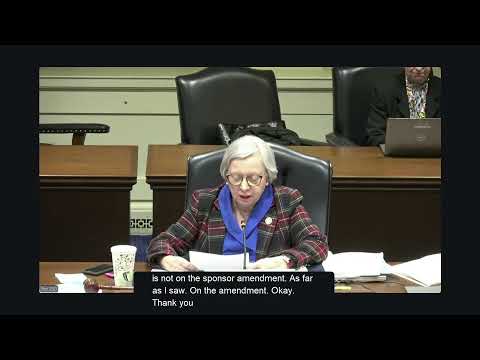
After testimony stretched into the evening, the committee approved a technical amendment (adding cosponsors and a drafting correction) and advanced HB 488 out of committee by voice vote. The committee did not record a roll‑call tally in the hearing transcript; the clerk’s office will publish the official vote record later.
What happens next: HB 488 will move to the next stage in the General Assembly’s process, where floor debate and additional amendments are likely. Opponents signaled intent to litigate; supporters said they are prepared for legal challenges but argued action is necessary now to protect Maryland’s representation for the upcoming midterm cycle.
Reporting note: Quotes and attributions are drawn verbatim from the committee hearing transcript. The committee’s hearing record includes dozens of individual statements for and against the bill; this article highlights the central claims, questions raised by members, and the committee’s procedural outcome.
The committee adjourned after advancing the bill and beginning a separate hearing on related reform measures.