
Striped bass management and industry debate: agencies cite recruitment concerns; charter captains warn of economic harm
Get AI-powered insights, summaries, and transcripts
Sign Up Free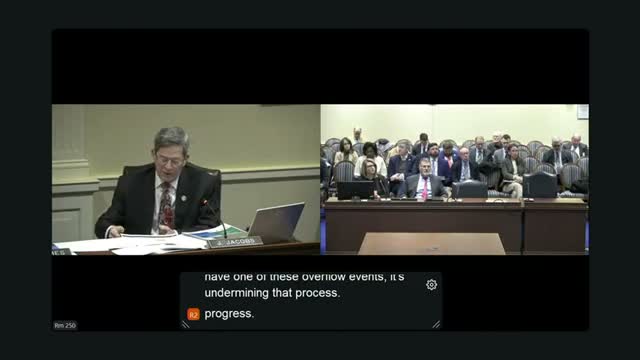
Summary
State scientists and DNR officials described low juvenile recruitment and are scoping seasonal protections; charter‑boat representatives and industry groups urged caution, saying proposed baseline changes and slot limits have already harmed businesses.
Maryland fisheries managers and stakeholders clashed over proposed seasonal and baseline changes for the striped bass fishery at a Jan. 27 House Environment and Transportation Committee briefing.
Department of Natural Resources Secretary Josh Kurtz and scientists told the committee that the juvenile striped bass index has fallen for several years and that a mix of factors — prey availability, temperature stress and catch‑related mortality — are under investigation. Kurtz said Maryland has tried to protect large spawning fish through slot limits and is now considering additional measures to protect fish during hot summer periods when catch‑and‑release mortality rises. He said the state is coordinating with the Atlantic States Marine Fisheries Commission and expects further regional action in 2027.
Industry witnesses said proposed changes are already having economic consequences. Brian Hardman, president of the Maryland Charter Boat Association, said recent DNR actions (including a slot limit change to 19–24 inches and baseline realignment scoping) reduced charter catch opportunities, caused canceled trips, contributed to at least 56 charter boats being sold or listed and drove several tackle shops out of business. Hardman argued that handling during catch‑and‑release — especially during pre‑spawn and spawning periods — can cause egg discharge, stress and delayed mortality and urged DNR to keep April closed to protect spawning females and to consider a distinct regulatory category or season for for‑hire charter operations.
David Sikorsky of the Coastal Conservation Association of Maryland, who sits on Atlantic States Marine Fisheries Commission panels, said fisheries management requires balancing fishing mortality and access; he noted that task‑force scoping for a baseline reset received initial majority support and encouraged continued stakeholder engagement. Sikorsky and others suggested additional best practices — such as limiting handling, prohibiting lifting large fish out of the water, and improving reporting — could reduce catch‑and‑release mortality.
DNR and stakeholder representatives acknowledged the trade‑offs: summer closures aim to reduce heat‑related release mortality while spring closures protect spawning success. DNR said management decisions will be informed by ASMFC guidance and by continued outreach to commercial, for‑hire and recreational fishers. No regulatory change was adopted at the briefing.
The committee asked agencies to continue data sharing and to meet with industry representatives to further explain the baseline‑reset process and the scientific basis for proposed season and gear adjustments. The debate underscores tensions between conservation goals and economic impacts in a fishery that many witnesses described as vital to Maryland’s coastal businesses.