Get Full Government Meeting Transcripts, Videos, & Alerts Forever!
Get email alerts on the Parking Study topic
No spam. Unsubscribe anytime.
Study finds ample parking today in Old Town Fairfax but flags possible shortfalls under certain development scenarios
Summary
Walker Consultants reported weekday peak occupancy near 34% (6,300‑space study area) and projected roughly 2,200 additional spaces over 15 years. The firm recommended a parking 'champion,' improved wayfinding, shared‑parking agreements, consistent enforcement and monitoring; an optional 300–400 space garage was identified as a contingency at ~$15–$20M.
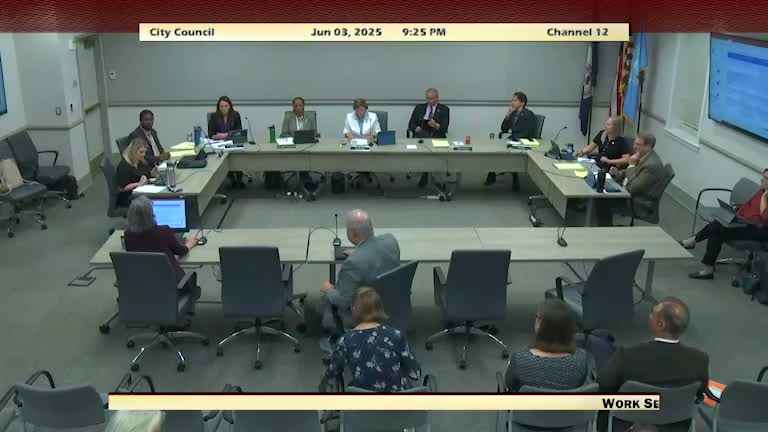
John Dorset of Walker Consultants presented the Old Town Fairfax parking study to council on June 3, reporting that baseline counts show about 6,300 spaces in the study area and weekday noon peak occupancy around 34%. "We were at 34% occupancy during a weekday," Dorset said, summarizing field counts taken in September and October.
The consultant modeled future development drawn from the city's small‑area plan and pending proposals and projected an increase of roughly 2,200 parking spaces over 11–15 years; even so, some core public lots near the Main‑University intersection could exceed capacity in short‑term scenarios tied to major projects (Walker modeled an event center scenario that would push downtown public parking into overcapacity on weekend peaks).
Key recommendations focused on operations and policy rather than immediate garage construction: appoint a parking champion (a staff role to coordinate parking projects), improve signage and wayfinding, standardize shared‑parking agreements, and maintain consistent enforcement to preserve turnover. Dorset said a new public parking garage (300–400 spaces) is not required under current zoning and county public garage availability, but could be revisited if zoning or public‑use assumptions change.
Council members asked about monitoring triggers and modal shift; staff said the study provides a baseline and that the city will continue to monitor redevelopments and parking demand, bringing parking‑facility plans back if demand materializes. The consultant noted automated parking guidance signage and painted on‑street markings as low‑cost, high‑impact measures to help drivers locate available spaces.