Get Full Government Meeting Transcripts, Videos, & Alerts Forever!
Get email alerts on the George Snyder Trail topic
No spam. Unsubscribe anytime.
Fairfax City Council reaffirms full George Snyder Trail after weeks of public debate
Summary
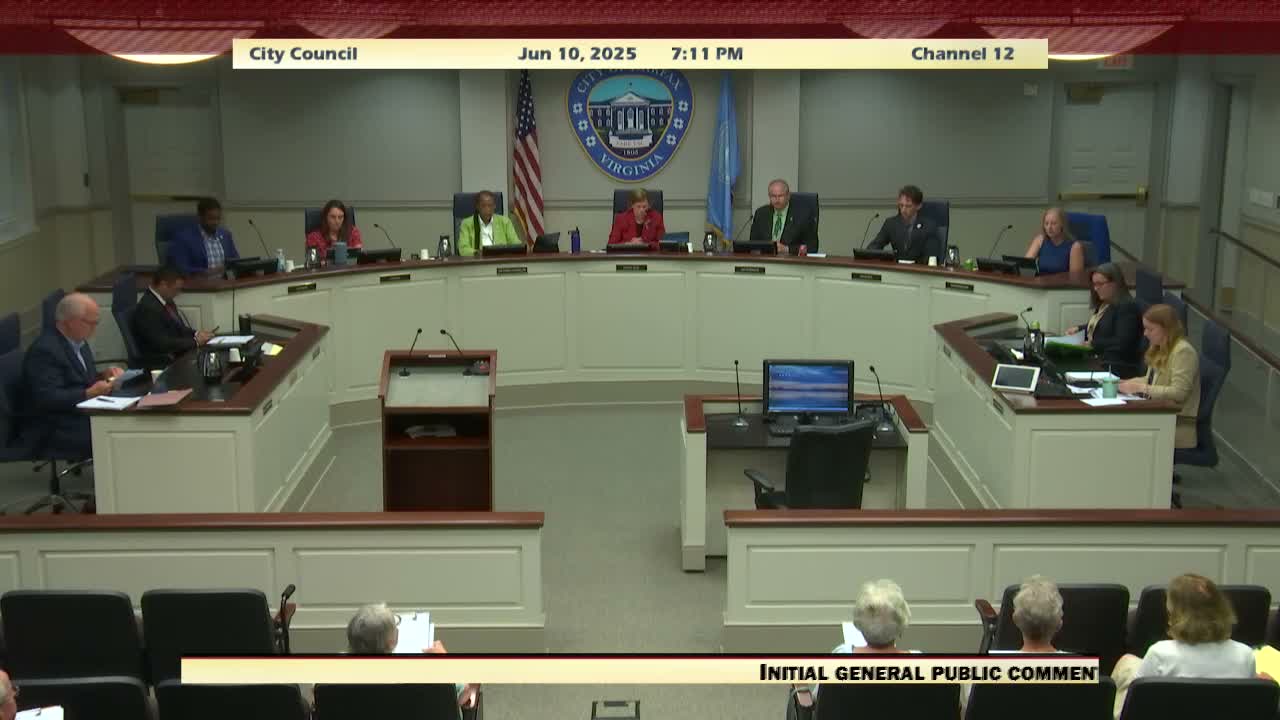
After hours of public comment and debate, Fairfax City Council voted 4–2 on June 10 to reaffirm approval of the full George Snyder Trail as designed, rejecting an amendment to build only the western half and a substitute motion to cancel the project while staff seeks offsetting savings.
Fairfax City Council on June 10 voted 4–2 to reaffirm approval of the full George Snyder Trail project, ending a months‑long dispute between residents who urged completion for regional connectivity and those who opposed the plan’s through‑the‑woods alignment on environmental grounds. The council rejected a motion to limit construction to a western half and a later substitute motion to cancel the trail if staff could identify repayment financing and $3.7 million in budget savings.
The decision followed a lengthy public‑comment period in which dozens of residents, advocacy groups and former officials spoke. Supporters emphasized connectivity and the risk of losing roughly $3.7 million in I‑66 concession and related grant funding if the city abandons the full design. "Adding an obligation of $1,700,000 to the city's taxpayers is simply unacceptable," said Art Hammerschlag of Fairfax City Citizens for Smarter Growth, urging the council to build the entire trail. Other speakers, including Tom Ross, a former council member, said completing the trail is necessary to maintain the city’s credibility with regional partners.
Opponents focused on environmental damage and tree loss in resource‑protection areas. Residents who opposed the through‑the‑woods alignment described mature forest, wildlife and stream restoration work they said would be harmed by a hard‑surface trail. Tom Blackburn of the Northern Virginia Bird Alliance described planned excavation and retaining walls on the eastern alignment and urged cancellation. Several speakers noted memoranda from Fairfax County staff that recommend shared‑use paths in RPAs be a last resort.
Staff and council members spent substantial time on the financial consequences of each option. Acting Deputy City Manager Melanie Zipp and project staff described three choices: proceed with the full project, build only the western A1 segment (a hybrid), or cancel the project. VDOT had signaled in a June 4 letter that it would accept a western‑half hybrid but that the city would be required to repay expenditures incurred for omitted sections. CFO Martinez told the council that repaying a $3.7 million obligation within the current fiscal year would reduce the city’s projected unassigned fund balance from 17.7% to 15.6% and that financing repayment over 25 years at a 5% interest rate would add roughly $2.9 million in interest on a $3.7 million loan.
Councilmember Bates moved to modify the project to build the western half and accept repayment obligations for removed segments; that motion failed on a roll call (Aye: Bates; No: Amos, Hall, Hardy Chandler, Peterson, McQuillan). A subsequent motion by Councilmember Hardy Chandler to reaffirm the full project as designed was put on the table. Councilmember Peterson offered a substitute motion to cancel the project while directing staff to identify repayment options and $3.7 million in savings; the substitute was seconded and failed 5–1. The final reaffirmation passed on a roll call (Aye: Amos, Hardy Chandler, Bates, McClellan; No: Hall, Peterson).
Staff clarified several technical points during questioning. In response to Councilmember Hall, staff said the stream restoration project at the subdivision entrance would continue regardless of trail scope. Staff also explained that the project cost estimates were engineer construction estimates, not final bid results, and that a 10% contingency is included in current estimates.
What happens next: with the council’s reaffirmation, staff will proceed with the trail as designed and maintain coordination with VDOT and other regional partners. VDOT’s earlier letter leaves open coordination on any repayment schedule if circumstances change; staff recommended against financing repayment and emphasized seeking options to avoid long‑term interest costs. The council’s decision does not preclude future design adjustments that respond to environmental mitigation requirements or permitting conditions.
Council members emphasized the difficulty of the decision. "This was one of the most difficult decisions I've had to make since being on council," Councilmember McQuillan said, noting concerns about alignment and environmental impacts while stressing stewardship of taxpayer funds.
Provenance: topicintro SEG 167; topfinish SEG 3563.
Speakers referenced: Art Hammerschlag (public commenter), Mary McDaniel (public commenter), Mariana Fournier (public commenter), Tom Ross (public commenter), Leslie Cullen (public commenter), Megan James (public commenter), Kathy Russell (public commenter), William Pitchford (public commenter), Philip Latasa (public commenter), Toby Sorensen (public commenter), Steve Welke (public commenter), Bill Nedringhaus (public commenter), Councilmember Hardy Chandler, Councilmember Bates, Councilmember Peterson, Councilmember Hall, CFO Mr. Martinez, Acting Deputy City Manager Melanie Zipp.
Authorities cited: VDOT communications and I‑66 concession funding (referenced by staff), Virginia Freedom of Information Act (closed‑session certification referenced earlier in the meeting), Chesapeake Bay/Resource Protection Area guidance (referenced by public commenters and county memoranda).
Actions: The council considered three formal motions on the George Snyder Trail: (1) a motion by Councilmember Bates to modify the project to construct only Segment A1 (western half) with repayment for omitted segments (motion failed on roll call); (2) a substitute motion by Councilmember Peterson to cancel the project contingent on staff identifying repayment financing and $3.7M in savings (motion failed); and (3) a motion by Councilmember Hardy Chandler to reaffirm approval of the full trail as designed (passed 4–2).