
Maryland’s state premium subsidy and reinsurance fund aim to blunt federal cuts but face sustainability limits
Get AI-powered insights, summaries, and transcripts
Subscribe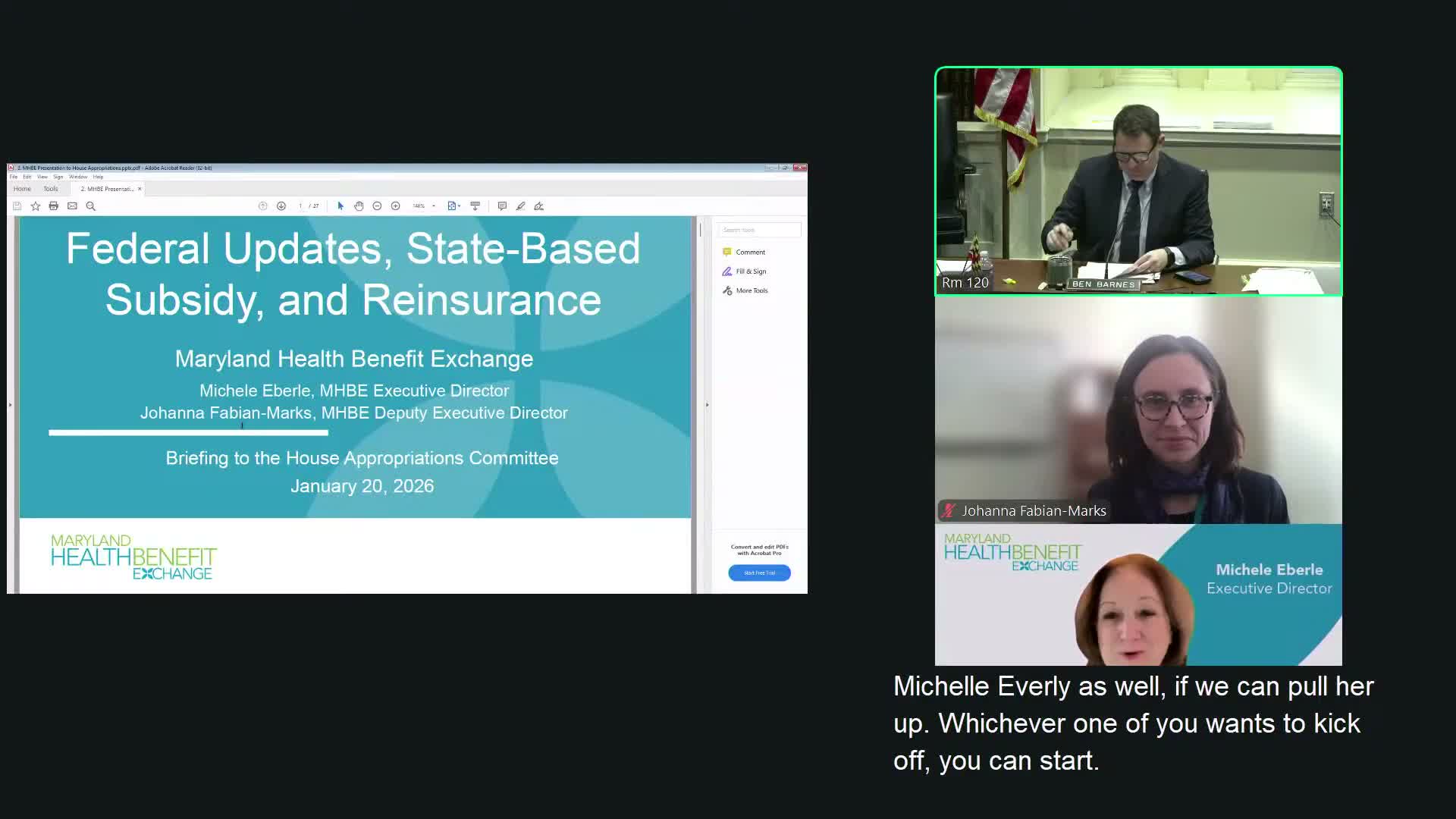
Summary
MHBE officials told lawmakers the state premium subsidy helped retain coverage during the end of enhanced federal credits, serving roughly 177,000 people so far, but the reinsurance reserve and subsidy authority sunset in 2027–2028, creating budget uncertainty.
Maryland Health Benefit Exchange briefed the Appropriations Committee on enrollment and the state premium assistance program created after enhanced federal premium tax credits expired.
Executive Director Michelle Eberly said MHBE’s priority during the January 2026 open enrollment was retention. Eberly reported renewed enrollments were up while new enrollments had declined and said premiums rose an average of 13% in 2026. She and other MHBE staff described a marked shift of enrollees toward higher‑deductible plans — for some consumers a move from a $1,000 deductible plan to a $10,000 deductible plan — and warned that such shifts increase the likelihood of deferred care and emergency‑department use.
MHBE staff explained the state premium subsidy’s parameters: it fully replaces lost enhanced tax credits for people under 200% of the federal poverty level and phases down assistance through 400% FPL; it is funded from a 1% state provider fee assessment that also supports the state reinsurance program. MHBE staff reported preliminary data at close of open enrollment that about 177,000 individuals were receiving the state subsidy at an average of roughly $94 per month, but noted that nonpayment and grace periods mean final disenrollment impacts will be clearer in March–April 2026.
The exchange warned that the reinsurance waiver and the 1% assessment sunset in 2028; MHBE said the board will review 2027 reinsurance and subsidy levels in light of fund balances and the need to preserve reinsurance solvency. Officials cautioned that the state subsidy is not sustainable long term at current funding levels and that policy choices will be required in 2027 on how to maintain affordability without destabilizing reinsurance.
Committee members asked MHBE for follow‑up data, including the exact number of enrollees who moved from gold to bronze plans and county‑level impacts. MHBE pledged to provide the specific counts.