Get Full Government Meeting Transcripts, Videos, & Alerts Forever!
Get email alerts on the Hr1 Fiscal Impacts topic
No spam. Unsubscribe anytime.
Maryland hearing: federal HR 1 expected to raise state costs and cut coverage for thousands
Summary
State analysts told the Appropriations Committee that federal HR 1 changes will shift costs to Maryland, increase SNAP administrative and benefit expenses, and could cause sizable Medicaid disenrollments unless automated exemptions and outreach limit losses.
At a Jan. 2026 briefing of the Maryland Appropriations Committee, state analysts warned that federal changes dubbed HR 1 (referred to in testimony as OBA/OBAA) will shift costs and administrative burdens to the state and threaten coverage for thousands of residents.
The Department of Legislative Services presented modeled impacts for SNAP and Medicaid. DLS staff said HR 1 would make states responsible for a portion of SNAP benefit cost if the payment error rate is above specified thresholds; they showed Maryland’s historical payment error rates and noted the state’s error rate rose during the COVID transition period but had declined to 13.64% in federal fiscal 2024. DLS’s modeling estimated state fiscal impacts in future years, including a headline figure shown by analysts of roughly $1.28 billion in total benefit cost exposure over the relevant planning window and annualized additional SNAP administrative and cost-share spending beginning in 2027.
On Medicaid, DLS and MDH witnesses described three major changes: new work requirements for the ACA expansion adult group, more frequent eligibility redeterminations (every six months instead of annually for affected adults), and narrower immigrant eligibility. MDH’s deputy secretary, Perry Briskin, told the committee the immigration provision could make about 15,000 people ineligible starting Oct. 1, 2026, and that work requirements and redeterminations could lead to substantial disenrollments beginning in mid‑2027. Briskin testified that, over several years, Maryland could lose ‘‘as much as $2.7 billion’’ in annual federal funding depending on the full scope of implementation.
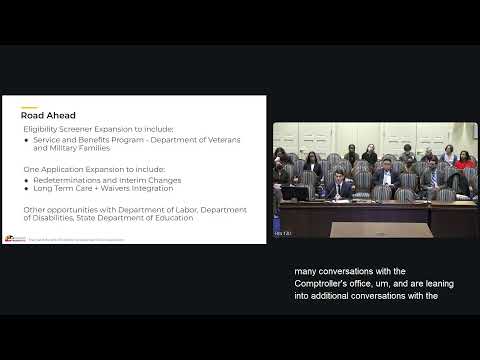
Agency witnesses emphasized a distinction between formal eligibility changes and avoidable churn caused by paperwork: several presenters said automation and cross‑agency data matches can preserve coverage for many people who are eligible but risk losing benefits for administrative reasons. DHS and MDH described plans to use data exchanges (for example SNAP, Department of Labor, CRISP) and new portals to flag exemptions and reduce manual work.
Committee members pressed for more precise counts and asked about operational readiness. DLS and DHS said their estimates are evolving and that final enrollment impacts will not be clear until March–April 2026, when nonpayment and redetermination effects show up in carrier and program data.
The committee requested follow‑up reports and specific counts (for example the exact number who shifted from gold to bronze plans and jurisdictional disenrollment breakdowns). The hearing closed with leadership urging continued monitoring and coordination across agencies.
The Appropriations Committee plans to receive additional data and follow‑up briefings as agencies track enrollment and appeals.