Get Full Government Meeting Transcripts, Videos, & Alerts Forever!
Get email alerts on the Competency Timeline topic
No spam. Unsubscribe anytime.
Family survivors and prosecutors back extending competency deadline for serious charges; disability advocates oppose
Summary
HB 180 would allow courts to hold charges open up to 10 years for defendants found incompetent in very serious cases; state prosecutors and a victim's family urged the change for public-safety reasons, while Disability Rights Maryland and public defenders warned it prolongs detention of people unlikely to be restored.
Delegate John Carden introduced HB 180 to the House Judiciary Committee, asking lawmakers to restore a prior 10‑year period (reduced to five years in 2012) before mandatory dismissal of certain charges against defendants found incompetent to stand trial for the most serious offenses.
Supporters from the Maryland State's Attorneys Association and a victim’s family described cases where defendants found incompetent to stand trial posed ongoing risks and where restoration treatment can take many years. Tracy Varda, who runs Baltimore City’s mental-health court, said the bill would permit courts to hold charges open for up to 10 years only when clinicians certify that additional time is likely to lead to restoration and the defendant meets narrow criteria (charged with first‑degree murder/rape and deemed dangerous). Troy Turner, whose children were murdered, described a case in which a defendant found incompetent was released after five years and later reoffended, arguing the public-safety risk warrants more time for restoration.
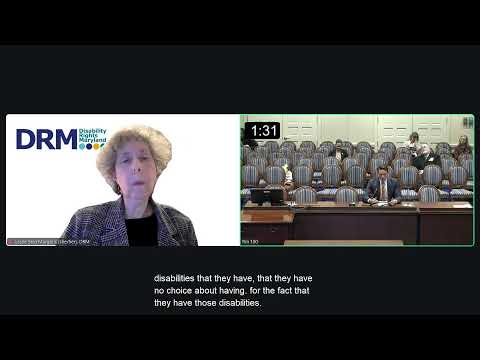
Opponents — the Office of the Public Defender and Disability Rights Maryland — urged an unfavorable report, arguing scientific literature indicates most restorations occur within months and that extending time would detain disabled people longer without benefit, exacerbate hospital bed shortages and risk constitutional problems. Disability Rights Maryland also warned that existing involuntary civil-commitment mechanisms and statutory exceptions already address some circumstances.
Committee exchange: Delegates questioned capacity at state hospitals, the process for recharging charges after dismissal, and whether dismissed defendants can be located for retrial. Witnesses agreed cases affected a very small population, but disagreement remained over bed capacity, restoration likelihood and supervision after dismissal.
Next steps: Committee received both favorable and unfavorable testimony and noted proposed amendments to address protections for people with disabilities while preserving public safety for the rare, high-danger cases; no committee vote occurred on Jan. 27.