Get Full Government Meeting Transcripts, Videos, & Alerts Forever!
Get email alerts on the Transportation topic
No spam. Unsubscribe anytime.
YDOT outlines six-year highway plan for Laramie area, flags funding uncertainty if federal bill lapses
Summary
Wyoming Department of Transportation officials presented District 1's draft State Transportation Improvement Program to the Laramie City Council, highlighting near-term projects (US 287 widening, Grand Avenue overlay, I-80 overlays and bridge work), the preservation-first funding strategy, and uncertainty tied to the federal highway bill expiring in 2026.
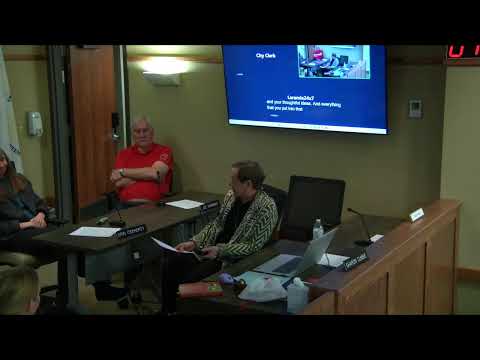
Wyoming Department of Transportation district staff on Tuesday reviewed the draft State Transportation Improvement Program for District 1 with the Laramie City Council and Albany County commissioners, listing projects through 2031 and warning that federal funding uncertainty could disrupt local allocations.
"We have 16,000 lane miles of roads, 6,000 bridges and structures," said Ralph Tarango, district engineer for Southeast Wyoming, as he described the district's asset base and the limits of current funding. Tarango told the council the state returns in federal funds make Wyoming more reliant on federal highway appropriations than many other states.
Ryan Shields, YDOT district construction engineer, walked the council through projects programmed over the next six years, including a 2026 widening of US 287 south of Laramie to a five-lane section with continuous left-turn lanes, an overlay on Grand Avenue, a small bridge replacement on US 30 and the ongoing I-80 preservation work. "This is a project where, you know, we believed in it," Shields said of the US 287 safety-driven exception to YDOT's usual preservation focus.
Shields said about 60% of District 1 construction funding is currently directed to interstates — primarily I-80 — and that YDOT is maintaining a preservation-first approach except where safety or lifecycle conditions justify capacity or replacement projects. He described how YDOT uses pavement and bridge management systems, crash and safety data, and annual public and stakeholder input to prioritize projects for the draft STIP, then rebalance that list before commission approval in September.
Council members pressed YDOT on timing and construction impacts for local work. Shields said the Snowy Range Road rehabilitation slated for 2029 will be a full-depth reclamation that could take "the better part of the summer" and that YDOT will try to phase work to maintain access for businesses and traffic.
Several councilors raised the pending expiration of the federal highway bill. "They don't pass highway bills," Tarango said, noting Congress often resorts to continuing resolutions and that shortfalls would likely require state legislative action to backfill lost federal funds. He urged local officials to monitor and, where appropriate, support advocacy efforts to protect federal transportation funding.
Shields and Tarango encouraged local officials and residents to review the draft STIP and use YDOT's interactive map and comment tools; Shields said YDOT would accept public comment during the draft phase and that the commission publishes the final STIP after approval in September.
The presentation included references to specific grant and program deadlines — for example, a March 1–April 15 window for certain public transit grant applications — and YDOT staff offered contact information and a GRAMA page for grant resources. No council action or formal vote was taken at the work session; the presentation was informational and intended to solicit feedback during the public comment window.
The council closed the work session after routine updates from members and public comments.