Lawmakers consider juvenile firearm early-intervention program that would dismiss charges on completion
Loading...
Summary
House Bill 24-56 would create a prosecutor-approved juvenile firearm early intervention alternative — including 12 months of intensive supervision, therapy and mentorship — with dismissal upon successful completion and fund the program via a $100 increase to concealed pistol license fees; sponsors and law-enforcement groups offered cautious support while defense groups pressed for judicial role and civil-rights protections.
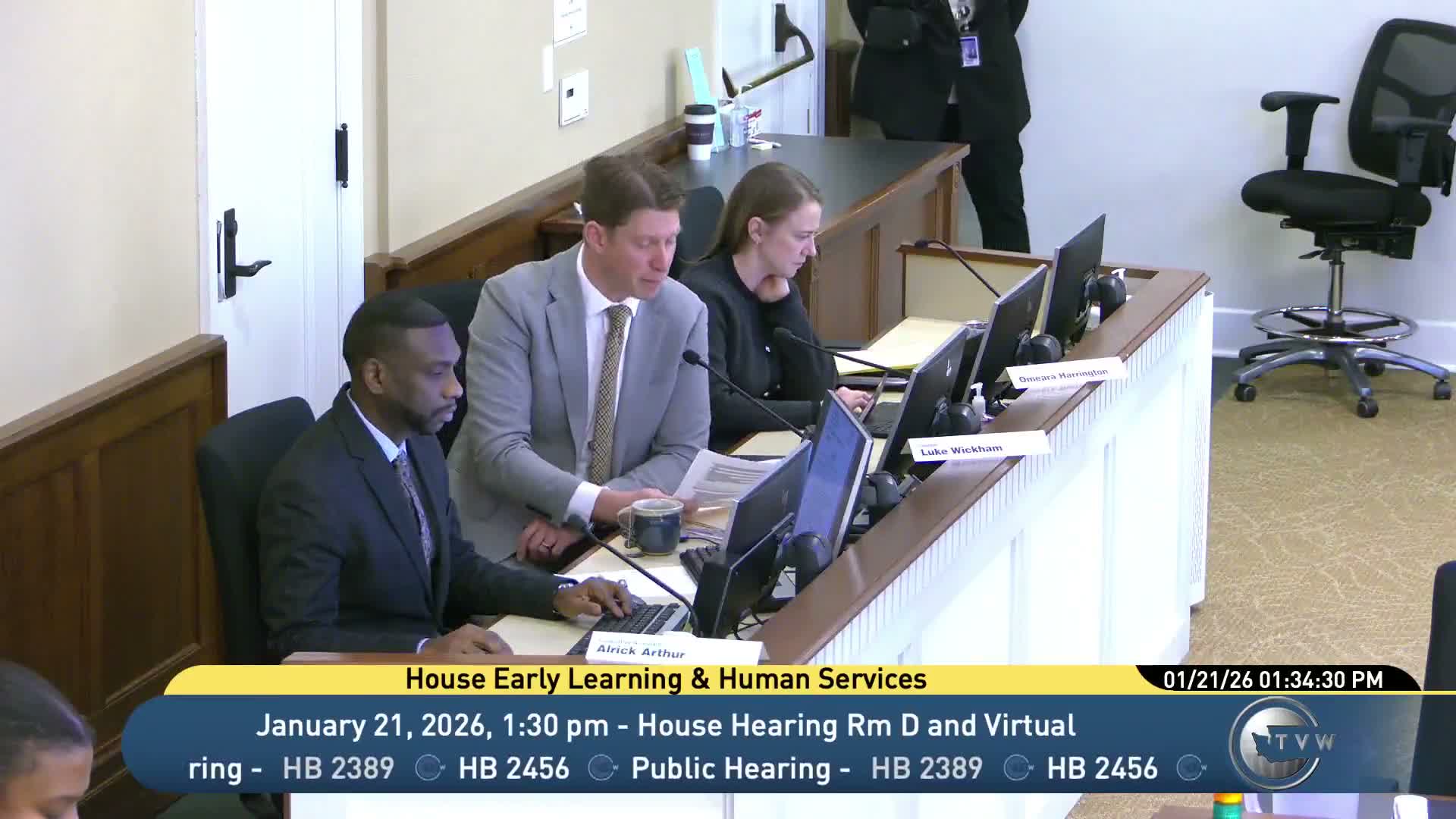
Committee counsel Luke Wickham opened the hearing on House Bill 24-56 by outlining the proposal: the bill establishes a juvenile firearm early-intervention alternative for juveniles charged with unlawful possession of a firearm in the second degree and, if the participant completes the program, requires dismissal of that charge. The alternative requires prosecutor agreement, must be offered within two weeks of filing, and includes 12 months of intensive community supervision with a reduced probation caseload, multi-systemic therapy or other evidence-based services, credible-messenger mentorship, and random suspicionless searches and probation arrest authority under specified conditions. Wickham also noted the bill would raise initial and renewal concealed pistol license (CPL) fees by $100 and deposit the revenues into a newly created juvenile firearm early intervention services account to be used only by appropriation for required services.
Sponsor Representative Lauren Davis (32nd District) told the committee HB 24-56 is intended to “stand in that gap” between the moment a youth is found with a firearm and the eventual resolution of the case, offering close supervision and services rather than immediate confinement. Davis said the bill borrows search language from Idaho parole practice and cited Washington case law that motivated narrow search authority. She provided an illustrative cost estimate of roughly $35,000 per youth (multisystemic therapy ~$14,000; credible messenger program ~$10,000; juvenile probation counselor ~$6,000; a $5,000 flex fund for supports) and defended using a fee increase to fund services, pointing to prior bipartisan uses of fees for related programs.
Supporters including the Center for Children and Youth Justice, community‑violence-intervention practitioners and some law-enforcement groups endorsed the concept of rapid, targeted interventions for youth with guns. Rachel Sawtelle (CCYJ) and William Hairston (regional violence-intervention experience) said research supports quick, community-based, mentorship and focused interventions.
Defense and civil‑rights advocates urged changes to reduce prosecutorial gatekeeping and to preserve judicial discretion. Ramona Brandes and Katie Hurley said prosecutors already have diversion power in many places and that the bill’s reliance on prosecutor approval could limit access to diversion for disproportionately charged youth. Defense witnesses also flagged concerns about suspicionless search authority for juvenile probation counselors, warning it could undermine trust between youth and service providers.
Law enforcement and prosecutors offered conditional support but asked for modifications. James McMahon (Association of Sheriffs and Police Chiefs) said restoring a meaningful diversion tied to immediate supervision could prevent later victimizations, and Russell Brown (WA Association of Prosecuting Attorneys) urged clearer language on “substantial compliance” standards and flexibility on quarterly hearings.
The committee closed the hearing on HB 24-56 after the panel and solicited technical amendments from stakeholders; members left HB 23-89 open for further testimony.