Get Full Government Meeting Transcripts, Videos, & Alerts Forever!
Get email alerts on the Sebb Eligibility topic
No spam. Unsubscribe anytime.
Bill to shorten SEBB eligibility lookback draws praise from substitutes and concern from districts over costs
Summary
House Bill 2160 would presume SEBB eligibility for employees who worked 630 hours in a year when they return the next year to the same type of position, shifting from a two‑year lookback to one year. Substitute educators and unions backed the change as a recruitment and continuity fix; school districts and business officers warned of significant, unfunded costs and administrative complexity.
Representative Birnbaum, prime sponsor of House Bill 2160, told the House Appropriations Committee the bill addresses a common‑sense problem: substitutes and other classified staff who work the 630‑hour threshold one year then lose coverage at the school‑year boundary face disruptions that can force them on to private insurance or Medicaid.
"So what the bill says is once you've worked for that first year, we're gonna presume that you're gonna keep working for that second year, and your health insurance is gonna stay on during that second school year," Representative Birnbaum said, describing the change as a one‑year lookback that would create presumptive eligibility on the first day of employment for returning workers in the same type of position.
Workers, unions and advocates testified in support. Jared Mason for the Washington Education Association said the bill would reduce disruptive coverage gaps and help address shortages in substitutes, bus drivers and other classified roles. Multiple substitute teachers and paraeducators described personal hardships from being enrolled for only part of a year and urged the committee to adopt the one‑year lookback to provide continuous coverage.
Opponents included the Washington Association of School Administrators, Washington Association of School Business Officials, Lake Washington School District and other district representatives who said the change would be an unfunded mandate that increases district costs and complicates administration. Fred Yancey (WASBO) cited district cost projections (for example, Edmond School District estimated an additional $6.4 million in one example) and said the bill "is not simple, and it is not cheap." Barbara Postumus, Lake Washington School District CFO, estimated her district might pay for an additional 80–100 substitutes at a cost of roughly $1.3–1.6 million annually under the change.
Dave Eisminger of the Health Care Authority explained how SEBB eligibility is currently determined, noting there is no statutory definition of "position" (it is treated at a macro level in guidance and WAC), described benefits‑administrator worksheets and appeals, and highlighted that the funding rate is an averaged payment that already assumes some waiver behavior and includes non‑waivable items such as dental and life insurance. He also noted the rule history behind two‑year averaging and why the SEBB program uses multi‑year concepts in some contexts.
Committee members asked about the possibility of aligning definitions with OSPI duty codes, the mechanics of cross‑district hour tracking, potential impacts on retirees who avoid benefits to preserve Medicare coverage, and which entity (state general fund or local levies) would bear costs when districts fail to apply rebuttals perfectly. Several members signaled openness to amendments to tighten definitions and asked for further fiscal analysis before advancing the bill.
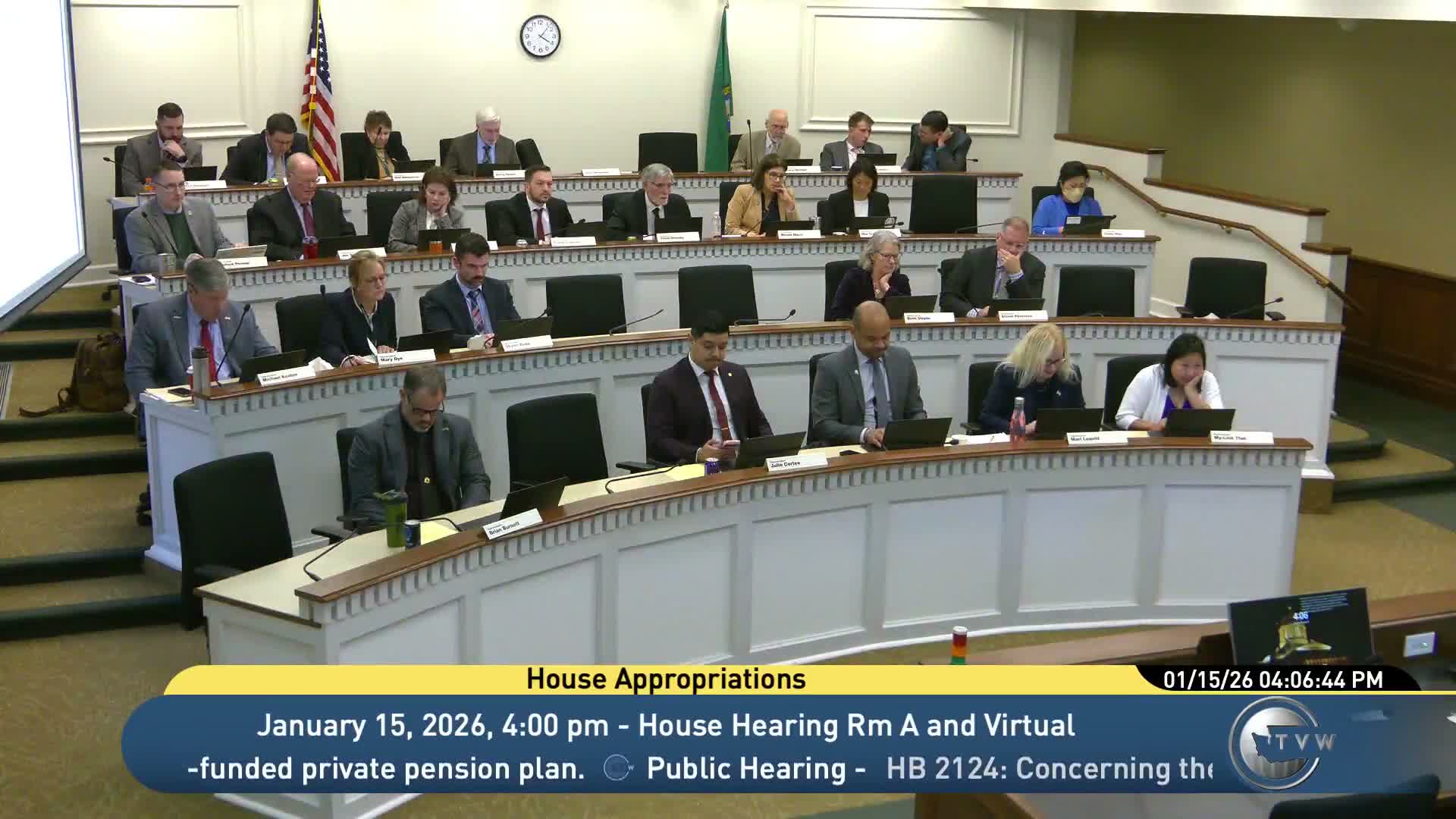
The committee closed public testimony on HB 2160 and adjourned the hearing.