Get Full Government Meeting Transcripts, Videos, & Alerts Forever!
Get email alerts on the Academic Programs topic
No spam. Unsubscribe anytime.
Senate hears competing views on bill to identify and review low‑enrollment degree programs
Summary
Senate Bill 59‑09 would require boards to list undergraduate programs averaging fewer than 10 graduates per year and, after three consecutive years, begin formal discontinuance review with teach‑out planning; public university faculty opposed numeric cutoff and warned of disproportionate impact on programs serving underrepresented students.
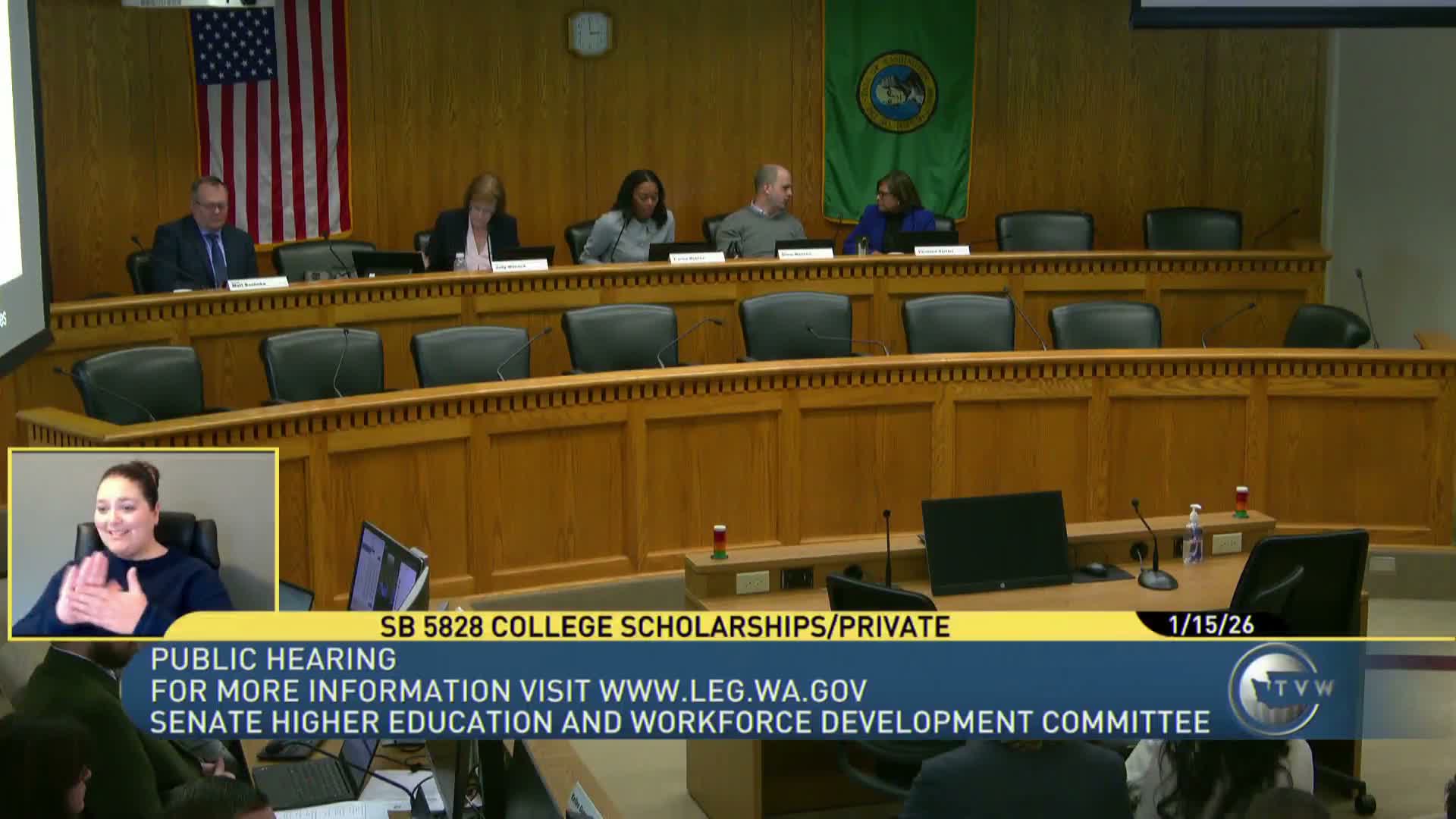
Senator Matt Behnke introduced Senate Bill 59‑09 in the Senate Higher Education and Workforce Development Committee, saying the measure would bring transparency, accountability and efficiency to public baccalaureate institutions by requiring governing boards to identify undergraduate degree programs averaging fewer than 10 graduates per academic year (five‑year average) and subject programs that appear on the list three consecutive years to a discontinuance review.
Staff described the review process, which must consider extenuating circumstances such as whether a program is new, equity and access implications, workforce demand, accreditation and licensure requirements. Behnke said the bill protects students through required teach‑out plans and argued that data‑driven oversight would better align programs with workforce needs.
Testimony was mixed. David Bridal (Eastern Washington University) and other university leaders said transparency and accountability could build public trust. Faculty legislative representatives (Sam Ligon, Bidisha Biswas, Beth Ebel, Matthew Altman) and student lobbyists urged caution: they argued a single numeric cutoff is blunt, will disproportionately affect programs that serve underrepresented groups, and that institutional governance structures are better suited to make these judgments. Several witnesses emphasized the importance of considering course enrollments, program value beyond headcount and potential impacts on diversity of curricula.
The committee closed the hearing after hearing panels from faculty, students and administrators. No committee vote was recorded.