Get Full Government Meeting Transcripts, Videos, & Alerts Forever!
Get email alerts on the Higher Education Funding topic
No spam. Unsubscribe anytime.
Senate hearing spotlights push to restore Washington College Grant awards for private nonprofits
Summary
Senate Bill 58‑28 would change how maximum Washington College Grant and College Bound Scholarship awards are calculated for private not‑for‑profit four‑year institutions—linking them to average awards at public research institutions—to restore funds cut the prior session; college presidents, students and business groups largely supported the change, public faculty raised concerns about prioritization.
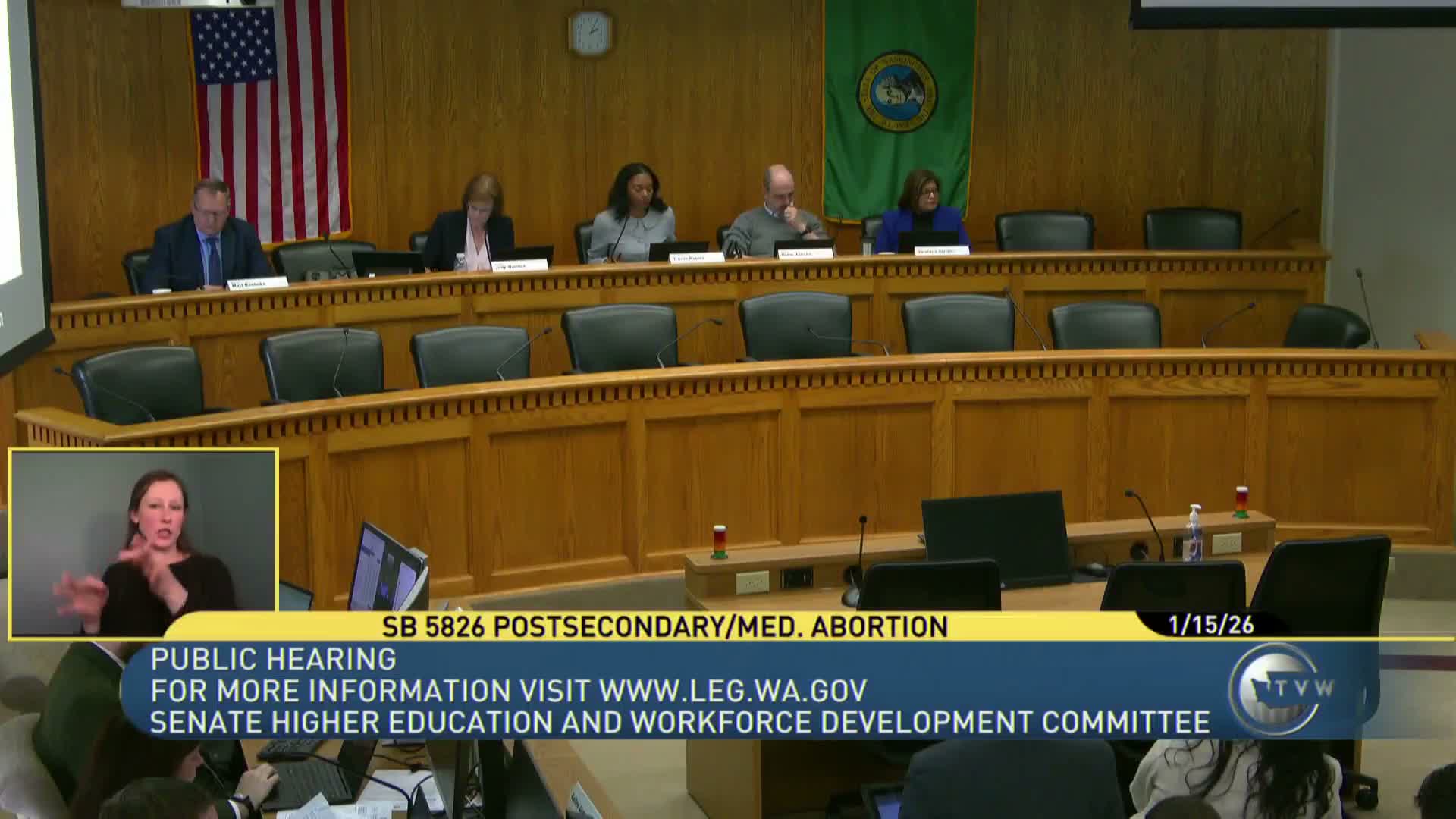
Chair Tawanna Nobles opened a public hearing on Senate Bill 58‑28, a proposal to adjust how the Washington College Grant and College Bound Scholarship calculate maximum awards for students attending private not‑for‑profit four‑year institutions. Staff told the committee the change would take effect beginning in the 2026–27 academic year (for the Washington College Grant) and 2027–28 for College Bound awards.
Sponsor Nobles framed the bill as restoring fairness and predictability for students at private nonprofit campuses, saying the proposal does not expand eligibility but updates statutory award formulas so students can make informed choices about where to attend. Presidents and higher‑education advocates attended in force: Alan Belton, president of Pacific Lutheran University, said last session’s cuts fall hardest on economically vulnerable students and urged a do‑pass recommendation; Katya Passerini, president of Gonzaga University, and Emily Whitman of the Association of Washington Business also testified in support, saying the WEA account has grown and funds exist to support the change.
Students from multiple private institutions described how the grants and scholarships made attendance possible and urged lawmakers to restore awards. Faculty legislative representatives from public institutions (Sam Ligon, Bidisha Biswas) and other witnesses cautioned that restoring funds to private non‑profit institutions while public campuses face cuts raises trade‑offs; public faculty argued decisions about program funding and cuts are better left to institutional governance and warned a simple dollar‑averaging approach could have uneven effects across campus types.
Committee members asked clarifying questions about how the formula differs from prior statutory language and whether the bill would reinstate the 50 percent of prior awards that were reduced last year; staff explained the bill restores the previous averaging approach for private non‑profit awards. The committee closed the hearing after extensive testimony; no committee action was recorded.