Get Full Government Meeting Transcripts, Videos, & Alerts Forever!
Get email alerts on the Reproductive Health topic
No spam. Unsubscribe anytime.
Committee considers bill requiring public colleges to provide or connect students to medication abortion
Summary
Senate Bill 58‑26 would require student health centers at public colleges and universities to offer medication abortion access by 2027–28 through public programs, formal agreements with safety‑net providers, or other means; testimony split sharply between reproductive‑health advocates and faith‑based and conservative groups.
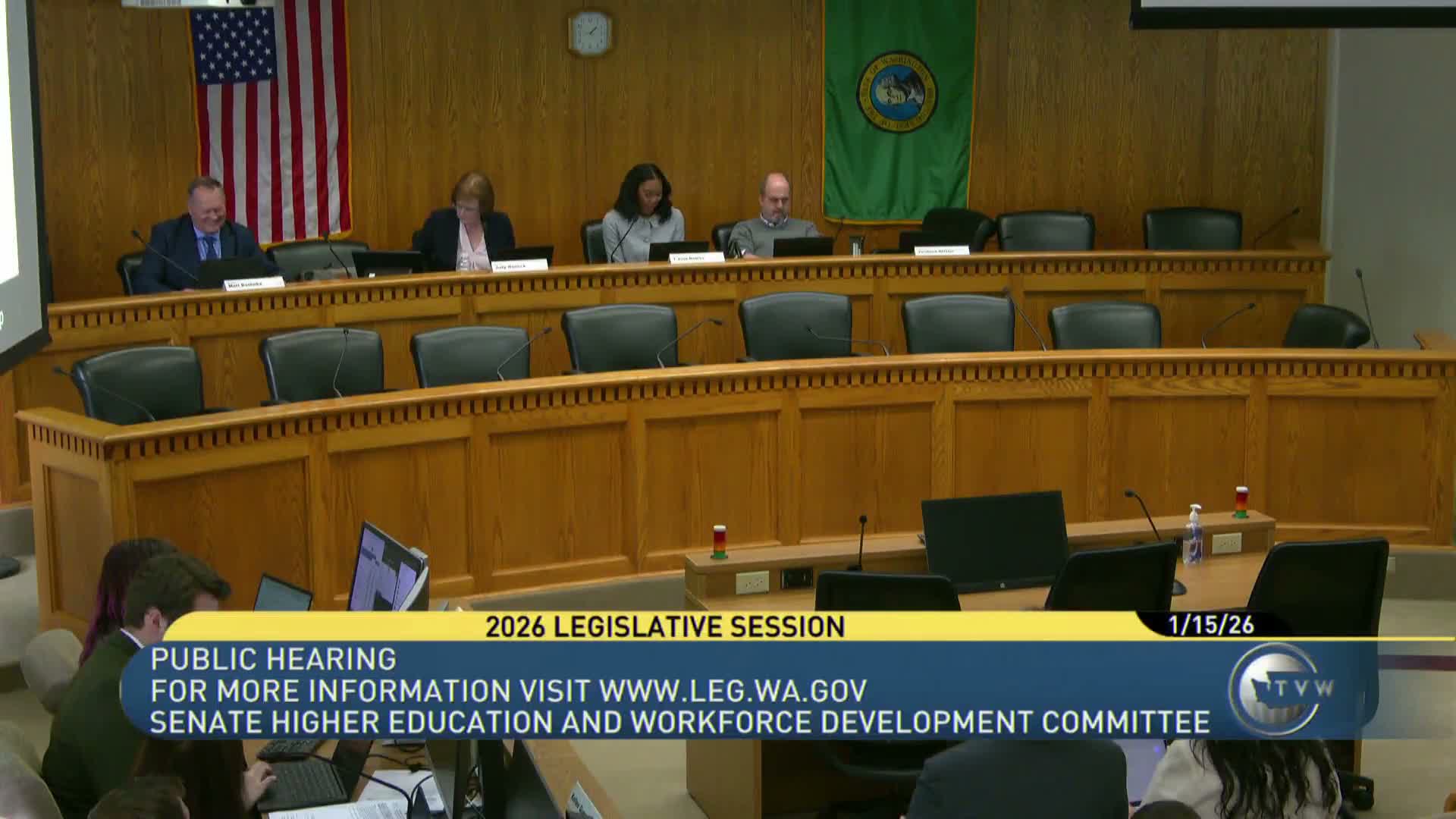
The Senate Higher Education and Workforce Development Committee on Jan. 30 heard extensive testimony on Senate Bill 58‑26, a proposal that would require public postsecondary student health centers to provide access to medication abortion by the start of the 2027–28 academic year, either directly through a program, by formal agreement with a safety‑net provider, or by other means.
Committee staff Kelly Gunn told senators that institutions without health centers must provide information and referrals and maintain a comprehensive web page detailing services and resources. Sponsor Chair Tawanna Nobles said the bill is about “meeting students where they are” and removing logistical and financial barriers that force some students to choose between seeking care and staying enrolled.
Supporters — including Haley Gray, Washington campus coordinator for Advocates for Youth, and student witnesses such as Sullivan Taylor and Anna Raider — emphasized students’ logistics and vulnerability. Sullivan Taylor, a Clark College student, said many students travel up to 90 minutes for care and that the bill would reduce wait times and help survivors of violence. Clarice Sandvik cited clinical effectiveness and safety statistics for medication abortion and urged lawmakers to protect access for students who come from states with more restrictive rules.
Opponents included Theresa Shrimp, who said the bill is “based on the false premise” of widespread access barriers and disputed assertions about average wait times; Eric Lundberg called the bill “one of the worst pieces of legislation” and objected to language declaring access a human right; Jean Hill of the Washington State Catholic Conference expressed deep concerns about provisions that describe abortion as a human right and urged the committee to vote no.
Testimony also included personal accounts. Nicole Peterson described a traumatic miscarriage while using mifepristone and misoprostol and said she would not have felt safe undergoing care at a student health center. Sunny Taylor and others raised safety and mental‑health concerns and urged stronger supports for pregnant and parenting students instead of expanding medication access.
Committee members asked few procedural questions during the panels and closed the hearing after multiple panels spoke for and against the bill. No vote was taken during the hearing; committee staff noted the bill had been before the committee in a prior session.