Get Full Government Meeting Transcripts, Videos, & Alerts Forever!
Get email alerts on the Veterans Education topic
No spam. Unsubscribe anytime.
Senate committee hears bill to align Washington tuition waivers for veteran survivors with federal rules
Summary
Senate Bill 59‑54 would expand state mandatory tuition‑and‑fee waiver eligibility for dependents and surviving spouses/partners to match federal Survivors and Dependents Educational Assistance (DEA) timing rules; veterans groups testified in favor, saying the change would prevent families from losing benefits while awaiting VA certification.
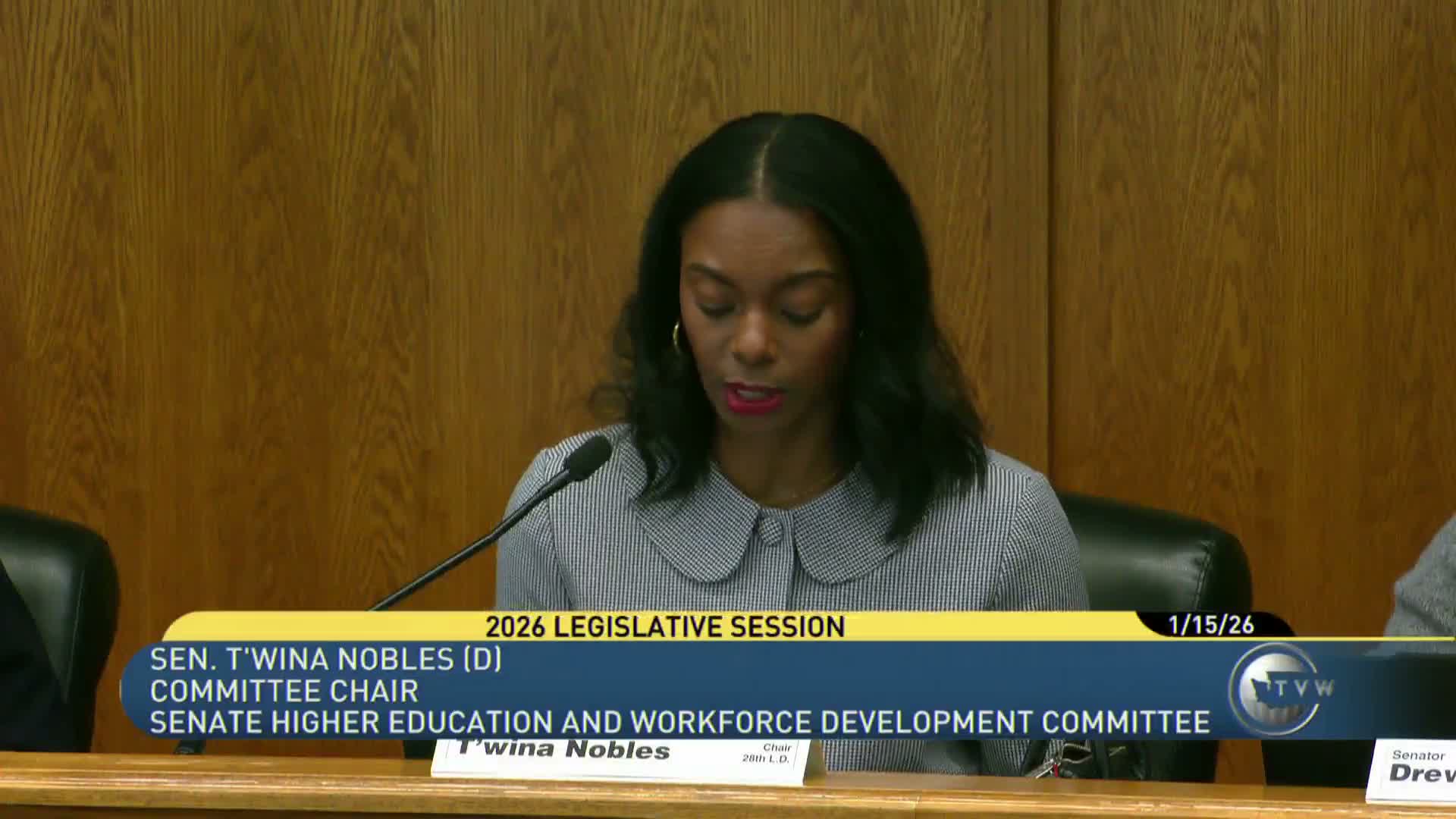
Senators and witnesses in the Senate Higher Education and Workforce Development Committee on Jan. 30 heard a briefing and public testimony on Senate Bill 59‑54, which would align Washington’s mandatory tuition‑and‑fee waiver for dependents and survivors of eligible veterans and National Guard members with federal DEA (Dependents’ Educational Assistance) eligibility periods.
Matt Sheppard Conninger, staff to the committee, told lawmakers the bill would allow a child of an eligible veteran or National Guard member to qualify for the state waiver before age 17 and after age 26 if they meet the federal program’s eligibility periods, and would permit surviving spouses or domestic partners to use the waiver beyond the current 10‑year state window if federal criteria apply. Sheppard Conninger said each public institution administers its own waiver and that a preliminary fiscal note is available.
Sponsor Senator Wagner framed the bill as a constituent‑driven fix for delays in VA certification. “What this bill does is it brings state requirements in alignment with the federal requirements,” Wagner said, arguing that families who wait on VA determinations sometimes lose state benefit windows and should not lose access because of administrative delays.
Veterans organizations voiced support. Alan Acosta, post commander of the American Lake chapter of the Military Order of the Purple Heart, said the measure would expand educational opportunities for surviving family members and urged lawmakers to “honor the veterans’ service and sacrifice” by joining other states that offer similar benefits. Anthony Barela, a U.S. Army retiree with the Veterans Legislative Coalition and Association of the United States Army, said the bill would reduce barriers to educational access and help keep talent in Washington.
No committee action or vote was recorded during the hearing. The public hearing on SB 59‑54 was closed after testimony; committee staff indicated a fiscal note is available for review. The committee moved on to other bills on the agenda.