Get Full Government Meeting Transcripts, Videos, & Alerts Forever!
Get email alerts on the Police Accountability topic
No spam. Unsubscribe anytime.
House committee hears competing views on HB 2220 to change CJTC decertification rules
Summary
Representative Ari Levitt told the Committee on Community Safety HB 2220 would raise the burden of proof for license suspension or revocation to clear and convincing evidence, add a law‑enforcement member to the CJTC hearings panel, and require biennial training reports; law‑enforcement groups supported the bill as restoring fairness, while CJTC staff and civilian oversight advocates warned it would weaken accountability and lacks supporting data.
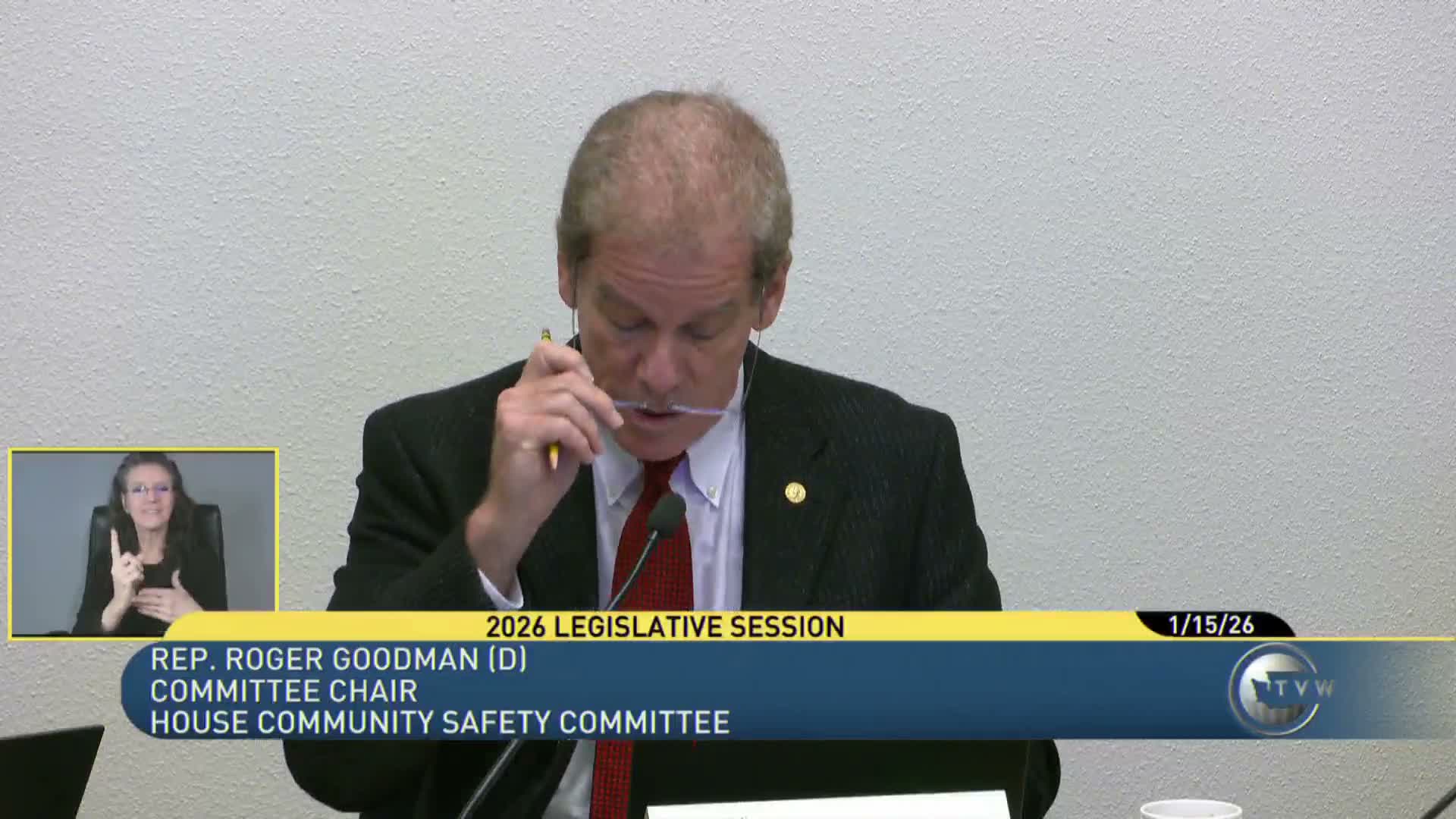
Representative Ari Levitt, sponsor of House Bill 2220, told the House Committee on Community Safety on Jan. 15 that the bill would add statewide reporting on peace‑officer training, restore a higher evidentiary standard for revocation or suspension of certifications, and add a third law‑enforcement member to CJTC hearing panels to make them evenly split between clinicians/civilians and professional officers. "This is not intended to roll back the good work… it is intended to honor that good work," Levitt said, arguing the changes would improve transparency and recruitment across the state.
The bill’s staff briefing described three main changes: changing the standard of proof for revocation/suspension from preponderance to clear and convincing, increasing hearing‑panel membership by one peace or corrections officer, and establishing biennial reporting obligations for law‑enforcement agencies (agency reports beginning 07/01/2027; CJTC summary reports beginning 07/01/2028). Lena Langer, counsel to the committee, emphasized the reporting schedule and clarified that "biennial" means every two years.
Law‑enforcement advocates offered strong support. Teresa Taylor of the Washington Council of Police and Sheriffs said the bill would "restore balance" and "uphold officer due‑process rights" while preserving community representation on hearing panels. Jeff DeVere, a retired Washington State Patrol captain, said the measure would give officers confidence that "we've given them every opportunity" before a career‑defining decertification.
By contrast, Kimberly Bliss, assistant director at the Washington State Criminal Justice Training Commission, said the agency’s formal position was "other," and she urged caution. Bliss called the bill’s proposed definition of probation "problematic" because it removes enforceable consequences and noted the legislature considered and rejected a higher clear‑and‑convincing standard five years ago during enactment of Engrossed Second Substitute Bill 5051. "The system the legislature enacted in 2021 already meets those standards," Bliss told the committee.
Civil‑society and oversight witnesses pressed the committee not to advance the legislation. Amy McCollum, a civilian oversight practitioner from Spokane, testified in strong opposition, saying the change would "water down civilian oversight at the state level" and risk allowing officers who have committed serious misconduct to remain in the field. Martina Morris and Eliana Machevsky cited CJTC data during testimony: the agency has received roughly 1,500 adjudicated cases under the new system, about 117 decertifications (mostly voluntary or default surrenders), and, the witnesses said, only six contested hearings have led to decertification since the statute changed.
Committee members asked how frequently panels have split and whether a 3‑3 tie would deadlock decisions. Levitt and several witnesses replied that most recent panels have been unanimous or near‑unanimous and that the bill’s language provides that if a panel cannot reach a majority, no action is taken and the matter may be reexamined by certification staff or brought again.
The committee limited public testimony to two minutes each due to time constraints and closed the public hearing on HB 2220 after a broad record of support and opposition. The bill received no committee vote at this hearing; members said they expect additional amendments and follow‑up briefings before any committee action.
The hearing drew community advocates, CJTC staff, law‑enforcement associations, and current and former commissioners; the committee recorded technical questions about the bill’s definitions, how probation would operate under the proposed language, and the practical effect of raising the evidentiary standard.