Get Full Government Meeting Transcripts, Videos, & Alerts Forever!
Get email alerts on the Curriculum Instruction topic
No spam. Unsubscribe anytime.
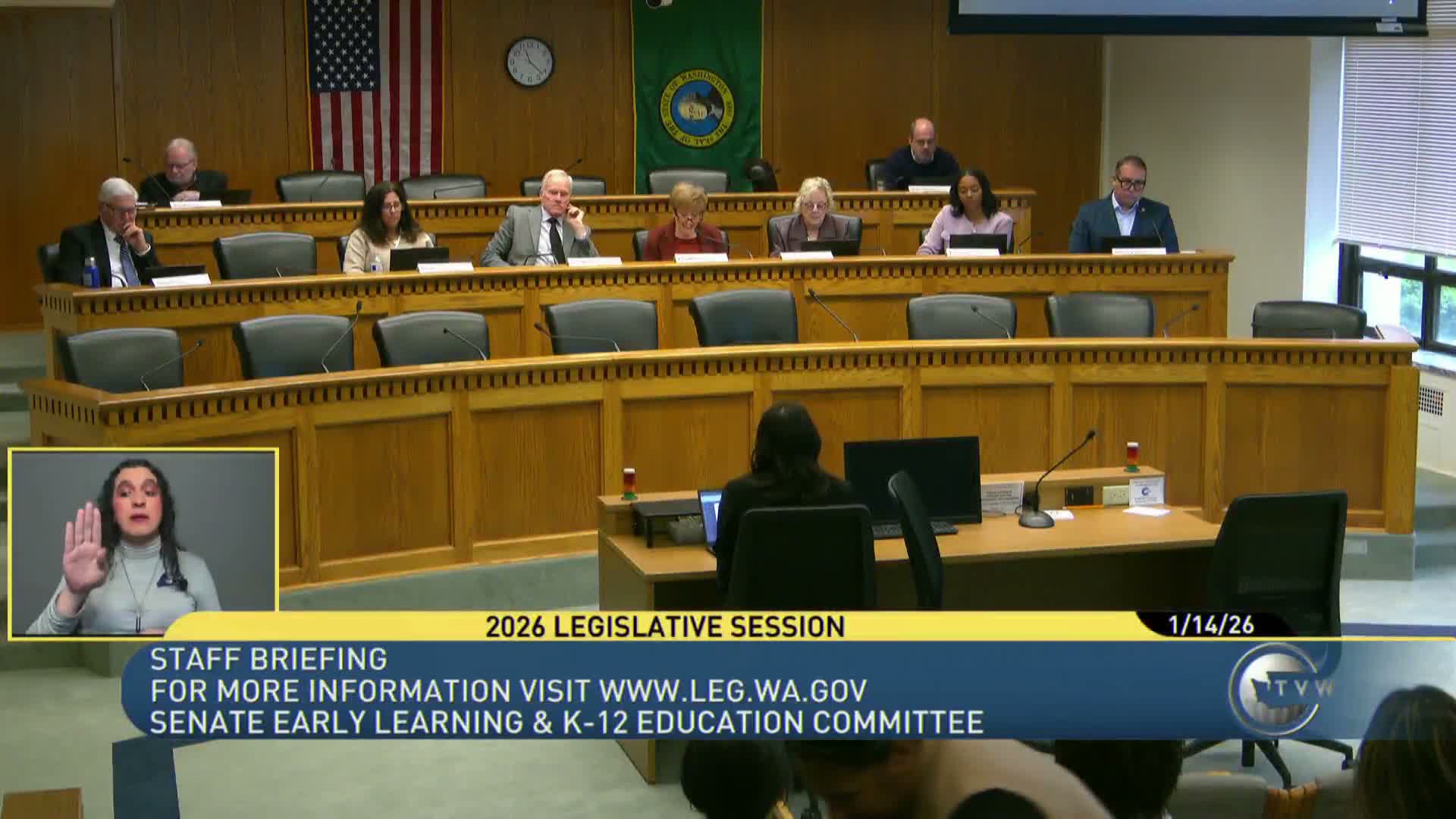
Committee hears substitute for SB 5574 to embed Asian American, NHPI, Latino and Black histories in K–12 social studies
Summary
A substitute to SB 5574 would require districts to adopt policies to integrate Asian American, Native Hawaiian & Pacific Islander, Latino American and Black American histories into required social studies courses as part of regular curriculum review, with implementation timelines tied to OSPI standard revisions and reporting beginning June 2030; broad public testimony favored the measure.
Committee staff described the proposed substitute to SB 5574 as directing school districts to adopt a policy ensuring instruction in Asian American, Native Hawaiian & Pacific Islander (NHPI), Latino American, and Black American history is included in one or more required social studies courses during regular curriculum review cycles. District policy adoption is required by Sept. 1, 2028, or after OSPI adopts revised social studies standards, whichever is later; instruction must be provided beginning in the 2029–30 school year, and districts must report annually beginning June 2030 that the instruction is planned, ongoing and systematic.
Senator Tawanna Nobles framed the bill as broadening curriculum so students do not see histories minimized or omitted and emphasized the goal of countering hate and misinformation. "This bill affirms a simple principle that decisions that affect our students' future must be made by people and not by algorithms," she said in earlier testimony regarding a different bill; for SB 5574 the committee heard a similar emphasis on inclusion and student belonging.
Seventeen testifiers representing parents, teachers, students and community organizations gave mostly supportive testimony. Angelique Chong, director of Make Us Visible Washington, said the bill does not create a new course or graduation requirement but integrates histories into existing U.S. and Washington history instruction. Thelma Fontenilla (middle‑school teacher) and Ross Thompson (Association of Washington School Principals) said credible free resources already exist and many educators are already doing this work; Thompson noted the substitute aligns with forthcoming revisions to social studies standards.
Several students and young adults spoke about personal experiences of omission or erasure in curriculum and urged action. One remote commenter offered strongly critical remarks about community priorities; the chairwoman cut the comment short for time and to avoid personal attacks. The substitute does not supersede 'from time immemorial' tribal curriculum and is explicitly supplementary to ethnic studies resources.
The committee did not take a vote at the hearing; staff requested materials offered by organizations to support implementation guidance.