Get Full Government Meeting Transcripts, Videos, & Alerts Forever!
Get email alerts on the Ai Policy Schools topic
No spam. Unsubscribe anytime.
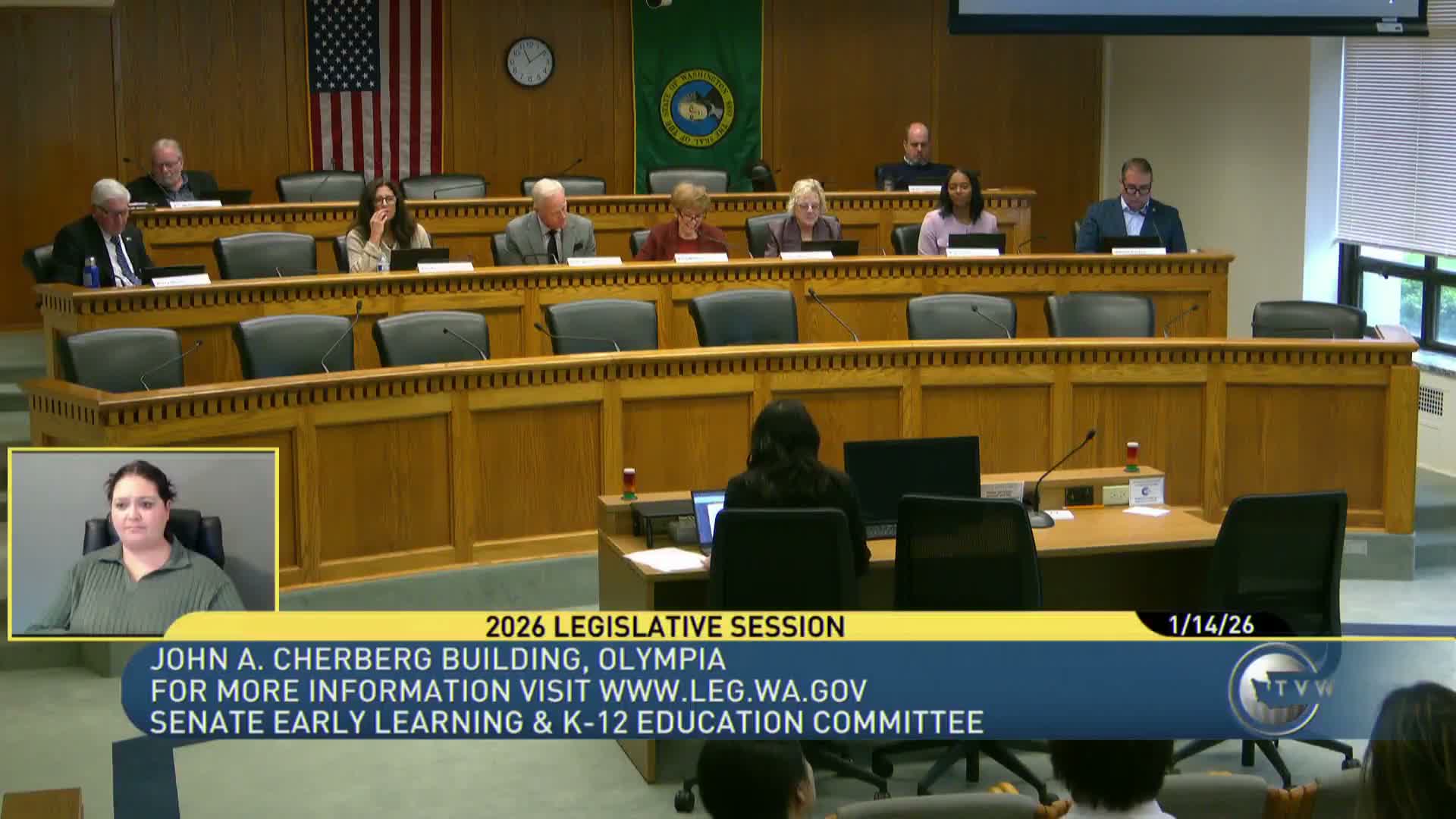
Lawmakers hear bill to ban certain school uses of AI and automated surveillance
Summary
SB 5956 would ban automated‑only student discipline, predictive risk scores, watch lists, and biometric inference of emotions in public schools; sponsors and civil rights and privacy advocates urged support and OSPI/WASDA guidance and vendor limits were included in the proposal.
Senator Tawanna Nobles told the committee that Senate Bill 5956 is intended to keep "people, not algorithms" making disciplinary and consequential decisions about students and to prevent automated systems from magnifying existing disparities.
Committee staff Eileen Cotto described three components of the bill: six specific prohibitions on the use of automated decision systems and surveillance technology as the sole basis for disciplinary actions (including suspensions, expulsions, referrals to law enforcement, assignment to alternative education settings, risk scores, and certain biometric inferences); updated OSPI guidance and model policies developed with WASDA to promote human oversight and vendor evaluation; and limits on disclosure of student personal information to law enforcement except when required by state or federal law or when there is an imminent likelihood of serious physical harm.
Derek Harris, executive director of the Black Education Strategy Roundtable, testified that automated systems have produced false alarms and data breaches in the past and can disproportionately harm minoritized students; he cited a public records release of nearly 3,500 unredacted student documents and described the risk of inaccurate surveillance. "False alarms...have triggered unnecessary trauma of our teenagers," Harris said. John Pincus, a technologist who served on the state's automated decisions work group, urged adding clear language that limits contractor and service provider disclosures and supported the bill's bans on predictive risk scoring and facial recognition surveillance.
The committee had questions about overlaps with existing intervention programs and emphasized that the bill targets conclusions drawn automatically by technology rather than the underlying data available to educators. No vote was taken at the hearing.