Get Full Government Meeting Transcripts, Videos, & Alerts Forever!
Get email alerts on the Land Use Conservation topic
No spam. Unsubscribe anytime.
Bill to Limit Conservation District Land Purchases Draws Strong Opposition from Districts and Regional Partners
Summary
House Bill 2,154 would bar conservation districts from acquiring agricultural parcels of 20 acres or more and require statewide inventories; supporters say it protects generational farmers, while conservation districts and regional partners warn it would remove a tool to preserve farmland and help new farmers access land.
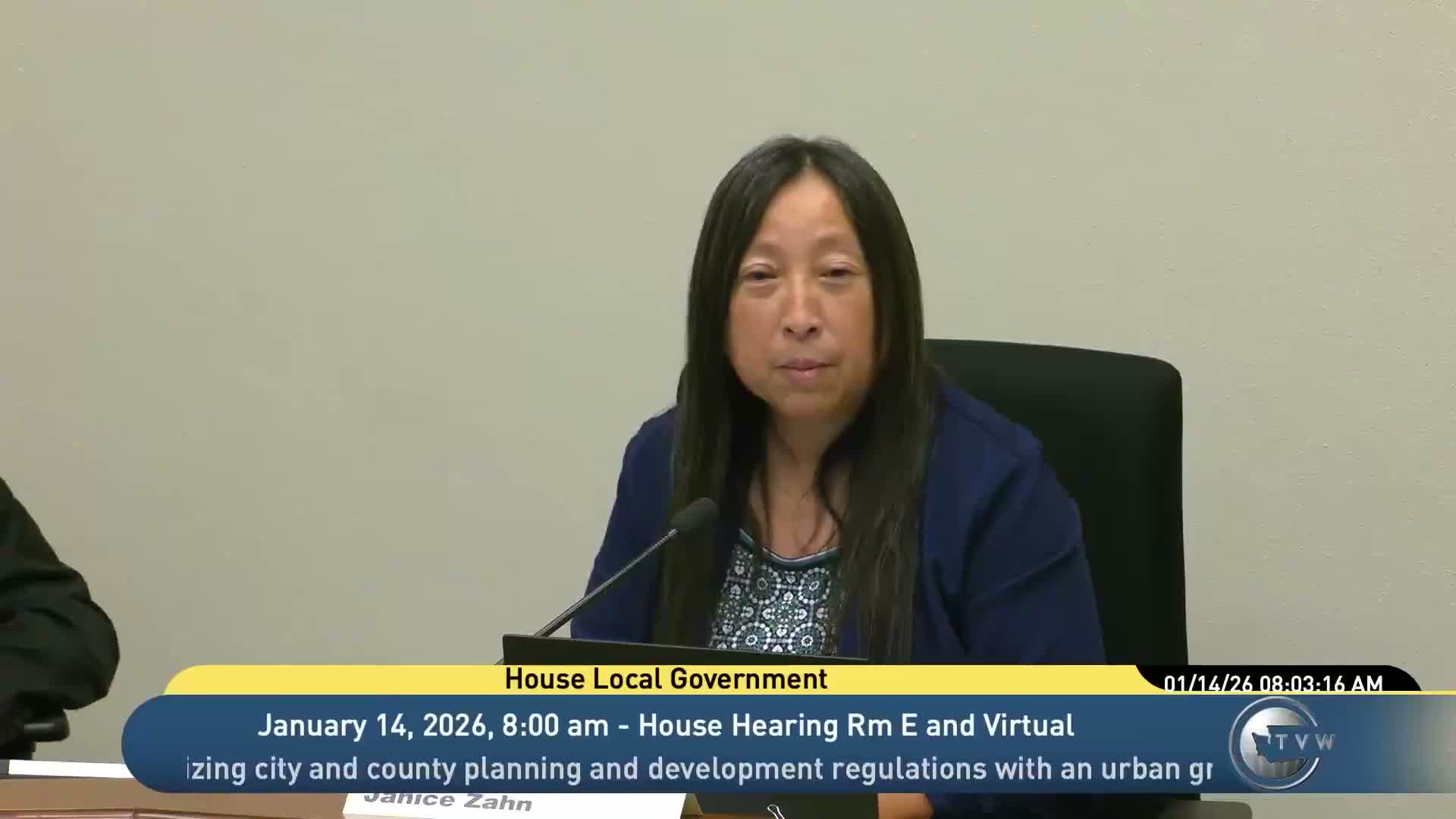
Representative Janice Saan, presiding over the House Local Government Committee, opened the public hearing on House Bill 2,154, which would prohibit conservation districts from purchasing or acquiring interests in real property of 20 acres or larger that were actively used for agricultural production prior to acquisition and require districts to inventory large agricultural holdings and post them via the Department of Agriculture.
Kellen Wright, staff to the committee, told members the measure would require each conservation district to report legal descriptions, water rights and recent crops for properties identified, and that inventories would be posted by the Department of Agriculture. "The bill before you is House Bill 2,154, an act relating to land ownership by conservation districts," Wright said during the briefing.
Sponsor Representative Joe Schmick (9th Legislative District) said the bill aims to protect private purchase opportunities for farmers. "When a soil conservation district . . . [uses] taxpayer dollars to compete for that land in the private market," Schmick said, "they pay a premium price, and they set the market," which he argued can make it harder for private growers to expand.
Conservation districts and allied organizations told the committee the bill would undermine farmland preservation tools and limit options for landowners who voluntarily wish to conserve land. Tom Salzer, executive director of the Washington Association of Conservation Districts, said districts typically operate on a voluntary basis without taxing authority and use a range of tools — donations, easements, acquisitions and leasing — to keep land in production and provide affordable access for farmers. "House Bill 2,154 directly restricts those rights," Salzer said in testimony opposing the bill.
Don Gourley of the Puget Sound Partnership and multiple county conservation district directors echoed those points, noting acquisitions are often donated and that districts lease or manage lands to keep them in agricultural production and for education. Gourley said conversion pressures in the Puget Sound largely come from industrial and residential development rather than conservation activity.
Committee members asked how commonly districts hold agriculturally productive land and whether acquisitions have raised local prices. Salzer said at least four districts currently hold land that would meet the sponsor's definition and that those parcels were donated rather than purchased; he told the committee districts typically pay appraised value and have been cost-conscious in acquisitions.
The committee took extensive testimony from conservation district leaders representing diverse regions who urged the committee to seek more targeted approaches to address specific parcels or concerns rather than enacting a broad statewide prohibition. There were no formal actions or votes recorded in the hearing. The committee closed the public hearing after hearing in-person and remote testimony and signaled further work and conversations will continue.