Get Full Government Meeting Transcripts, Videos, & Alerts Forever!
Get email alerts on the Economic Development topic
No spam. Unsubscribe anytime.
Senate committee hears Commerce pitch for statewide economic development strategy and private sector 2040 vision
Summary
Department of Commerce briefed the Senate Business, Trade and Economic Development Committee on a proposed Washington statewide economic development strategy, emphasizing data‑driven sector plans and stakeholder outreach; the Association of Washington Business presented a complementary private‑sector 'Washington in the Making 2040' vision.
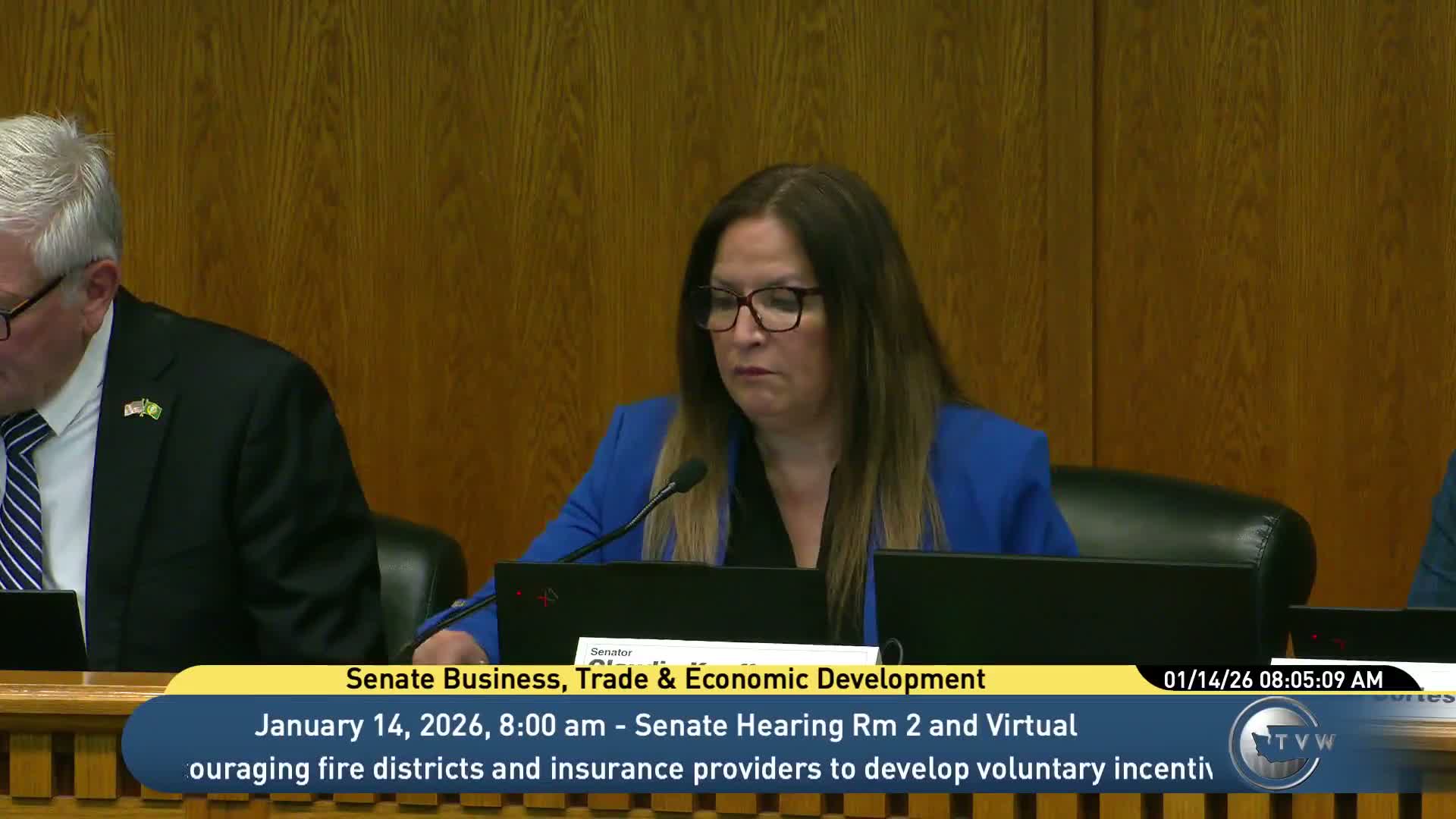
OLYMPIA — The Senate Business, Trade and Economic Development Committee on Jan. 14 heard a Department of Commerce presentation on a proposed statewide economic development strategy aimed at aligning state agencies, local partners and the private sector behind job creation and investment.
Andrea Chartock, assistant director of the Department of Commerce’s Office of Economic Development and Competitiveness, told the committee "Commerce was created by RCW 43.330" and described a strategic planning exercise the Office is leading. She urged a mix of sector‑level analysis and broad stakeholder consultation, and said the Office would carry out annual "pause and reflect" reviews while formally updating the strategy at least every five years.
The Commerce presentation outlined the agency’s programs — small business finance, export assistance, business development and industry sector work — and cited recent results: Chartock said the business development unit facilitated nearly $8,000,000,000 in capital investment over a recent five‑year period, resulting in roughly 11,000 new jobs, 38 business relocations and 32 expansion or retention projects. On exports, Chartock said the small business export program has generated over $118,000,000 in exports from small businesses and noted federal voucher funding delays for the State Trade Expansion Program, calling the lack of federal allocation "a bit of a question mark."
Chartock gave a specific example of trade‑assisted growth: Macabe Seafoods, a tribal business that participated in a Washington delegation at the Global Seafood Expo in Barcelona, which she said "grew from just 6 boats to over 30 in 2025," creating sustained income for a remote community.
The Association of Washington Business (AWB) and the Washington Roundtable also briefed the committee on a private‑sector plan called "Washington in the Making 2040." Chris Johnson, AWB president, said the plan is a "roadmap and a vision for the future of our state's economy" built from thousands of resident responses and hundreds of small‑business interviews. Michelle Hagee, project manager for the effort, said the engagement produced four pillars and 13 goals, including workforce development, regulatory and permitting reform, infrastructure and place‑based strategies.
AWB outlined aspirational targets the plan promotes: a goal to create 10,000 new work‑based learning experiences annually, a target to make Washington a top‑10 state for starting and growing businesses, and an objective to support construction of 1,000,000 housing units by 2040 to address affordability and workforce needs.
Committee members pressed presenters on implementation and scope. Senator Jeff Wilson asked about review frequency and stakeholder engagement; Chartock said the Office expects annual learning reviews with sector and regional consultations before finalizing plan elements. Senator Hashigawa asked about foreign trade offices; Commerce staff said five limited international offices are active now and that the number could return to about a dozen if pending federal funds are received.
Why it matters: Lawmakers flagged housing, workforce and regulatory barriers as central to executing any statewide strategy. The presentations framed the state‑level plan as a coordinating tool — not a single prescriptive program — that would rely on sustained agency cooperation and public‑private partnership.
Next steps: Commerce and AWB said they will continue outreach with legislators and local stakeholders. The committee did not take formal action on a bill tied to the Commerce plan during the session; presenters encouraged senators to review agency materials and forthcoming analyses such as AWB’s regulatory study.