Get Full Government Meeting Transcripts, Videos, & Alerts Forever!
Get email alerts on the Council Actions topic
No spam. Unsubscribe anytime.
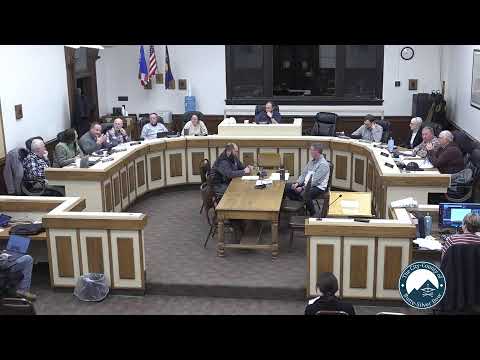
Council places multiple communications on file and records routine committee motions
Summary
The council recorded a series of routine motions to place communications on file, including the repository siting report and several land‑sale and budget items; one attempted referral regarding AI surveillance questions failed on a 2‑9 vote before the council placed the item on file 10‑1.
During the Committee of the Whole meeting, commissioners handled numerous communications and recorded formal votes to place items on file or hold them pending committee reports. These routine votes document the council’s procedural disposition of items and create a public record for further action.
Key votes and motions (recorded tallies):
- Communication 2621 (Repository Siting Study): Motion to place on file — recorded tally 11 yea, 0 nay (motion passed).
- Communication 2026‑01 (recognition / other): Motion to place on file — recorded tally 11 yea, 0 nay (motion passed).
- Communication 2626 (Emergency Operations Center report): Motion to place on file — recorded tally 11 yea, 0 nay (motion passed).
- Communication 2624 (AI surveillance public communication): An initial substitute motion to refer the communication and submitted questions to the county attorney and IT for formal response failed, tally 2 yea, 9 nay (motion failed). The council then voted to place the communication on file; recorded tally 10 yea, 1 nay (motion passed).
- Communication 2026‑34 (Transpac Manufacturing purchase and sale agreement): Motion to concur and place on file (recorded tally 11 aye, 0 nay) — motion passed. County Attorney noted a revision (typo) to section 11.1 that will be corrected prior to closing.
- Multiple other communications (land purchases, health department budget items, bid openings and strategic‑plan scheduling) were considered and either held pending committee reports or placed on file with recorded votes that were entered into the record as unanimous or near‑unanimous.
Why it matters: These dispositions establish which items remain active for follow up, which are scheduled for future public hearings, and which will require staff actions (for example, the purchase and sale agreement that carries a resolution contingency and will require council resolution to complete the transaction).
What’s next: Several items the council held in abeyance were scheduled for future committee or hearing dates (notably budget‑amendment public hearings and bid openings); staff and committees will return with the requested reports and corrected contract language where necessary.