
CDC COCA warns cave tours linked to travel-associated histoplasmosis; clinicians urged to "think fungus"
Get AI-powered insights, summaries, and transcripts
Subscribe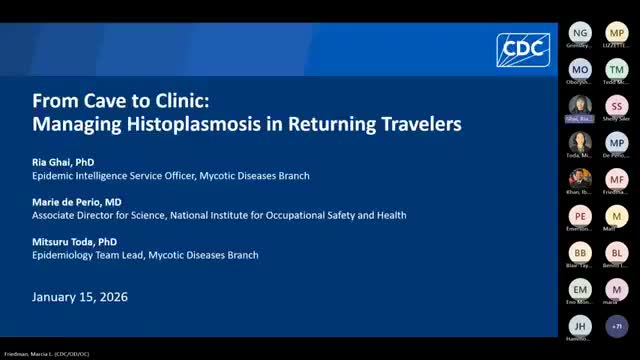
Summary
CDC presenters described three 2025 travel-associated histoplasmosis outbreaks linked to bat-inhabited caves (Puerto Rico, Costa Rica, Belize), documented high attack rates and common misdiagnosis with antibiotics or steroids, and urged clinicians to consider fungal testing and counsel workers and travelers on exposure controls.
A Centers for Disease Control and Prevention Clinician Outreach and Communication Activity (COCA) webinar reviewed an uptick in travel-associated histoplasmosis and advised clinicians and employers to look for fungal infection after cave exposures.
Presenters said CDC and partners supported three investigations in 2025 of groups who became ill after visiting bat-inhabited caves in Puerto Rico, Costa Rica and Belize. Dr. Ria Guy of CDC's Mycotic Diseases Branch said epidemiologic investigations identified cave exposure as the most likely source and that attack rates among travelers in those investigations ranged roughly from the high 60s to the low 90s percent. In one Costa Rica family cluster of 13 people, everyone who entered the cave became ill; the family matriarch who did not enter the cave did not become sick, Dr. Guy said.
The talks emphasized clinical pitfalls. Dr. Mitsuru Toda said histoplasmosis frequently mimics bacterial pneumonia or, in one Costa Rica patient, was initially mistaken for lung cancer. Presenters reported delays in correct diagnosis: many patients received antibiotics or corticosteroids that do not treat fungal infections, and time from first care-seeking to diagnosis can be prolonged. "Think fungus," Toda said, urging clinicians to solicit travel histories for patients with persistent or unusual respiratory symptoms.
On testing and diagnosis, presenters described CDC-developed algorithms for suspected fungal pneumonias. They recommended considering urine antigen and serum antibody testing for patients who have community-acquired pneumonia and either a compatible travel/exposure history (for example, cave or notable bird/bat droppings exposure) or who fail empiric antibacterial therapy. Presenters cautioned that antigen tests can be insensitive early in infection and may cross-react with other dimorphic fungi; if suspicion remains high, repeat testing or infectious-disease consultation is advised. The presenters noted an incubation window of about 3–17 days for histoplasmosis and that many exposed people never become ill, so clinical judgment is required.
Captain Marie de Perio reviewed occupational risks and prevention. She summarized jobs historically linked to histoplasmosis outbreaks (bridge, construction and tunnel work, landscaping, some laboratory work) and recommended applying the hierarchy of controls when possible: elimination or exclusion of roosting animals when feasible, engineering controls and dust suppression (wetting, HEPA-filtered vacuums), administrative controls including site safety plans and training, and targeted PPE for workers who perform high‑risk tasks. She noted PPE is often impractical for tourists and emphasized that respirator programs for workers require medical evaluation, fit testing and training.
On treatment, presenters summarized 2025 Infectious Diseases Society of America guidance cited in the call: many asymptomatic or mild cases may not require therapy, but immunocompetent patients with persistent or worsening mild-to-moderate disease may be treated with itraconazole for about 6–12 weeks; severe or disseminated disease may require amphotericin B formulations and specialist management. Presenters advised that treatment decisions, including management of patients who have already received corticosteroids, must be individualized and guided by infectious-disease consultation when appropriate.
During Q&A, Dr. Guy said the Costa Rica Ministry of Health led the on-site investigation, assessed the cave and tour operators, and issued recommendations to tour operators including updated liability/release language so tourists can be informed of cave-related histoplasmosis risk. When asked when to pivot from empiric antibacterials to fungal testing, presenters reiterated the algorithm: consider fungal testing when CAP fails one course of empiric antibacterial therapy and exposure risk or radiographic features raise concern.
Resources and follow-up: presenters pointed clinicians to the CDC Yellow Book for travel-specific guidance, the CDC COCA website for recordings and materials, and CDC TRAIN for continuing education listings. The COCA recording, captioning and transcript will be made available on the CDC COCA site.
The webinar underscored two practical takeaways: (1) ask about cave or bat/bird‑dropping exposures when respiratory illness is unexplained or not responding to antibiotics, and (2) apply appropriate workplace controls for employees who may disturb contaminated soils or guano to reduce inhalational risk.