Get Full Government Meeting Transcripts, Videos, & Alerts Forever!
Get email alerts on the Homeless Services topic
No spam. Unsubscribe anytime.
Pinellas Hope director describes shelter capacity, partnerships and funding needs
Summary
Joe Pandolfino, director of Pinellas Hope, told council the program shelters up to 255 people (96 cottages, 159 tents), averages roughly 117 days per stay, and relies on a $3.1 million operating budget supplemented heavily by donations and county support; he sought continued municipal partnership to cover storm recovery and service expansion.
Joe Pandolfino, director of Pinellas Hope, gave council a detailed update on operations, outcomes and funding. He said the site serves a capacity of 255 people using a mix of renovated shipping‑container cottages (96) and tents (159), aims for a 90‑day housing‑readiness target but currently averages about 117 days, and estimates roughly 40–45% of discharges move into permanent housing "which fluctuates all the time." Pinellas Hope’s operating budget is about $3.1 million, roughly $1 million of which is funded; the remainder comes from in‑kind donations and partner support.
Pandolfino described medical and supportive services onsite — a medical respite building with a full‑time nurse, mobile medical units and a contract with BayCare — and a permanent supportive housing component (156 apartments) that uses vouchers and project‑based funding to keep residents housed. He noted the shelter’s low per‑person cost compared with institutional settings: "At Pinellas Hope, it's about $33 a day for the cost to house these people and to work with them." He also described recent storm damage (trees, infrastructure) that displaced the operation for several weeks and required significant clean‑up and repairs.
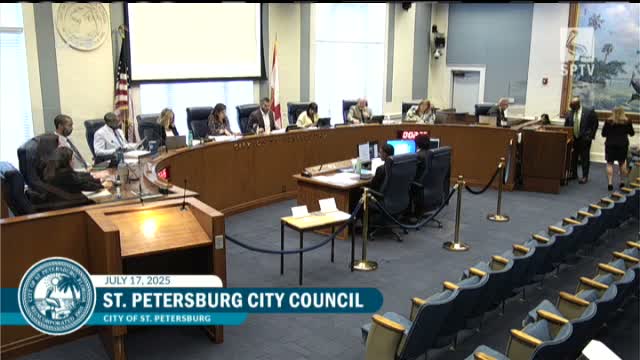
Councilmembers thanked Pandolfino for the presentation and asked about wait lists, partnerships and funding stability. Pandolfino said the county is the largest funder (about $500,000), the organization hosts weekly intake and works closely with municipal outreach officers and county partners, and he expects the county relationship to continue. Council members offered to coordinate visits, volunteer meal days, and to explore short‑term capital improvements (shade structures or kitchen upgrades) to help with recovery and heat‑mitigation.