Get AI Briefings, Transcripts & Alerts on Local & National Government Meetings — Forever.
PNNL researcher outlines tool to assess wildfire risks to the power grid
Loading...
Summary
Jeff Daigle of Pacific Northwest National Laboratory described a tool that uses grid frequency and contingency analysis to estimate how wildfire probabilities could affect electric‑grid infrastructure and to identify mitigation options.
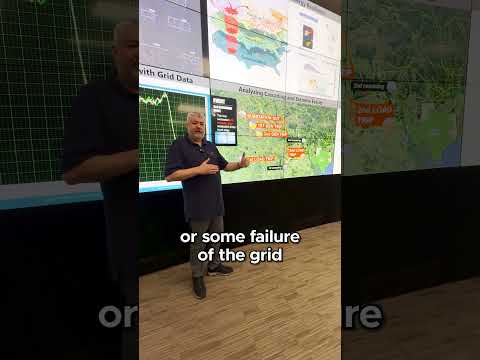
Jeff Daigle, a researcher at the Pacific Northwest National Laboratory, presented a tool for assessing how wildfires could affect electric‑grid infrastructure and for identifying mitigation options.
Daigle said the work draws on measurements of grid frequency and other signals to detect imbalances between generation and load. "And what we're looking at here is the frequency of the grid that we measure in Hertz," he said, adding that "so normally it's around 60 Hertz, but from moment to moment it can vary depending on what's going on in the grid." He described those variations as a source of information about reliability and stability.
The researcher emphasized speed and precursors to larger failures. "The other thing to keep in mind about the power grid is that things happen very quickly," Daigle said. He described "contingency analysis" as a way to anticipate problems before they occur and to "assess whether that will or will not lead to a cascading failure." Those analyses, he said, help operators and planners evaluate risk and prioritize mitigations.
Daigle said the demonstration tool is focused on wildfires. "This particular tool focused on wildfires and assessing whether or not the wildfire probabilities would impact the electric grid infrastructure and what we could do to mitigate those vulnerabilities," he said. He framed the tool as a way to combine hazard probabilities with grid measurements so decision‑makers can evaluate potential impacts and possible interventions.
The presentation did not include a formal timetable for deployment or describe specific mitigation actions in detail. Daigle framed the tool as part of ongoing research at PNNL aimed at improving situational awareness and planning for rapid events that could threaten grid reliability.