Fed Holds Rates at 3.5%–3.75%, Powell Says Path Forward Will Be Data-Dependent
Loading...
Summary
The Federal Open Market Committee left the target range for the federal funds rate at 3.5%–3.75% and Chair Jerome Powell said the committee will make future decisions meeting-by-meeting based on incoming data, citing stabilizing labor-market signs and continued, though elevated, inflation.
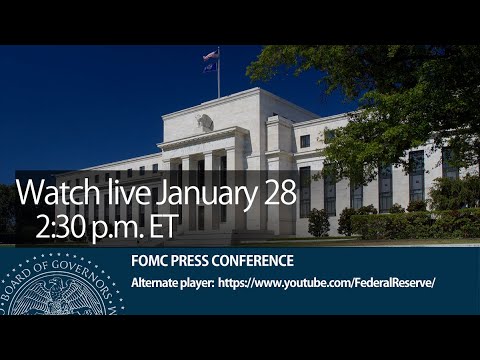
The Federal Open Market Committee decided to maintain the target range for the federal funds rate at 3 and a half to 3 and 3 quarters percent, Federal Reserve Chair Jerome Powell said following the committee's meeting. Powell described incoming indicators as showing solid economic expansion and said the current stance of policy is appropriate to promote progress toward maximum employment and the Fed's 2% inflation goal.
Powell singled out labor-market readings and recent inflation data in explaining the committee's decision. He noted that the unemployment rate was 4.4% in December and said total nonfarm payrolls declined at an average pace of about 22,000 per month over the last three months, while core PCE inflation was 3% for the 12 months ending in December. "We see the current stance of monetary policy as appropriate to promote progress toward both our maximum employment and 2% inflation goals," Powell said.
The chair said the committee had cut its policy rate by 75 basis points across the previous three meetings and that the normalization to date leaves the Fed "well positioned" to determine the extent and timing of any further adjustments depending on incoming data. "We'll continue to make our decisions meeting by meeting, based on the incoming data," he told reporters.
On inflation, Powell said much of the recent overshoot has been concentrated in goods prices and that tariffs have been a significant contributor; he and staff expect many of those tariff-driven price effects to be one-time and to pass through over the course of the year. "Most of the overshoot, if you were to take that out, you'd get core PCE inflation running just a bit above 2%," Powell said.
Reporters pressed Powell on how the Fed would choose its next move. Powell repeatedly emphasized that the committee would weigh the balance of risks to employment and inflation, saying that "the upside risks to inflation and the downside risks to employment have diminished" but still exist. He declined to set a specific test or calendar for the next rate cut and said views differ among committee participants.
Powell also addressed institutional questions raised by reporters, including whether the Fed had responded to subpoenas and whether attendance at a recent Supreme Court hearing was political. Powell said he had "nothing for you on that today" regarding subpoenas and declined to respond to comments by other officials about his attendance, saying simply that he judged the case important and that precedent exists for such attendance.
The Fed press session included extensive questioning about tariffs, the labor market, productivity, and the implications of AI on jobs. Powell acknowledged uncertainty around structural shifts such as AI, said staff and FOMC participants study technological trends and incorporate judgment alongside models, and reiterated that policy would be data-dependent going forward. The press session concluded after Powell fielded multiple questions and thanked the room for participation.