Amendment Would Remove Deportability for Admissions of Fraud, Speaker Says
Loading...
Summary
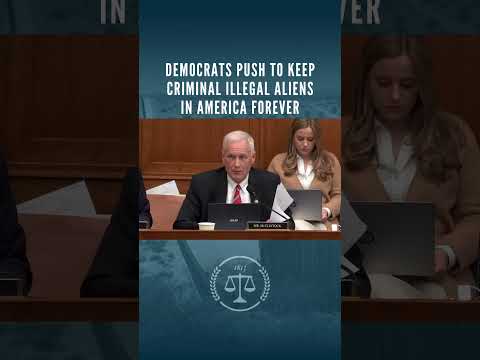
An unidentified speaker in a committee transcript said an amendment would strip a bill’s provision that made admissions of fraud a basis for deportation, citing court decisions and long appeals to argue the change could allow convicted fraudsters to remain in the U.S.
An unidentified speaker recorded in a committee transcript said an amendment to a bill would remove a provision that treats an admission of fraud as a ground for deportation, and called the change "absurd."
The speaker summarized the amendment as eliminating the clause that makes an admission of fraud deportable and said, "This bill says if you admit to fraud, you're deportable," adding that "the amendment says even if the alien admits to the fraud, they can remain here indefinitely."
The speaker argued the change mattered because, under current law, removal outcomes are inconsistent. "The current law is so ambiguous that even conviction is not sufficient for deportation or in admissibility," the speaker said, and pointed to multiple court examples to underline the point.
As evidence, the speaker cited an unnamed case in which an individual convicted of an aggravated felony connected to a $169,000 food-stamp fraud scheme was allowed to stay in the United States despite the conviction. The speaker also described another case that entered removal proceedings in 2005 and did not reach the U.S. Court of Appeals for the Sixth Circuit until February 2013 to determine whether a conspiracy conviction for trafficking in identification documents made the person removable.
The speaker further recounted a separate matter in which a person who had admitted receiving "up to 3 and a half million dollars" through food-stamp fraud spent two years contesting removal proceedings, saying these examples showed that limiting deportability on the basis of admissions could have significant, and potentially unintended, consequences.
The transcript does not record any formal vote on the amendment or further procedural steps. It records only the speaker's argument and the case examples cited; no responses or legal rebuttals appear in the provided segments.