
Insurer CEOs Defend Practices, Pledge Reforms as House Ways and Means Probes Soaring Costs
Get AI-powered insights, summaries, and transcripts
Subscribe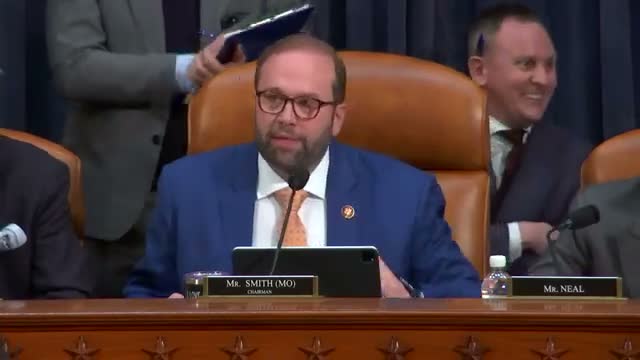
Summary
Insurance executives told the House Ways and Means Committee that rising premiums reflect broader health-care cost trends, pledged steps to speed prior authorization and increase transparency, and faced repeated questions about vertical integration, Medicare Advantage and shareholder payouts. UnitedHealth said it would rebate profits on ACA individual plans for the year.
WASHINGTON — Insurance industry leaders testified for hours before the House Committee on Ways and Means on Jan. 30, 2025, defending their companies’ roles in a health system that members said has grown unaffordable for American families.
Chairman Smith opened the hearing by citing rising premiums, large deductibles and national health spending, and asked executives to explain why higher insurer market concentration and taxpayer-funded programs have not produced lower costs for patients. "Health care is increasingly unaffordable for American families, workers, and seniors," the chairman said in opening remarks.
Stephen Hemsley, chief executive of UnitedHealth Group, told the panel that insurance prices largely mirror underlying health-care costs and that insurers work to moderate those trends. Hemsley said UnitedHealth negotiated "nearly $300,000,000,000 in savings for our customers" last year and described enterprise margins of about 5 percent. He also announced a voluntary commitment for ACA individual plans, saying the company will "forego profits and rebate" them for these coverages this year to reduce premium pressure in the exchanges.
Executives from CVS Health, Elevance Health, Cigna Group and Ascendiant (parent of Blue Shield of California) emphasized similar themes: they blamed medical and drug price inflation, site-of-care price differences and growing utilization, while outlining company efforts to reduce administrative friction.
David Joiner of CVS Health highlighted efforts to reduce prior authorization burdens, reporting that approximately 77 percent of some authorization requests now approve in near real time and that average approval times for certain medication authorizations have fallen from hours to minutes. "We are working to ensure our members have access to the right care at the right cost," Joiner said.
Gail Boudreaux of Elevance said the company has removed hundreds of services from prior authorization and is expanding electronic workflows and clinician-led review. David Cordani of Cigna and Paul Markovich of Ascendiant likewise described initiatives around value‑based care, prevention and provider coordination to restrain long‑term cost growth.
Lawmakers pressed the witnesses on several fronts. Members repeatedly questioned executives about vertical integration—insurer ownership of PBMs, pharmacies and provider entities—and whether rebates, spread pricing, buybacks or executive pay have contributed to higher premiums. Representative Thompson and others demanded specifics on denials and appeals; several lawmakers noted high overturn rates for prior-authorization denials and asked whether plans are using automation or algorithms to deny care. Executives uniformly denied using artificial intelligence to make clinical denials, saying AI is applied for administrative automation and that clinical decisions involve human clinicians.
The hearing also featured sustained questioning about Medicare Advantage. Members raised reports that Medicare Advantage payments exceed traditional Medicare in some analyses and pressed witnesses to explain network adequacy, coding practices and assurances that supplemental benefits reach beneficiaries.
Democratic members pressed for restoring enhanced premium tax credits as a near-term relief measure; several Republicans framed the discussion around structural reforms to payment incentives, competition and transparency. Members repeatedly sought commitments from the companies to reduce costs and to ensure that any operational savings are passed to consumers; the witnesses described pilots and public commitments but did not announce industry-wide mandates.
The committee recessed for floor votes and reconvened for extended questioning that covered rural provider payments, ambulance and hospital payment timeliness, and cases of denied care raised by members and constituent witnesses. Chairman Smith closed by reminding members that written questions are due within two weeks and adjourning the hearing.
What happens next: Members will submit written questions, and the committee said it plans follow-up hearings and additional witnesses, including providers and hospital representatives, to probe specific allegations and to seek legislative options on transparency and prior‑authorization reform.