Senate committee holds bill to extend potable water and install hydrants in Smith Bay after WAPA flags funding and schedule gaps
Loading...
Summary
Senators held Bill 36-0206 in committee after testimony from WAPA and the fire department that supported the bill’s intent but said the project would cost about $12.77 million, require roughly 33 months to complete rather than the bill’s one-year deadline, and depends on federal grants.
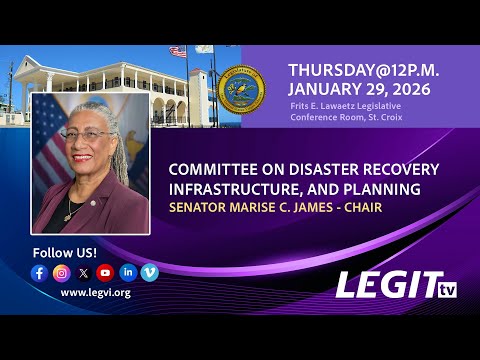
Senators on the Committee on Disaster Recovery, Infrastructure and Planning voted to hold Bill 36-0206, legislation that would require the Virgin Islands Water and Power Authority (WAPA) to expand potable water distribution and install fire hydrants in Estate Smith Bay, St. Thomas.
Sponsor Senator Avery Lewis opened the hearing describing the proposal as a public-safety and equity measure shaped by his experience as a former island administrator. Lewis said the project would “expand potable water service to currently unserved areas, upgrade the existing system to ensure sufficient water pressure and install additional fire hydrants” and asked colleagues to support the measure. He described the work as a one-year mandate with bimonthly progress reports to the Legislature and estimated the project’s cost at approximately $12,500,000.
The Virgin Islands Fire and Emergency Medical Service told the committee it is “in full support” of the bill. Director Antonio Stevens said hydrants provide firefighters with a steady, reliable source of water and that additional hydrants in Smith Bay would improve suppression efforts in a dense area that includes hotels and clustered structures.
WAPA’s chief engineer, Noel Hodge, told senators the authority supports the intent but emphasized constraints. Hodge said the authority’s estimate for design and construction to serve Smith Bay is $12,773,103, calls for about 21,000 linear feet of pipe, would connect roughly 250 customers and would install about 42 hydrants to meet the international fire code. WAPA said the dominant cost items are roadway excavation and paving, and that the authority has no internal funding for a project of this size; it is pursuing federal grants (including EPA SRF and FEMA programs) and expects decisions in the near term.
WAPA proposed extending the sponsor’s one-year completion target: "One year is not adequate," Hodge said, recommending a more realistic schedule of about 33 months to finish design, permitting, competitive bidding, construction and commissioning. Senators pressed WAPA on the master-planning work and on whether the territory’s prudent-replacement federal funds might be redirected; WAPA said prudent-replacement funds are focused on existing pipe replacement and that expansion would need separate grant awards or other funding.
After more than two hours of testimony and questions, the committee voted on a motion to 'hold' the bill in committee at the discretion of the chair. The motion was recorded as moved and seconded on the record and passed on roll call: six yeas, one nay. The committee chair indicated WAPA would provide requested planning documents and an assessment of whether a short-term hydrant installation could be done with in-house equipment.
What’s next: the bill is held in committee while the chair and sponsor work with WAPA and federal partners to identify funding sources and a practicable schedule; WAPA said it would return with more specific cost breakdowns, a schedule, and an assessment of near-term hydrant placement options.