Lifetime Citizen Portal Access — AI Briefings, Alerts & Unlimited Follows
Ione council reviews rewritten protocol manual as residents question rising legal bills
Loading...
Summary
The Ione City Council and outside counsel reviewed proposed updates to the council protocol manual on Jan. 28, 2026, including agenda-setting, procurement thresholds, conflicts-of-interest and social-media rules; public commenters pressed the council about tens of thousands in legal fees and transparency.
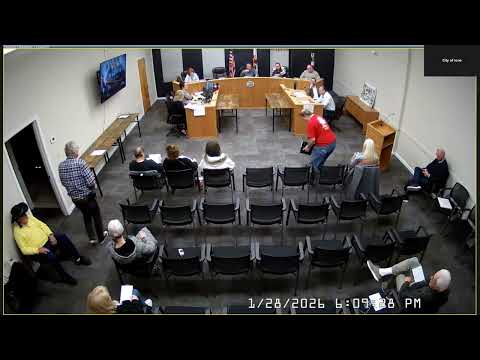
Ione — The Ione City Council held a special workshop on Jan. 28 to review a redlined update to the council protocol manual, a staff report and law‑firm summary that would change how agendas are set, clarify planning‑commission authority, raise the city manager’s contract/contract‑authority threshold and add new conflict‑of‑interest and social‑media guidance.
At the outset of public comment, resident Marsha Enoch told the council she had not been informed that the manual was being overhauled and said the council was already ‘‘tens of thousands of dollars over attorney’s fees’’ this fiscal year. She asked who directed the revision and how many billable hours had been consumed so far.
The firm presenting the draft, which volunteered its time for the session, defended the timing and scope. ‘‘First and foremost, the way that this is set up is that we only take direction from either the mayor or the councils,’’ the firm’s representative said, framing the manual revisions as a response to council priorities and special projects that have driven extra legal work. The presenter and staff said much routine municipal work remained within budget but described litigation and special projects — including work on the Castle Oaks matter and a separate litigation involving a council member — as the primary sources of additional cost.
Why it matters: The manual governs how council members, the mayor, the city manager and advisory bodies coordinate and who may place matters on the agenda. The revisions under discussion would shift routine agenda preparation to the city manager ‘‘in consultation with the mayor’’ while clarifying the city attorney’s limited role in bringing litigation or HR items to closed session. The draft also proposes raising the city manager’s contract authority to $15,000 from $5,000 in the existing draft language, a change that prompted several council questions about how the city’s procurement ordinance, RFP thresholds and contract approvals will continue to intersect.
Council members pressed staff and counsel for specifics. One member asked whether the proposed $15,000 threshold conflates procurement rules with contract authority; staff replied the municipal code and purchasing ordinance set RFP and bidding thresholds and that the manual should be aligned to reflect those distinctions. Staff and counsel discussed a common structure in which modest contract authority is delegated to the city manager while larger agreements or RFP‑required procurements still come to council for approval.
The draft also explicitly recommends a standing agenda item early in meetings for declarations of conflicts of interest, and it emphasizes that conflicts are fact‑specific and that council members bear personal liability for decisions taken with undisclosed conflicts. Presenters recommended using FPPC (Fair Political Practices Commission) advice letters when issues are unclear.
Social media and civility provisions were added to the proposed chapter 10. Staff recommended that elected and appointed officials use official city email for city business to preserve public‑records integrity, and counsel urged language reminding members that knowingly false statements may carry personal legal exposure.
Public feedback during the workshop focused on three themes: limits on a single council member’s ability to place items on a future agenda, transparency about legal spending and contractor invoices, and restoring a standing packet item that lists correspondence and public requests. Speakers asked whether single‑member agenda requests would be blocked and urged that the packet show who requested items; staff said any council member can request an item but that requests with two council sponsors would be prioritized so limited staff and legal resources can be used efficiently.
What happened next: No formal actions or votes on the manual were taken at the workshop. Staff and outside counsel said they will revise the draft based on feedback and return the manual for additional council review and a later public meeting, with budget adjustments for legal costs likely handled through the midyear budget amendment process.
The meeting record shows only two formal motions during the session: approval of the meeting agenda at the start of the session and a procedural motion to adjourn at the end; both were approved by voice vote with no recorded opposition.
Key quotes: Resident Marsha Enoch: ‘‘the city attorney takes direction from the city council as a unit and does not represent any single city council member’’; Outside counsel: ‘‘we only take direction from either the mayor or the councils’’; Staff on procurement change: ‘‘[the] procurement authority for [the] city manager [is] 15,000. Previously, it said 5,000.’’
Next steps: Staff and counsel will incorporate public and council feedback, provide any requested supporting documents (including relevant contracts and investigator invoices), and bring a revised protocol manual and related code‑oriented amendments back to the council for additional review and possible adoption at a future meeting.