Council tables discussion of taking over school‑zone speed cameras after residents raise legal and refund concerns
Loading...
Summary
A council debate over assuming control of school‑zone speed cameras at Diaspora Elementary was tabled after residents and the city attorney raised concerns about legal compliance, required cooperative agreements with the school board, and potential refunds tied to previous enforcement.
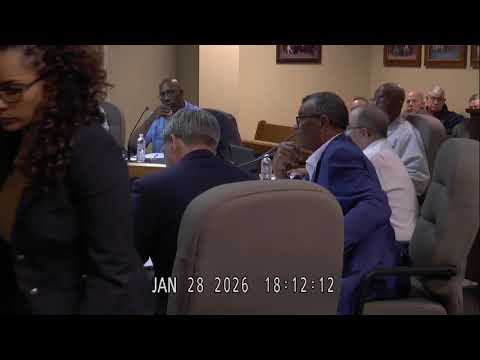
The Iberia Parish Council on Jan. 28 tabled consideration of a resolution that would have the parish assume oversight and operation of school-zone speed cameras on Dastard/Dassett Road at Diaspora Elementary, after extensive public comment and council debate about legality and refunds.
Councilwoman Natalie Broussard introduced the item as a request for council feedback rather than an immediate transfer of authority. "I did not mean to create a firestorm... I just wanted a discussion whether or not it was right for us to take over the cameras," Broussard said. Several council members and members of the public expressed concern about legal requirements under state law and about the cost and liability of addressing improperly issued citations.
Resident Paige Simrong told the council she believed enforcement continued in areas outside city limits and alleged that the issue could involve "24,000 improperly collected fines needing to be refunded," referencing the New Orleans attorney-general action as precedent. Simrong urged deactivation, legal compliance with Act 103 (requiring a cooperative endeavor agreement with the school board), and refunds where appropriate.
Jeff Simon, the city attorney, asked the council to limit discussion to the resolution before them and offered to return with a fuller briefing of the city's interactions with the attorney general, the school board and the contract provider. Council members discussed whether the sheriff or parish government should lead on enforcement matters, whether any parish action would require new contracts with the camera vendor (BlueLine/Blue Line), and whether a parish-wide approach would be necessary rather than selecting a single school.
After debate, Broussard moved to table the resolution pending what the school board decides on Feb. 4; the motion carried. Several council members said they wanted to wait for the school board’s position because a cooperative endeavor agreement would be required to operate cameras lawfully under Act 103.
Why it matters: the issue touches on school safety, potential taxpayer liability for refunds, and the limits of parish authority without an agreement from the school board. The council’s decision to table preserves options but delays any immediate parish action.
Next steps: the item will remain on hold while the school board considers the city’s cooperative endeavor agreement; if the school board signals willingness to accept a CEA, the parish may revisit whether to pursue a parish‑wide or limited program and what funding or contracting steps would be required.