
Saucon Valley School Board hears proposal to buy 300 keyboards for 3rd–4th graders; debate on handwriting and cost
Get AI-powered insights, summaries, and transcripts
Subscribe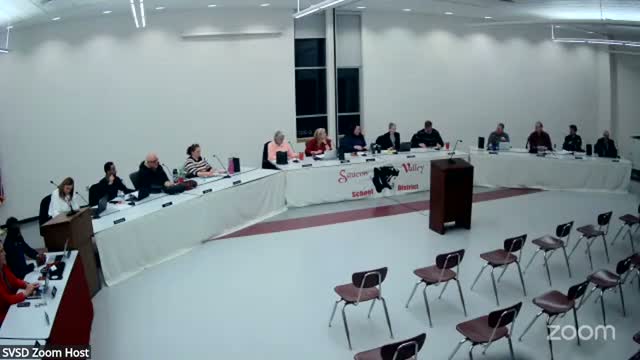
Summary
District leaders presented a keyboarding pilot for third- and fourth-graders and proposed purchasing 300 external keyboards to prepare students for the PSSA digital writing prompt; board members split over handwriting, screen time and quality/cost of devices.
At the board meeting, the district presented a keyboarding pilot aimed at building typing fluency for third- and fourth-grade students and proposed purchasing 300 external keyboards to ease the transition to digital PSSA writing prompts.
"This is not to replace handwriting," said Doctor Janoor, the administrator leading the pilot, responding to concerns that keyboards would supplant pen-and-paper instruction. Janoor described a two-week pilot in one third-grade classroom and three fourth-grade classrooms using external keyboards and an online application, typing.com, to measure fluency. The presentation said teachers built short daily practice ("Typing Tuesday") into instruction, and the district is tracking fluency and student engagement.
Board members asked about scope and consequences. Director Demko and others warned that adding keyboard instruction reduces time available for handwriting and other instruction and questioned whether the keyboard practice would meaningfully improve long-term literacy. "We basically take the pen and pencil away from them," said a board member during the Q&A, urging caution about increased screen time. Director Santos and others argued that separating an external keyboard from an on-screen virtual keyboard is less intrusive during testing and may let students see prompts and type without blocking text.
The presentation proposed buying 300 low-cost external keyboards to supply third- and fourth-grade students; during discussion a board member referenced an approximate retail price of $20 per keyboard and confirmed the devices would be non‑Apple models. Janoor said the devices are meant to remove "artificial mechanical barriers" so students can focus on composing responses when the state testing platform is digital. He also said students would still practice handwriting as part of the district's arts-and-letters curriculum.
Board members also asked whether AI tools would be available to elementary students. Janoor said, "At this point, no," adding the district will manage access and monitor use. Several board members asked how the district would measure impact; Janoor said data collection and fluency tracking would follow the pilot and that roughly 25% of some scores are tied to the writing prompt, which informed the pilot rationale.
No formal purchasing motion or vote on procurement was recorded during the meeting; the administration said it would take board feedback, collect additional data and return with recommendations.
What happens next: Administration will review feedback, continue data collection on fluency and return with procurement options and cost details for board consideration.