Get Full Government Meeting Transcripts, Videos, & Alerts Forever!
Get email alerts on the Public Health Governance topic
No spam. Unsubscribe anytime.
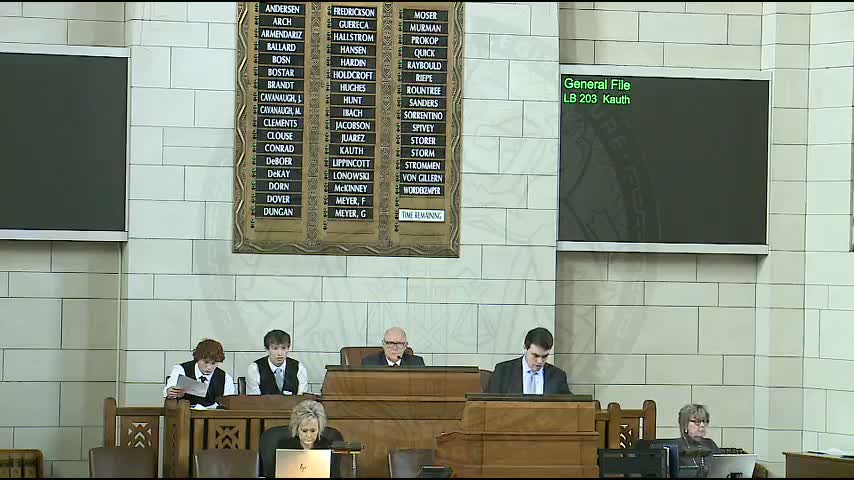
Senate debates LB203 to shift county public‑health directed measure authority to elected officials
Summary
Sen. Kautz introduced LB203 to require majority written approval from elected county or city officials before countywide directed health measures take effect and to require seven‑day reauthorization; opponents warned it undermines public health expertise and could slow emergency responses.
Lincoln, Neb. — Lawmakers on Wednesday debated LB203, a bill that would change the authority for countywide directed health measures so public health directors could issue them only after written approval of a majority of the elected local body charged with oversight.
Sen. Kautz, sponsor of LB203, said the bill would make public health directors advisers to elected county or city officials for countywide measures and require reauthorization every seven days. "Under LB203, public health directors will serve as advisers to the elected officials who oversee their department," she said, arguing elected officials should retain decision‑making authority when fundamental personal liberties might be restricted.
Committee amendment AM611 adds a new section providing that community‑wide directed health measures expire after seven days and may be reauthorized by the local board of health. Sponsor Sen. Hardin noted the HHS committee advanced the bill 7–0 with the amendment.
Opponents framed LB203 as part of a national trend to undermine public‑health expertise. Sen. Duncan said the change risks delaying fast, expert‑led responses to fast‑moving public‑health threats and diminishes trust in public‑health officials. "This is part of a concerted and ongoing effort ... to push back on public health writ large," Duncan said.
Proponents said the bill preserves tools for tailored responses while requiring elected oversight for countywide measures; senators from rural districts raised concerns about board availability during vacations and the need for speed in emergency responses. Supporters noted the bill was drafted to allow rapid meetings and written approvals when needed.
The floor record shows robust debate but does not record a final floor vote on LB203 during this session. Sponsors and opponents signaled plans to continue discussions and amendments as the bill moves forward.
— Reporting from the floor of the Nebraska Legislature.