Oklahoma Mental Health Agency Asks for $17M to Address Consent Decree, Cites Staffing and Contract Reforms
Loading...
Summary
The Department of Mental Health asked the appropriations panel for additional funding to comply with an ongoing consent decree and to raise pay for direct-care workers; leaders said roughly $9.4 million from a prior allocation has been spent on fines, legal counsel, consultants and medications.
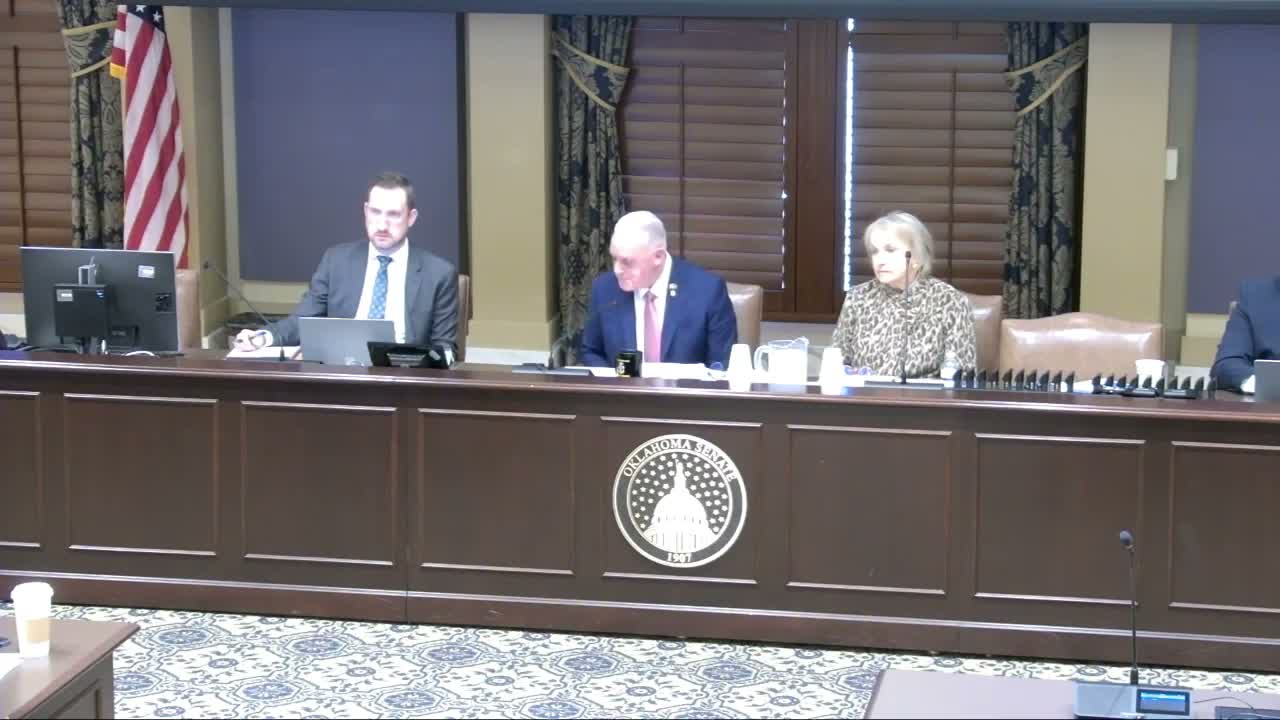
The Department of Mental Health and Substance Abuse Services told lawmakers it needs additional funding to comply with an ongoing federal consent decree and stabilize operations, Commissioner Slovonic said during a committee hearing.
Slovonic and Acting CFO Kathy Menefee said the department expects to spend remaining FY25 supplemental funds and has requested an additional $17,000,000 for FY26 tied largely to consent-decree obligations, evaluations, fines and staffing adjustments. “We intend to use that throughout the remainder of the fiscal year,” Menefee said of the earlier allocation.
The agency said about $9.4 million from last year’s funds has been used for fines, legal counsel, court consultants and additional evaluators. Members pressed for detail on whether the department had a finalized plan; Slovonic said a plan was being submitted to consultants and class counsel and that the attorney general’s office would provide a general counsel with relevant consent-decree experience to oversee execution.
Slovonic described operational steps to expand capacity, including bringing online beds at Veneta (construction is complete), creating a tiger team to provide leadership support on-site every two weeks and pursuing residencies with the University of Oklahoma and Oklahoma State University to address physician shortages. He warned, however, that staffing the beds may require contract labor at higher cost during ramp-up.
On contracts, Slovonic said he inherited roughly $4.4 billion in contracts and has led a review of about 800 agreements that produced savings and identified duplications; the department plans a further review beginning in March. The department also issued an RFP to explore transferring four state-run Certified Community Behavioral Health Clinics (CCBHCs) to private operators on the grounds private entities may be able to pay higher wages and secure staff more readily.
Members asked whether services had been cut; Slovonic said crisis services (including the 988 hotline) remain available and he had not received reports of missed services or patient harm connected to the contract actions.
Next steps: Slovonic said the agency will submit a consent-decree plan to consultants and class counsel, bring OCA legal support to oversee the decree, and continue contract reviews and RFP work on CCBHC arrangements. Lawmakers requested ongoing updates on the consent decree’s progress and financial burn rate.
Ending: Committee members thanked Slovonic and Menefee and adjourned the DMH portion of the hearing.