
Interim DMH chief warns consent‑decree work needs funding as SSM hospital deal stalls over alleged defect
Get AI-powered insights, summaries, and transcripts
Subscribe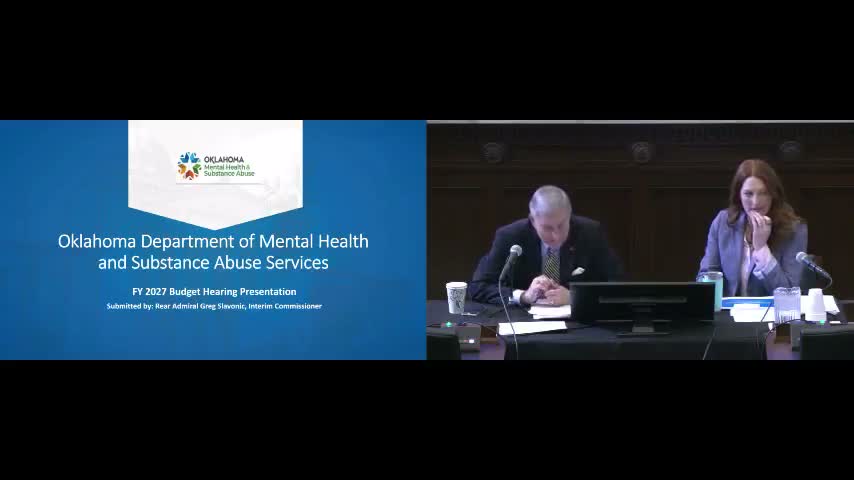
Summary
Interim Commissioner Greg Slovonic told the Oklahoma House his department missed early consent‑decree deadlines and is asking for $17 million to staff competency restoration, expand beds and cover related costs; he also said an SSM facility purchase may be delayed after his team found an undisclosed 3x3 hole filled with water.
Interim Department of Mental Health and Substance Abuse Services Commissioner Greg Slovonic told lawmakers Friday the agency is still stabilizing after leadership turnover and needs targeted funding to meet a court‑ordered consent decree and expand capacity.
Slovonic said the consent decree was signed March 10 and that he "reported aboard June 10," which left the agency short of the first deliverable. "We missed those," he said, acknowledging the agency did not meet the initial deadline for a plan to address the number of incarcerated individuals needing competency restoration.
Why it matters: The consent decree requires timelines for competency evaluations and restoration services; missing early deliverables has already triggered court‑ordered fines and adds urgency to the department's FY‑26 supplemental request. Slovonic said the department is seeking a $17 million package tied primarily to implementing restoration services, improving data and hiring clinical staff.
Kathy Menefee, the agency's interim CEO handling financial duties, told the committee the $17 million request includes roughly $10 million for workforce stabilization, an amount to cover higher‑tier competency evaluations and a portion for temporary bed expansion connected to the SSM facility plan. Menefee said the department expects some legal‑related costs and rising fines in later years: "the fines increase about $2,000,000 that second year," she said, adding the figure and composition could be refined as actuaries and staff provide more detail.
SSM purchase and a water‑filled hole: Slovonic described a parallel issue affecting capacity plans: an SSM Health building the state proposed to buy and renovate as a faster alternative to building a new hospital. He said his team found a "large hole 3 by 3 filled with water" during inspections and that he viewed the defect as an undisclosed condition the seller should address before closing. "I felt that was a breach of contract," Slovonic said, and he sent a letter to SSM to flag the concern. Negotiations continued at the hearing; Slovonic said he had not received a firm response by the meeting.
Beds and timelines: The presentation said the SSM hospital would ultimately yield roughly 197 beds, plus a 32‑bed annex that could take some patients early. Menefee said the annex lease and ARPA remediation work could allow moving consumers into the annex "by the February" and that the broader project was on schedule to provide capacity in 2026 if closing and repairs proceed.
Contract review and systems work: Slovonic emphasized a financial and contract clean‑up since he took the job seven months ago. He said his team reviewed about 800 contracts over 75 days and pared them to roughly 300, instituting statements of work, cost reporting and new procurement oversight. He also repeated longstanding technology gaps and said an electronic health‑record system and better grants software are in the budget as one‑time asks to improve visibility and monitoring.
What happens next: Lawmakers signaled willingness to review the department's supplemental request but pressed for more detailed breakdowns and evidence that new hires, beds and legal staffing would measurably reduce waiting times and fines. Slovonic said he is arranging a reset with his legal team and the attorney general's office and will provide follow‑ups to members. The committee did not vote on funding at the hearing.
Ending: Slovonic asked for legislative patience and oversight as the department pursues legal and construction fixes. "If we can get the beds, we can get the staff," he said, "and that should be able to meet all the requirements and get that trend line to go back down."