Oklahoma task force opens yearlong study of 14(c) subminimum‑wage certificates, prioritizing data and benefits planning
Loading...
Summary
Lawmakers and disability advocates launched a two‑year task force to study the federal 14(c) certificates that allow employers to pay subminimum wages to some workers with disabilities. Speakers urged better state data, expanded benefits counseling and careful transition plans; testimony is scheduled for March and a report is due in 2027.
Lawmakers and disability advocates convened a task force in Oklahoma City on Jan. 30 to begin a multi‑year review of 14(c) certificates — federal permissions that have allowed some employers to pay workers with disabilities less than the minimum wage. The co‑chairs, Senator Julia Kirk and Representative Ellen Heffner, said the group will collect state data, hear testimony from people with disabilities and families, and recommend actions before the task force’s report is due in 2027.
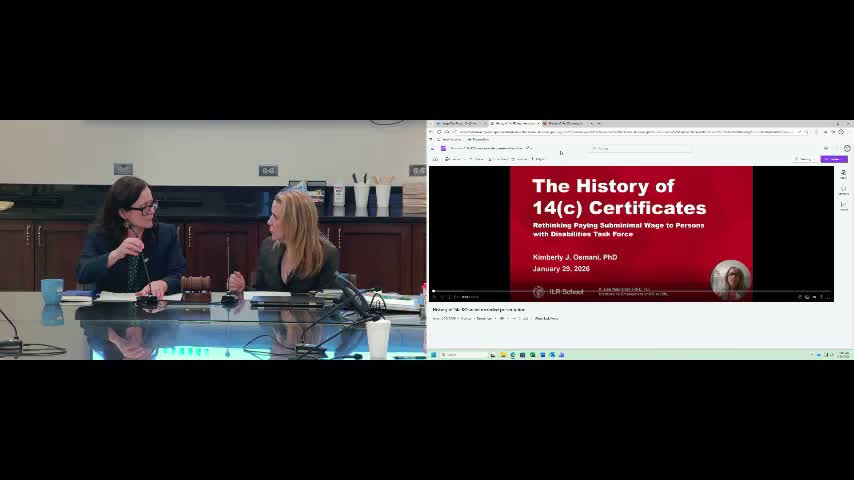
The task force’s opening presentation was a recorded overview by Kim Losmani of Cornell University’s Yang Tan Institute, who summarized the legal and historical context for 14(c) certificates under the Fair Labor Standards Act. Losmani told the group that 14(c) dates to the 1938 law and that national use of certificates peaked historically but has fallen: roughly 141,000 workers were paid under certificates in 2018 and about 36,000 in 2025, according to federal data she cited. She described changes under the Workforce Innovation and Opportunity Act (WIOA, reauthorized 2014) that require transition services and vocational rehabilitation steps before students can pursue subminimum‑wage employment, and warned that states that phase out certificates have sometimes seen mixed outcomes, including many people moving into day habilitation or leaving the workforce altogether.
"Before WIOA, the door was just open," Losmani said in the recorded presentation. "Now there's a door with a handle on it — it takes work and supports to get through." Her remarks framed the group’s central tension: advocates want to eliminate noncompetitive, segregated work placements that pay very low wages, but closing those options without sufficient supports can leave people with fewer opportunities.
Family advocates and providers used the meeting to press specific operational and financial questions. Deborah Copeland, chief executive of the Dale Rogers Training Center, said benefits counseling is scarce in Oklahoma and urged the task force to evaluate how Medicaid, ABLE accounts and other supports interact with the choice to work. "Benefits counseling is very limited in Oklahoma," Copeland said. "We need much more resources to help families navigate what happens to medical care and other benefits if a person moves into paid work."
Participants flagged several priority topics for the task force: a state data inventory of who is currently paid under 14(c) and where those workers live; a review of Medicaid waiver rules and the long‑unfunded Medicaid buy‑in statutory option; outreach on ABLE accounts and other savings tools; and lessons from states that have phased out certificates. Providers asked for attention to rural transportation and residential staffing patterns that can complicate 9 a.m.–5 p.m. community employment. Employers and a representative of Mercy Oklahoma Communities described existing programs such as Project SEARCH that can produce paid placements, but legislators said broader employer outreach will be necessary.
The co‑chairs gave a schedule for the year: the next meeting in March will prioritize testimony from people with disabilities, families and practitioners; organizers expect to form working groups in June and reconvene in September to define action steps. The task force’s formal report is not due until 2027, the co‑chairs said, but members emphasized they want interim work products and evidence the state can use to shape budget and policy decisions.
Representative Heffner, who described personal experience as a parent of an adult with a disability, said the task force should avoid abrupt changes and instead seek phased, person‑centered approaches: "This isn't an on‑and‑off switch — it's going to take years and thoughtful planning," she said. The meeting ended with agreement to build a shared resources folder, gather GAO and state data, and return in March for public testimony.
Next steps: the task force will collect suggested data measures from agencies and stakeholders, invite benefits‑planning experts and the U.S. Department of Labor for additional briefings, and hold a March meeting focused on testimony and data collection.