Get AI Briefings, Transcripts & Alerts on Local & National Government Meetings — Forever.
Douglas County outlines $8 million biochar facility to process wildfire wood, officials say
Loading...
Summary
Douglas County presented plans for a county‑operated biochar facility in Sedalia that officials say will process low‑value wildfire mitigation wood locally, generate revenue to reinvest in wildfire mitigation and provide a local drop‑off site for residents; construction timing, traffic and feedstock rules drew audience questions.
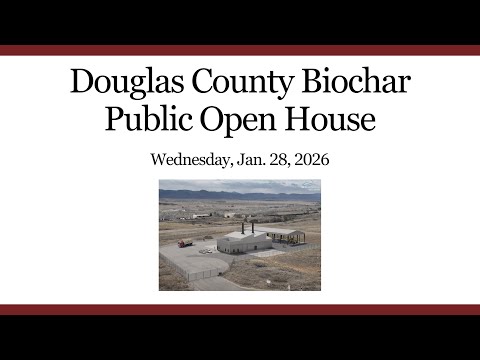
Douglas County officials onstage at a Sedalia open house laid out plans for a county‑operated biochar facility intended to turn low‑value woody material from fuels‑reduction work into a marketable soil amendment and other products, reduce haul distances and provide a new local drop‑off point for residents and contractors.
The county said the project will involve an initial capital investment of about $8,000,000 to acquire land, build a 6,717‑square‑foot production and support building and install processing equipment. "An initial investment in the property totaling about $8,000,000 as planned," said Dan Roberts, assistant director of public works for operations. County projections presented at the meeting estimate roughly 10,000 cubic yards of biochar produced annually, gross revenue of about $2,200,000 and operating costs near $1,500,000, yielding an anticipated payback period of about nine years.
Why it matters: County staff and the Wildfire Action Collaborative framed the facility as a tool to lower the cost and logistical barriers of fuels‑reduction work across Douglas County and nearby public lands. "Improving our ability to receive, sort, and utilize this small‑diameter material doesn't just remove an operational bottleneck," said Dylan Williams, the county's wildfire mitigation and resilience coordinator. Officials said keeping processing local will cut long truck hauls to other parts of the state, reduce public‑land contractors' hauling costs and free up funds for additional mitigation projects.
Construction and timing: Tim Hallmark, director of facilities, fleet and emergency support services, said the county is finishing construction documents and plans to send bids to six prequalified contractors. He outlined a schedule that anticipates a contract award in early March, site grading in late March, vertical construction beginning in mid‑April, equipment arriving mid‑late July and final completion and building acceptance in 2026. Holly Carroll, the county's special projects manager, also told attendees the site is "expected to open this summer," a difference in phrasing the county used in the meeting; county staff told the audience that limited resident drop‑off services may begin earlier while construction proceeds and that a full commissioning timeline is subject to the bid and build schedule.
Feedstock, operations and resident access: Officials said the facility is sized to process material from fuels‑reduction projects, National Forest work and resident drop‑offs. Dan Roberts said the site will be able to process roughly 250 truckloads of logs a year and that large volumes from the U.S. Forest Service and Pike National Forest provide abundant feedstock. Staff said the county plans to prioritize Douglas County residents for free drop‑off and that out‑of‑county material may incur a tipping fee. Residential yard waste will be separated and routed to grinders and compost streams when contaminated; clean large boles and specified forestry loads would enter the biochar production stream.
Technology and environmental claims: Industry partners on the panel described a three‑stage pyrolysis process that produces biochar and thermally oxidizes syngases in a hot chamber to clean exhaust. "We consume all of those in the last part of our process," said Ian, a representative of Complete Solutions, describing how the system uses thermal oxidation to limit emissions. County and industry presenters also described environmental benefits for soil health, water retention and pollutant removal and said universities (UCCS, CSU) will partner to refine product specifications for targeted uses. Commissioner Layton highlighted an often‑cited "30% reduction in water use" for some applications, a figure speakers said derives from research and early industry examples; county staff identified university studies and pilot work as part of the product‑development plan.
Questions and logistics from the community: Audience members pressed officials on traffic, contamination in incoming loads (nails, wire, full trash loads), appointment systems for large logging trucks and whether the facility will accept electronic waste or expand into a full diversion hub. The county said logging trucks from the National Forest will need appointments and that a maximum of five logging trucks per day would be allowed, with in‑day processing capacity limited. Staff also outlined plans for the site to eventually host electronic waste drop‑off currently routed to Commerce City and said relocating that program could save a few hundred thousand dollars annually.
Partners and funding: Panelists named private partners Carbon Dynamics and Complete Solutions and noted an Aurora Water investment of $100,000, which county staff said secures Aurora's ability to bring feedstock at no cost. Officials emphasized the county intends to reinvest any additional revenue — including potential future carbon‑credit proceeds, which were not included in baseline financials — into wildfire mitigation programs such as the county's helitack team.
Next steps: Roberts said the county will proceed through land‑use and location/extent review before beginning construction and invited public feedback on the renderings and operating details. A county newsletter sign‑up and staff at the back of the room were available for follow‑up questions. "We will be going through location and extent process or land use process before we start construction," Roberts said, and asked residents to submit comments via the county website.
Ending: The open house closed with panelists inviting more technical input and promising further public updates as bidding and permitting move forward.