Get Full Government Meeting Transcripts, Videos, & Alerts Forever!
Get email alerts on the Wastewater Management topic
No spam. Unsubscribe anytime.
Nantucket sewer director outlines Surfside plant operations, staffing and recent solar upgrade
Summary
Sewer Director David Gray described the Surfside Wastewater Treatment Facility’s eight buildings, recent solar-panel installation, staffing levels and year‑round operations, stressing treatment, pump‑station maintenance and permit oversight for the town’s sewer system.
David Gray, Sewer Director for the Town of Nantucket, provided a video overview of the town’s Sewer Department, describing facility operations, staffing and a recent solar upgrade intended to lower energy costs.
The Surfside Wastewater Treatment Facility “consists of eight separate buildings” that house staff and core infrastructure — including the main control room, electrical and generator switches, pumps, pipes, compressors, chemicals and an in‑house laboratory, Gray said. “An array of solar panels was recently added to the main building to help reduce energy costs,” he added, and he noted the building was the first municipal facility on Nantucket to have solar.
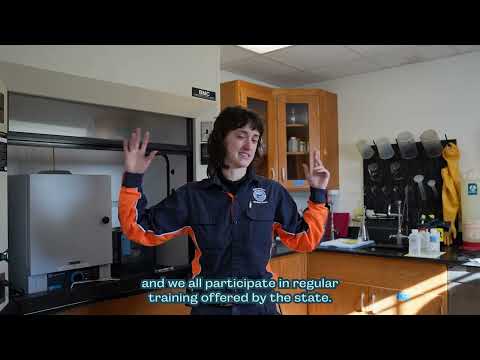
Gray outlined staffing and regulatory context: the department is supported by about 15 certified operators, three administrative staff and additional operational staff. He said operators are “certified and licensed by the Commonwealth of Massachusetts” and participate in regular state training.
He said the department operates year‑round with on‑call personnel available to respond to computer‑generated alarms and resident service calls around the clock. Gray listed the department’s principal duties as treating all wastewater streams to meet state requirements, carrying out critical maintenance of sanitary and stormwater infrastructure across the island, responding to flooding or other resident service requests, operating and maintaining 18 pump stations, and issuing permits and conducting inspections for authorized sanitary sewer work.
Most of that work, Gray said, is not visible to the public and takes place at two treatment facilities — one in Sconset and one at Surfside — plus various pumping stations around the island. He also described physical risks and maintenance work, noting that personnel sometimes work in confined spaces up to 24 feet below ground to service tanks, pumps, valves and other equipment.
Gray closed the video by saying the department’s mission is to keep systems functioning at peak performance and thanked viewers for watching the introduction. The presentation was informational; no formal votes, motions or policy decisions were announced.