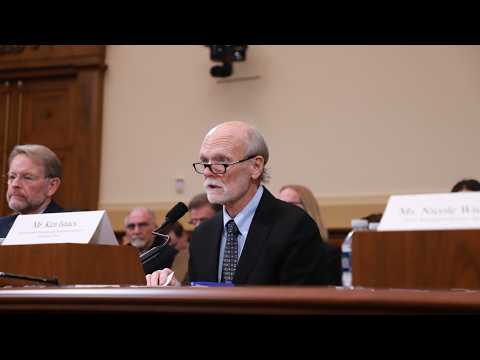
Witness tells House Foreign Affairs panel Sudan needs an internationally monitored ceasefire, guaranteed aid and a civilian transition
Get AI-powered insights, summaries, and transcripts
SubscribeSummary
An unidentified witness told the House Committee on Foreign Affairs Republicans that Sudan’s war requires an internationally monitored ceasefire, guaranteed humanitarian corridors free of diversion, and a genuine civilian transitional authority to replace military-dominated rule.
An unidentified witness told the House Committee on Foreign Affairs Republicans on Monday that ending Sudan’s war requires an internationally monitored ceasefire, guaranteed humanitarian access and the reconstitution of a meaningful civilian transitional authority.
The witness, who said they have worked in Sudan since 1993, warned that the conflict has deep ideological and institutional roots. "It's not just a fight between 2 generals," the witness said, arguing that Islamist political networks and militarized structures embedded in Sudanese governance have driven repeated cycles of violence.
Why it matters: The speaker gave a broad assessment of the crisis, listing the United States and at least a dozen regional and global actors — including the United Arab Emirates, Saudi Arabia, Egypt, Qatar, Turkey, Iran, Russia and China — as having stakes in Sudan's outcome. The witness said those competing interests make a unilateral approach ineffective and called instead for "coordinated restraint among many."
Humanitarian scale: The witness provided humanitarian figures to the committee, saying "an estimated 30,400,000 people, roughly two-thirds of the Sudanese population, need humanitarian assistance," about 21,000,000 face acute food insecurity, and "6 and a half million" are in or near famine conditions. The witness also said famine declarations have been issued in multiple locations over the last two years, citing November declarations in Al-Fashir (Darfur) and Kadugli (South Kordofan).
Evidence and verification: The witness said humanitarian organizations such as Samaritan's Purse have been involved in verifying famine conditions and urged that visual reporting and independent verification be considered when assessing atrocity claims. "Most recently in Al-Fashir, some reports state that as many as 60,000 people have been brutally murdered," the witness said.
Policy prescriptions: The witness outlined three priorities for U.S. and international action: first, to stop the fighting by pressuring both the Sudanese Armed Forces (SAF) and the Rapid Support Forces (RSF) to accept a ceasefire enforced and observed by a credible international body. The witness suggested a group of European Union monitors rather than UN peacekeepers and said that monitoring must be backed by political and economic leverage.
Second, the witness said humanitarian access must be guaranteed at the outset of any ceasefire, with aid corridors into Darfur, Kordofan, Khartoum and Al Jazira assured "without taxation, diversion, or interference."
Third, the witness urged reconstituting a non-symbolic civilian transitional authority drawn from across Sudan's multiethnic society. "Sudan requires a civilian constitutional structure that protects worship while ending the conflation of armed power with religious identity," they said.
U.S. policy stance: The witness argued U.S. policy should avoid engagements that enable the ideological networks from which groups such as Al Qaeda and Hamas emerged. They praised recent U.S. steps to designate the Muslim Brotherhood as a foreign terrorist organization, saying, "President Trump and Secretary of State Rubio are to be applauded for recognizing the dangers of the Muslim Brotherhood and moving to declare them as a foreign terrorist organization."
What did not happen: The hearing transcript records no formal vote or committee action in connection with the testimony. The witness concluded by saying, "This war will not produce a victor. The war must end," and thanked the committee.
Next steps: The testimony provides policy options (international monitoring, guaranteed aid corridors, civilian transition) but does not record committee direction, a vote or an implementation plan. The committee may follow up with staff briefings, requests for additional evidence, or further hearings.