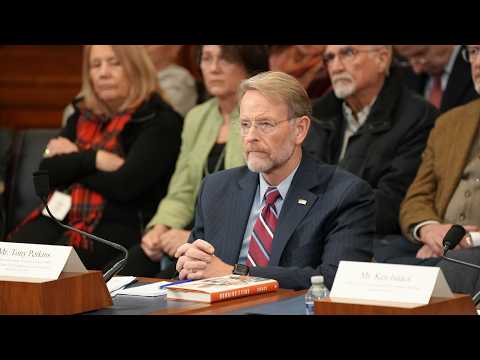
Witness urges U.S. to reimpose "country of particular concern" designation for Sudan, calls for humanitarian access
Get AI-powered insights, summaries, and transcripts
SubscribeSummary
An unidentified witness, president of the Family Research Council and former USCIRF commissioner, told lawmakers Sudan has backslid on religious freedom and urged reimposing a CPC designation under the International Religious Freedom Act and securing unimpeded humanitarian access to besieged regions.
An unidentified witness, president of the Family Research Council and former commissioner on the U.S. Commission on International Religious Freedom, told members of the House Committee on Foreign Affairs that Sudan has ‘‘reverted to conditions’’ warranting renewed U.S. action on religious freedom and human rights.
"Foremost among those is religious freedom," the witness said, citing the International Religious Freedom Act of 1998 and research linking protections for religion to greater social stability. The witness said reforms after Sudan's 2019 transition briefly led to removal from the U.S. list of Countries of Particular Concern, but that those gains have since collapsed.
Drawing on a 2020 visit to Sudan and meetings with then-transitional prime minister Abdalla Hamdok, the witness said both the Rapid Support Forces (RSF) and the Sudanese Armed Forces (SAF) have committed abuses. "Neither faction represents a credible path toward long term stability or respect for human rights," the witness said, and added that the SAF has committed "killings and beheadings of civilians." The testimony also cited reports that churches have been targeted and that some Christians have been denied food unless they renounced their faith: "unless you leave your Christianity, no food for you."
The witness described the humanitarian crisis as "staggering," giving figures of nearly 12,000,000 people internally displaced and more than 4,000,000 who have fled the country, many into Chad, Egypt and South Sudan. The witness said the Nuba Mountains "urgently require aid that is not obstructed nor manipulated by either the SAF or the RSF."
Pointing to regional influence, the witness named the United Arab Emirates, Egypt, Iran, Turkey and Russia as actors providing drones, weapons or incentives; the witness also cited reports that Sudan offered Russia a naval base in Port Sudan as an indicator of geopolitical stakes.
As a policy prescription, the witness urged the United States to reimpose Sudan's designation as a Country of Particular Concern (CPC) under the International Religious Freedom Act and to use IRFA tools to press for human rights and accountability. "These designations should inform all U.S. engagement with Sudanese factions and regional actors," the witness said.
The witness recommended broader steps to reduce violence and protect civilians, including promoting federalism and decentralized governance to reduce the risk of a single armed group dominating the state, ensuring direct humanitarian access to besieged regions, and partnering with local religious leaders whom the witness described as credible interlocutors.
The witness closed with a personal reflection from Khartoum and urged the United States to deploy diplomatic, humanitarian and economic tools "to help ensure that what flows forward is justice, peace, and genuine freedom for all Sudanese people."