Get Full Government Meeting Transcripts, Videos, & Alerts Forever!
Get email alerts on the Hybrid Warfare topic
No spam. Unsubscribe anytime.
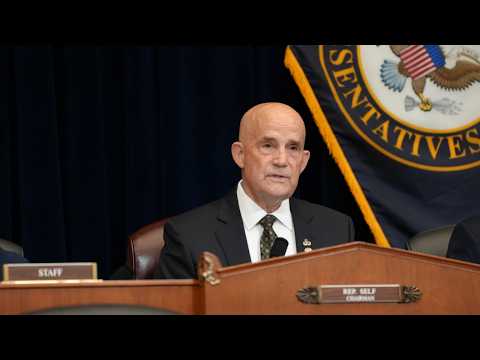
Unidentified subcommittee opening: speaker warns Russia, China wage 'hybrid warfare' across Europe
Summary
An unidentified speaker told a subcommittee that Russia and the People’s Republic of China are conducting coordinated hybrid warfare—cyberattacks, sabotage, drone incursions and economic pressure—urging witnesses to offer concrete policy recommendations and citing a Microsoft report of a 25% rise in Russian cyber activity.
An unidentified speaker opened a subcommittee session by saying, "Ladies and gentlemen, we are at war," and urged the panel to treat a rising tide of hybrid threats from the Russian Federation and the People’s Republic of China as an urgent national‑security problem.
The speaker summarized NATO’s definition of hybrid warfare as "the combination of military and nonmilitary, as well as covert and overt means, including disinformation, cyberattacks, economic pressure, deployment of irregular armed forces, and use of regular forces," and argued those tactics are being used to blur the lines between war and peace and to destabilize Western societies.
Citing recent incidents, the speaker said drone incursions have disrupted civilian travel hubs and that Polish forces recently shot down several Russian drones while NATO F‑35s intercepted Russian MiG‑31 fighters that violated Estonian airspace. On the ground, the speaker attributed a range of sabotage activities to Russian intelligence services, including arson at commercial hubs, rail sabotage to cause derailments, and severing undersea power and communications cables.
The speaker also warned of expanding cyber campaigns, saying "according to a report from Microsoft, cyberattacks emanating from the Russian Federation against NATO countries has increased 25% year over year." The speaker described state‑sponsored Chinese hacking and said the PRC is embedding technology into key sectors of European economies, noting the transcript reported that "two technology companies based in China were sanctioned by the U.K." for cyber activity that affected roughly 80 government and private industry systems.
The opening framed these activities under what the speaker called a "dime fret" framework—diplomatic, information, military and economic levers used to intimidate and harass NATO members and allied institutions. The speaker said these strategies have intensified since Russia’s full‑scale invasion of Ukraine in 2022 and pose heightened risks on NATO’s eastern flank.
The speaker asked witnesses to provide "concrete policy recommendations on addressing these hybrid threats" and said their written testimonies "lend absolute credibility to the fact that we are at war." The remarks closed with a request that witnesses’ recommendations be used by the subcommittee as it considers policy responses.
No formal motions, votes or specific legislative proposals were recorded in the opening remarks; the speaker invited witnesses to testify and offer recommendations as the next step.