
Trinity County supervisors move into closed session after public objections over CAO hiring process
Get AI-powered insights, summaries, and transcripts
Subscribe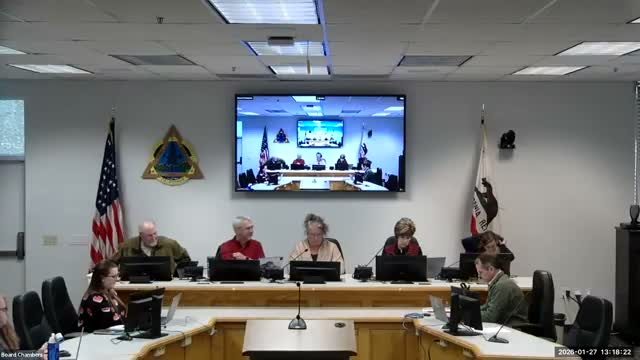
Summary
Public commenters told the Trinity County Board of Supervisors the meeting's closed-session notice mis-cited California law and bypassed county-code hiring rules for the county administrative officer; the board said it had consulted counsel and moved into closed session.
The Trinity County Board of Supervisors moved into a closed session at 1:17 p.m. after multiple residents objected to the meeting notice and urged public involvement in hiring the county administrative officer (CAO).
Speakers from Lewiston and Weaverville criticized the meeting's agenda and the CAO recruitment materials, arguing the notice cited the wrong Brown Act provision and that the board had not approved job qualifications, selection criteria or compensation parameters in open session. Lisa Wright Lewiston said she was "making a formal objection to the board proceeding into closed session today" and warned that actions taken in an improperly noticed closed session "may be subject to challenge and potential invalidation."
The issue centers on statutory authority and process. Several commenters said the agenda cites California Government Code section 54954.5(e) (which governs agenda descriptions) but does not invoke Government Code section 54957(b)(1), the statutory exception that specifically permits closed-session consideration of public employee appointments. Dan Trujillo (Weaverville) urged three steps from the board: "ensure that the closed session authority is properly grounded in the Brown Act by expressly invoking the correct statutory basis," open the recruitment criteria and job description to public input before key decisions, and comply with the reporting requirements of section 54957.
Residents also raised specific procedural and policy concerns. Ben Kellogg said the county was "dumbing down this position," arguing minimum qualifications had been removed at a time when the CAO will face budgetary decisions such as implementation of a cannabis tax. Catherine Sidman asked why license-plate readers were listed on the consent agenda and questioned the practice of allowing the CAO to sign federal contracts without clearer public oversight. Scott White said the public faces a "crisis ... of trust" when rules appear to be circumvented.
The Chair responded that the board had "consulted with our legal advisers, to the fullest extent," and stated the board was not doing anything illegal; the Chair said the Board would consider the public comments and review them with legal counsel. The public portions of the transcript end with the Chair announcing the Board would adjourn the public session and move into closed session for the agenda item described as "A1 government code section 54954.5(e) public employee appointment, county administrative officer." No vote tally or formal action on the appointment appears in the provided transcript.
Why it matters: The county administrative officer holds broad discretion over budgeting, contracts and policy implementation. Public commenters argued that excluding key recruitment decisions from open session risks removing practical oversight and accountability from a high‑impact appointment. Under the Brown Act, if a reportable action is taken in closed session the Board typically must announce the nature of the action and the vote of each member in open session the same day; commenters said that statutory reporting requirement warranted clarity before proceeding.
What happens next: The transcript ends with the meeting entering closed session and the Chair's assurance that counsel had been consulted. The record provided here contains no post‑session report or decision; any future open‑session announcement of action or vote was not included in the supplied transcript.