
Senate committee advances discussion of Windham County pilot to regionalize sheriff services
Get AI-powered insights, summaries, and transcripts
Subscribe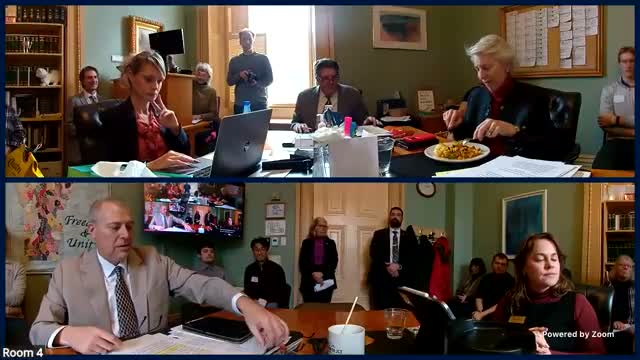
Summary
A bill to create a Windham County Law Enforcement Governance Council — a five‑or‑more‑municipality pilot to coordinate sheriff‑provided policing — received testimony showing broad town support but also raised oversight and funding questions; committee will continue hearings next week.
The Senate Committee on Government Operations on Thursday heard testimony on a bill to create a Windham County Law Enforcement Governance Council, a pilot program that would let participating towns pool funding and governance for regional sheriff‑provided law enforcement.
Sponsor testimony and local officials said the pilot aims to address gaps in coverage for towns that do not have their own police departments and to replace short annual sheriff contracts with a single governance entity that sets service standards and a county assessment. Mark Anderson, sheriff of Wyndham County, described the measure as primarily "a governance bill. It is a funding bill," and said the proposal grew from three years of outreach and earlier, decades‑long study of regional policing in Vermont.
Why it matters: proponents say the existing patchwork — three towns and one village in the county have police departments while many towns rely on state police or annual sheriff contracts — produces inconsistent coverage and is increasingly unsustainable. Under the bill, at least five municipalities would have to join to form the council; the council would prepare an annual law enforcement budget that assistant judges would include in the county budget and the county treasurer would collect a special assessment on the grand list of member municipalities.
Supporters including the sheriff and representatives of the League of Cities and Towns (VLCT) said about 17 Windham County towns have indicated interest in joining the pilot. Josh Heibert, representing municipal interests, said the pilot’s sunset and withdrawal provisions reduce the risk that the structure would add permanent costs without benefits and urged that a selectboard member serve on the council to protect local accountability.
Concerns persisted about oversight and constitutional limits on county authority. Several senators and witnesses noted publicized criminal charges against a sheriff in another county and asked how the pilot would ensure accountability for a sheriff who held broader responsibilities under a regional model. Senator Jeanette White acknowledged those concerns and said the pilot’s limited geography and timebound structure are intended to test answers to such questions in practice.
Key details and mechanics described by legislative counsel Tim Dela included: definitions of member and nonmember municipalities; a requirement that the council be created when five or more municipalities vote to join; council authority to adopt bylaws, set service levels and performance metrics; a budget submission deadline (assistant judges would receive the approved council budget on or before Dec. 1); and a sunset provision that would end the council on June 30, 2034 or earlier if membership drops to one municipality.
Funding and formula questions dominated the discussion. Lawmakers and witnesses debated whether assessments should be based on population (per‑capita), grand‑list (property valuation), or a blended formula that also accounts for demand or service need. Proponents said towns favored a population‑based approach supported by census counts, while others flagged adjustments for seasonal populations and equity concerns.
No formal vote was taken. Chair closed the session by saying the committee will continue testimony on the bill next week and that additional towns were expected to testify; the second agenda item was deferred.
The committee’s next procedural step is to collect further testimony, consider technical edits (including how municipalities join or withdraw and which municipal body votes to join), and return with proposed bill language changes prior to any committee vote.