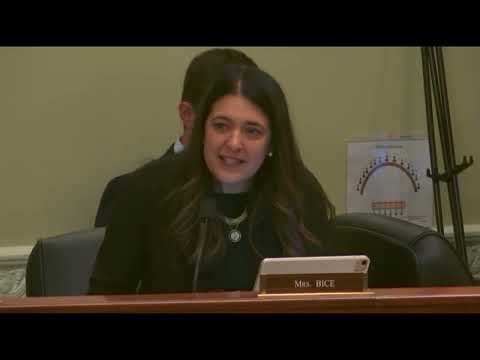
Committee debates preclearance and stronger enforcement to curb congressional stock trading

House Administration: House Committee · November 19, 2025

Get AI-powered insights, summaries, and transcripts

Subscribe
AI-Generated Content: All content on this page was generated by AI to highlight key points from the meeting. For complete details and context, we recommend watching the full video. so we can fix them.

Summary

At a House Administration committee hearing a committee member urged strengthening the STOCK Act and adopting a preclearance process for members’ stock trades; two witnesses said preclearance could work but stressed careful drafting and enforcement.

A committee member at a House Administration committee hearing urged stronger enforcement of the STOCK Act and proposed a preclearance requirement for lawmakers’ stock trades as a way to restore public trust.

The committee member, speaking throughout the exchange, said congressional stock trades “have come under incredible scrutiny” and asserted that some senior members are ‘‘consistently beating out some of the best investors in the country in the S and P 500,” which the member called “a problem.” The member also said, “Upon my election to congress, I actually divested all of my individual stocks,” and argued that “members who improperly trade should not get a slap on their wrist.”

Two witnesses responded that a preclearance system—similar to compliance regimes used by corporations and law firms—could be a viable way to allow lawful trading while providing transparency. One witness said, “I think that’s a reasonable approach,” and described how preclearance helps in corporate settings when employees must rebalance a portfolio because of spinoffs or mergers. The other witness said, “I think in principle, that’s an effective solution,” while cautioning that any statutory language and enforcement mechanisms would need to be carefully designed.

The committee member asked whether protections should be broadened beyond Members of Congress to include senior congressional staff, senior executive-branch staff and others who may possess nonpublic information. One witness noted that the judiciary and its clerks already operate under separate ethics constraints and that applying similar prohibitions to judges raises particular issues because of lifetime appointments; the witness said their organization (TVA) has stopped short of endorsing judicial inclusion without further study.

Neither witness opposed the concept of preclearance, but both urged lawmakers to spell out enforcement, standards and limits in any change to the STOCK Act. The committee member said current rules should be enforced more consistently and signaled intent to continue work on legislative options.

The exchange concluded with the committee member thanking the witnesses and yielding, saying they look forward to continuing the conversation.