House hearing weighs NVRA changes to broaden list maintenance and expand data-sharing
Get AI-powered insights, summaries, and transcripts
SubscribeSummary
At a House Administration Committee hearing, witnesses recommended expanding the National Voter Registration Act’s required list‑maintenance criteria and increasing access to federal databases such as SAVE and HAVA data exchanges after a member of Congress cited registration errors in several states.
An unnamed congresswoman pressed witnesses at a House Administration Committee hearing to consider amending the National Voter Registration Act (NVRA) to give election officials broader authority and better data to detect ineligible registrations.
The congresswoman opened the hearing by saying, “I am deeply concerned about the integrity of our elections,” and cited what she described as Illinois’s ‘‘long history of election fraud and irregularities’’ and recent instances where noncitizens allegedly obtained state driver’s licenses and were registered to vote. She told witnesses Congress must update the NVRA to account for states that she said "refuse to follow the law."
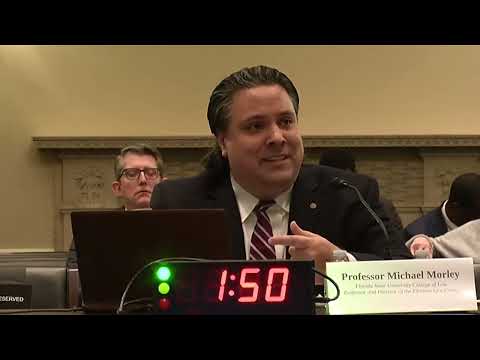
Professor Morley, a witness invited to advise the committee, told lawmakers the NVRA’s federally mandated list‑maintenance requirements are narrow. "As of right now, they are only required to identify voters who have died or, I believe, who have moved," he said, and recommended the committee consider expanding the list of criteria election officials must use so that officials can identify voters who are ineligible for any reason, not just those two categories. He also recommended improving the quality of information available to election officials by expanding required data‑exchange agreements under the Help America Vote Act (HAVA) and by facilitating access to federal databases containing citizenship information, such as the SAVE system.
Professor Morley said such steps could "help officials remove ineligible voters, while protecting vulnerable voters" by reducing erroneous removals, and suggested mandatory cross‑checking against additional data sources as part of ongoing list maintenance.
Later in the hearing, the congresswoman asked Mr. Braden about whether verification requirements would have prevented a Maryland State Board of Elections finding described in the transcript that an individual identified as Anne Roberts registered and requested absentee ballots in three elections. Mr. Braden responded, "And the answer to that is probably yes. Depends on the details," and told the committee there are "a variety of technologies available to us that we're not using, which this committee could statutorily encourage or require."
No formal motions or votes were recorded in the transcript. The hearing focused on policy options, including statutory changes to the NVRA, better interagency data‑sharing under HAVA frameworks, and strengthening verification processes used by state motor vehicle agencies. The witness testimony recommended specific avenues the committee could pursue but did not propose precise statutory language or identify cost estimates.
The hearing concluded after members questioned witnesses and no formal action was taken on the record. The committee may take additional testimony or draft legislation in follow‑up sessions.