Get Full Government Meeting Transcripts, Videos, & Alerts Forever!
Get email alerts on the Early Childhood Inclusion topic
No spam. Unsubscribe anytime.
Twin Rivers director details inclusive preschool practices for children 0–5
Summary
Johanna Scott, director of early childhood education at Twin Rivers Unified, described expanding inclusion preschools with a co-teach model and classroom adaptations—adaptive seating, mobility access, visuals—to support children with diverse needs.
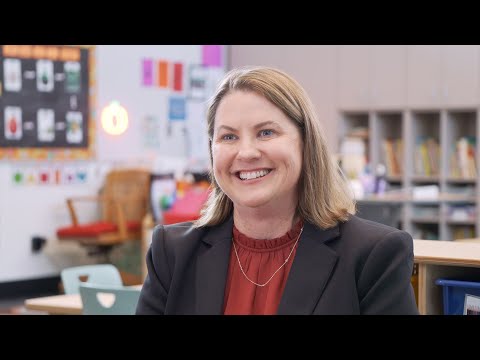
Johanna Scott, director of early childhood education for Twin Rivers Unified, said she expanded the district’s inclusion preschool programs to serve children ages 0–5 using a co-teach model pairing a special education teacher with a general education teacher. "I have expanded our inclusion preschool programs where we teach with a co teach model," Scott said.
Scott described concrete classroom changes intended to make learning accessible: picture-name labels so children can identify their spots, adaptive seating such as cube chairs and wiggle seats, floor visuals to cue lining up and handwashing, and tactile objects to support sensory engagement. She said mobility needs are anticipated in classroom layout so children who use walkers or wheelchairs "can already get around the classroom and they're not feeling like, oh, this wasn't designed for me."
Scott framed these design choices as instructional tools: intentional room setup can act as "an additional teacher" by supporting routines and independence and by allowing movement without disrupting learning. She emphasized that children do not have to be still to learn: "It's perfectly fine for them to be wiggling and moving around. They're still hearing the instruction."
Scott also described her professional pathway from preschool teacher to district administration and said that the co-teach model is one of her proudest achievements at Twin Rivers. She said the model places a special education and a general education teacher side by side in transition kindergarten and preschool classrooms to better serve a mixed group of learners.
Scott closed by saying she plans to remain involved in early childhood education and to pursue advocacy and policy reform for the field after retirement. The remarks were delivered as a personal account of practice and leadership, not as an official district policy announcement.