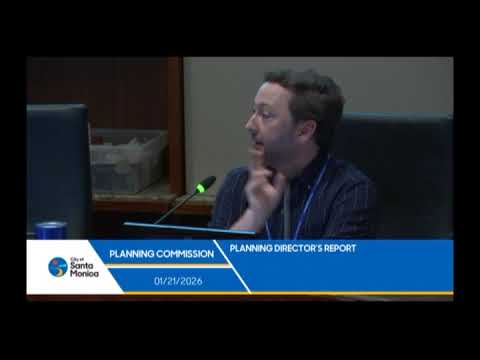
Planning commission backs broad zoning streamlining and narrows alcohol expansion after hours debate
Loading...
Summary
Santa Monica planning commissioners directed staff to codify downtown emergency zoning changes, streamline land-use reviews citywide and expand some alcohol exemptions while keeping true bars subject to higher scrutiny; commissioners set parameters for groceries, food halls and taprooms and sent redlines to council.
Santa Monica City Planning Commission spent its Jan. 21 meeting weighing a sweeping package of zoning amendments staff says is designed to make it easier for businesses to open and operate while formalizing emergency pandemic-era rules the city has been using.
Staff presented a multistage plan to permanently adopt portions of the downtown interim zoning ordinance, downgrade some discretionary entitlements (conditional use permits) to staff-level minor permits or permitted uses, and clarify land-use tables across the city. Planners argued the changes remove unnecessary delays for common businesses such as grooming and small retail, and reduce costs for applicants.
Commissioners generally supported codifying the downtown IZO provisions and asked staff to carry forward several commission directions to city council. Those include: allowing more permissive re‑tenancy of existing storefronts, raising the permitted-by-right grocery threshold in many parts of the city (the commission favored 30,000 square feet in most commercial districts, keeping a lower cap for neighborhood-commercial areas), and permitting larger food halls by right up to 10,000 square feet while keeping traditional restaurants at the lower threshold staff recommended.
A major thread of the night was alcohol policy. Staff proposed expanding alcohol-exemption (AE) permits — a ministerial process that allows some alcohol service without a full CUP — to a broader range of uses and areas. Commissioners agreed to expand AEs for many ancillary uses (small museums, sip‑and‑paint studios, personal‑service events and some retail) provided staff builds precise guardrails on hours and accessory limits. Commissioners directed that true bars (uses whose principal business is alcohol with little or no food service) remain subject to conditional use permit review rather than be downgraded to minor permits. The panel also backed creation of a new land-use category for small-scale alcohol beverage manufacturing (breweries/taprooms) with tailored rules and an AE option limited to earlier hours (commissioners settled on a 9 p.m. cutoff for taprooms/wine bars under the AE).
Commissioners repeatedly emphasized the need for clear, enforceable conditions — for example, requiring parking/loading operation plans for grocery and larger retail sites and preserving design/facade review to protect walkability where a ground-floor use would otherwise be by right.
Staff will return to the commission with redlined ordinance language reflecting the directions given, and a consolidated resolution for council consideration. The commission signaled urgency for some downtown items that staff already implemented as emergency ordinances while asking for additional analysis where policies were broadened citywide.
The commission closed the public hearing without a final ordinance vote and forwarded its guidance and amendments to be included in staff’s package to city council.