Get Full Government Meeting Transcripts, Videos, & Alerts Forever!
Get email alerts on the Housing Rental Inspections topic
No spam. Unsubscribe anytime.
Eureka council hears Arcadias rental-inspection model as a possible template
Summary
Arcadias building official outlined a rental inspection program that emphasizes life-safety checks, low fees and a self-certification option; Eureka council members and tenant advocates discussed whether a similar model would fit local needs.
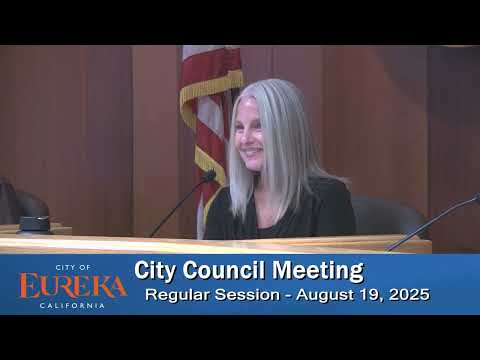
Joe, the City of Arcadiabuilding official, described Arcadias residential rental inspection program and the reasoning behind it, saying the city focused the effort on life-safety issues and low costs while trying to avoid tenant retaliation. "We're charging $20 a year and $75 for the inspection every three years," he said, adding that the program "has had over 90% compliance so far."
The Arcadia program began as a council goal and was reworked after pushback from property owners, Joe said. To reduce burdens, his department pared the checklist to a one-page, life-safety–focused form, created exemptions for properties already inspected by state agencies and introduced a self-certification pathway that he described as a carrot for responsible owners: "If you get into self certification, that's the carrot we're dangling out there...your inspection will be free, essentially."
During a council question-and-answer session, members pressed for operational details: how properties are identified, how inspections are scheduled and how the program is staffed. Joe said Arcadia uses mailers, assessor records and outreach to identify non-owner-occupied properties and that inspections average about 20 minutes. He estimated the program covers just over 2,000 rental properties in his jurisdiction and described a small enforcement team that scales up as demand spikes. "We schedule the time slot for a half hour...but generally 20 minutes is an average inspection time," he said.
Eureka speakers raised common concerns: potential staff and budget impacts, how accessory dwelling units (ADUs) are treated and how privacy and retaliation are avoided. A representative from the Humboldt Tenants Union told the council the Arcadia approach shifts the burden away from tenants who fear landlord retaliation and urged Eureka to consider lessons learned.
The Arcadia official emphasized trade-offs: low fees and a simplified checklist mean the program is not revenue-generating and may only approximately break even. "Back-of-the-napkin math, we're barely gonna break even," he said, adding staff will revisit fee structure as the program matures. He also recommended clear rules and prompt implementation to prevent multi-year delays in adoption.
Next steps discussed at the meeting included using outreach and record-keeping to identify eligible properties, exploring exemptions for owner-occupied units and considering a self-certification option if Eureka pursues a similar program. The council did not take formal action on a local program during this meeting.