Get Full Government Meeting Transcripts, Videos, & Alerts Forever!
Get email alerts on the Sb 6304 topic
No spam. Unsubscribe anytime.
Coalitions and investment experts push for a statutory responsible‑investing framework; SIB cautions on implementation details
Summary
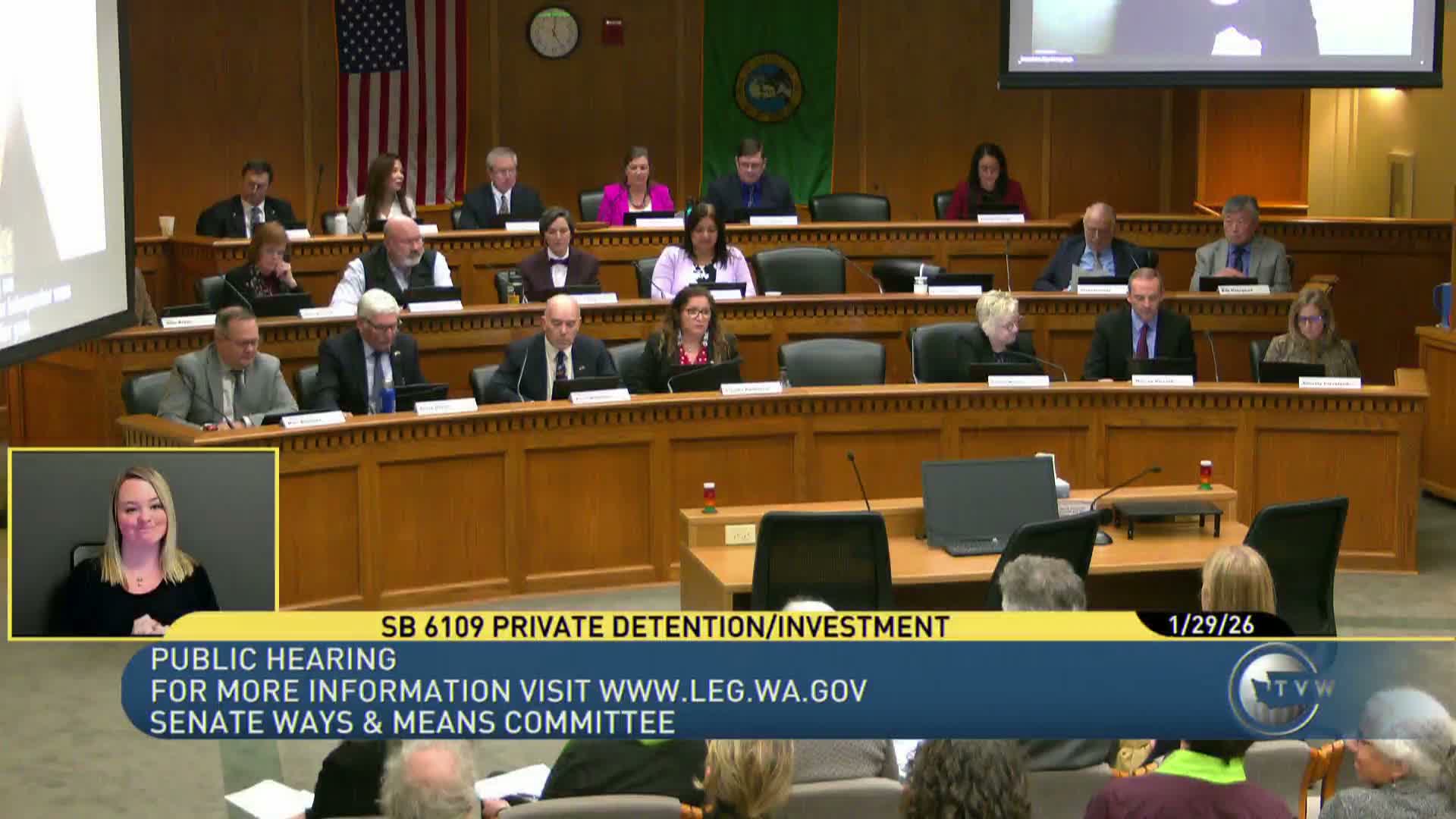
Supporters of SB 6,304 told the Ways and Means Committee that SIB should adopt clear, systematic responsible‑investment standards and proxy‑voting guidance; outside experts said such standards need not harm returns and passive responsible vehicles already exist.
Senate Bill 6,304 would require the Washington State Investment Board to incorporate responsible investment principles into its decision‑making, publish proxy‑voting guidelines aligned with those principles, and report annually on the process and actions taken. Committee staff summarized the bill and said responsible investment principles may address human‑rights violations, environmental degradation, corruption and other serious ethical concerns.
A broad coalition of faith groups, labor unions, human‑rights organizations and investment experts testified in support. Omar Hansson Barr, who said he managed parts of Norway’s sovereign wealth fund, told the committee that academic and practice‑level evidence shows responsible investing can be implemented with negligible impact on risk‑adjusted returns and that passive responsible vehicles already exist. Ray Levine (Jewish Voice for Peace) and other advocates argued engagement needs a credible backstop and that sustained engagement without escalation can become complicity.
Speakers linked responsible investing to specific portfolio concerns raised earlier in the meeting — including investments in companies associated with human‑rights complaints, surveillance technology, price‑fixing algorithms and fossil fuels — and urged a coherent, phased approach SIB could administer internally. Union representatives emphasized the need to preserve fiduciary stewardship while aligning investments with commonly held state values.
SIB staff in the earlier briefing said they already incorporate ESG materiality and stewardship but cautioned that operationalizing statutory standards requires careful staging to avoid unintended cost and implementation impacts. Several testifiers offered technical assistance and noted existing responsible passive funds could be swapped into current allocation buckets.