
Wide testimony urges ending 'fund split' and restoring state-funded compensation; committee takes no action
Get AI-powered insights, summaries, and transcripts
Subscribe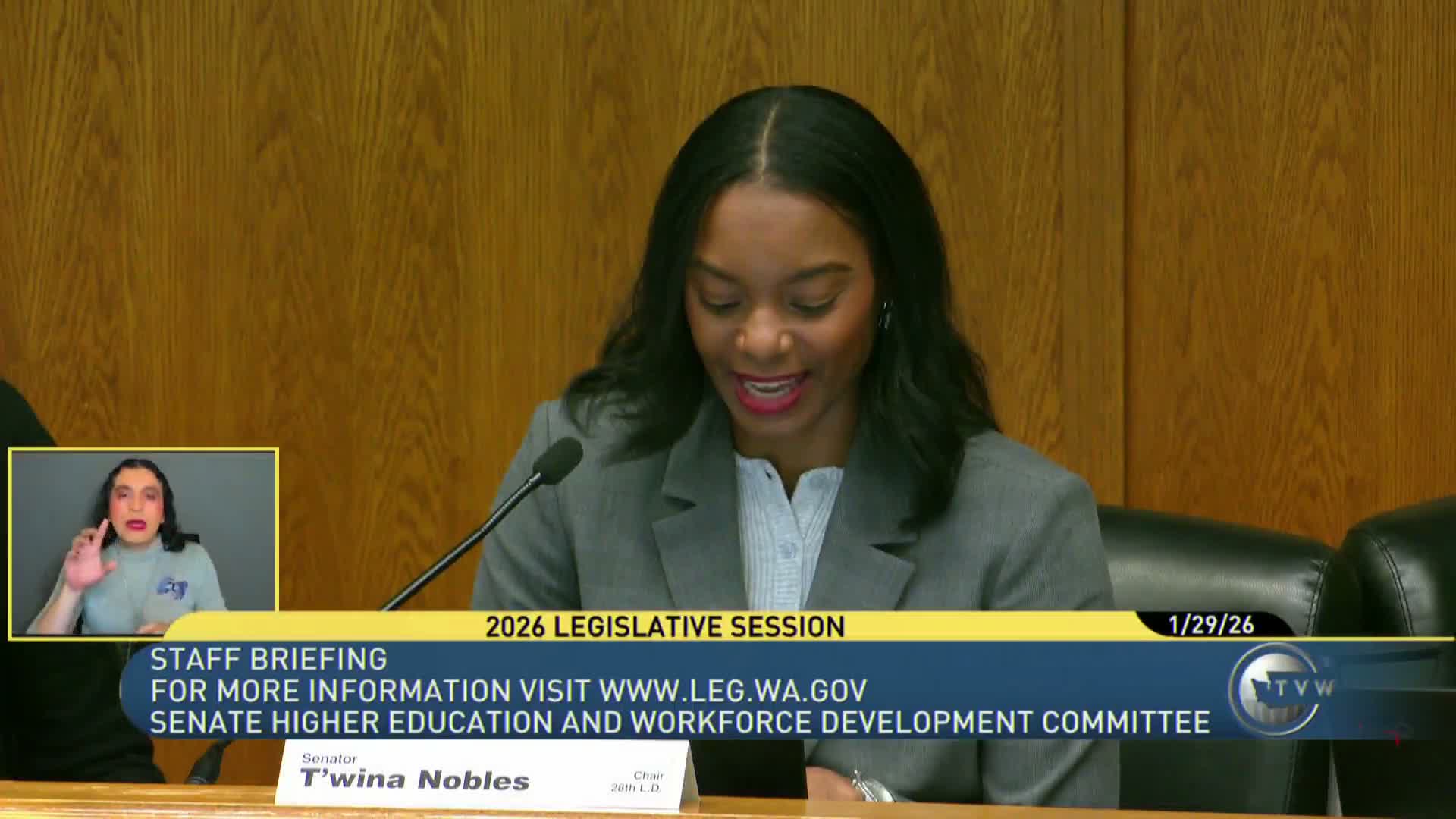
Summary
College and university presidents, faculty, and staff representatives told the committee that the 2015 'fund split' shifted compensation and central-service costs onto institutions and students, reducing services and program capacity; sponsors and many witnesses urged phased restoration of state funding but the committee did not take action on SB 6325 at this meeting.
Senate Bill 6325 drew extensive testimony on Jan. 29 from leaders across Washington’s higher-education system. The bill seeks a phased restoration of state-funded compensation and central services that were shifted in the 2015 fund split, and would require a WSAC study on essential student services.
Witnesses from public baccalaureates and community and technical colleges described recurring budget shortfalls tied to the fund split, forced program cuts, service reductions, and constrained ability to respond to emergencies. "The fund split has proven to be a spectacular failure," said a faculty representative for Washington State University, describing inadequate tuition revenue and constrained COLAs. Multiple college presidents told the committee that when compensation increases were not fully funded they implemented furloughs, program closures, and layoffs that harmed students.
Speakers gave local examples: a pharmacy program closure attributed to budget reductions, reduced library hours, staff layoffs, and longer wait lists for advising and student services. Postsecondary leaders argued that treating tuition projections as a state funding source is opaque and unsustainable; several witnesses urged a gradual return of compensation and central-service funding to the state budget.
Committee action: After extensive testimony the chair closed the hearing; in executive session the committee explicitly stated it would not take action on SB 6325 at this meeting.
Why it matters: The fund split affects campus operations, course availability, workforce training programs, and student services across the state; restoring state funding could change tuition pressure, staffing, and program offerings.
What’s next: The committee closed the hearing without action; witnesses offered to provide further data and follow-up materials.