Get Full Government Meeting Transcripts, Videos, & Alerts Forever!
Get email alerts on the Local Tax Tools topic
No spam. Unsubscribe anytime.
Committee advances broad local‑revenue 'toolbox' bill allowing new local taxes and credits
Summary
House Finance reported out substitute HB 2,442, a multi‑part bill authorizing new local revenue options (real‑estate excise tax, public‑utility tax, sales/use taxes for children/families), after debate over voter approval and levy impacts; roll call was 9 ayes, 6 nays.
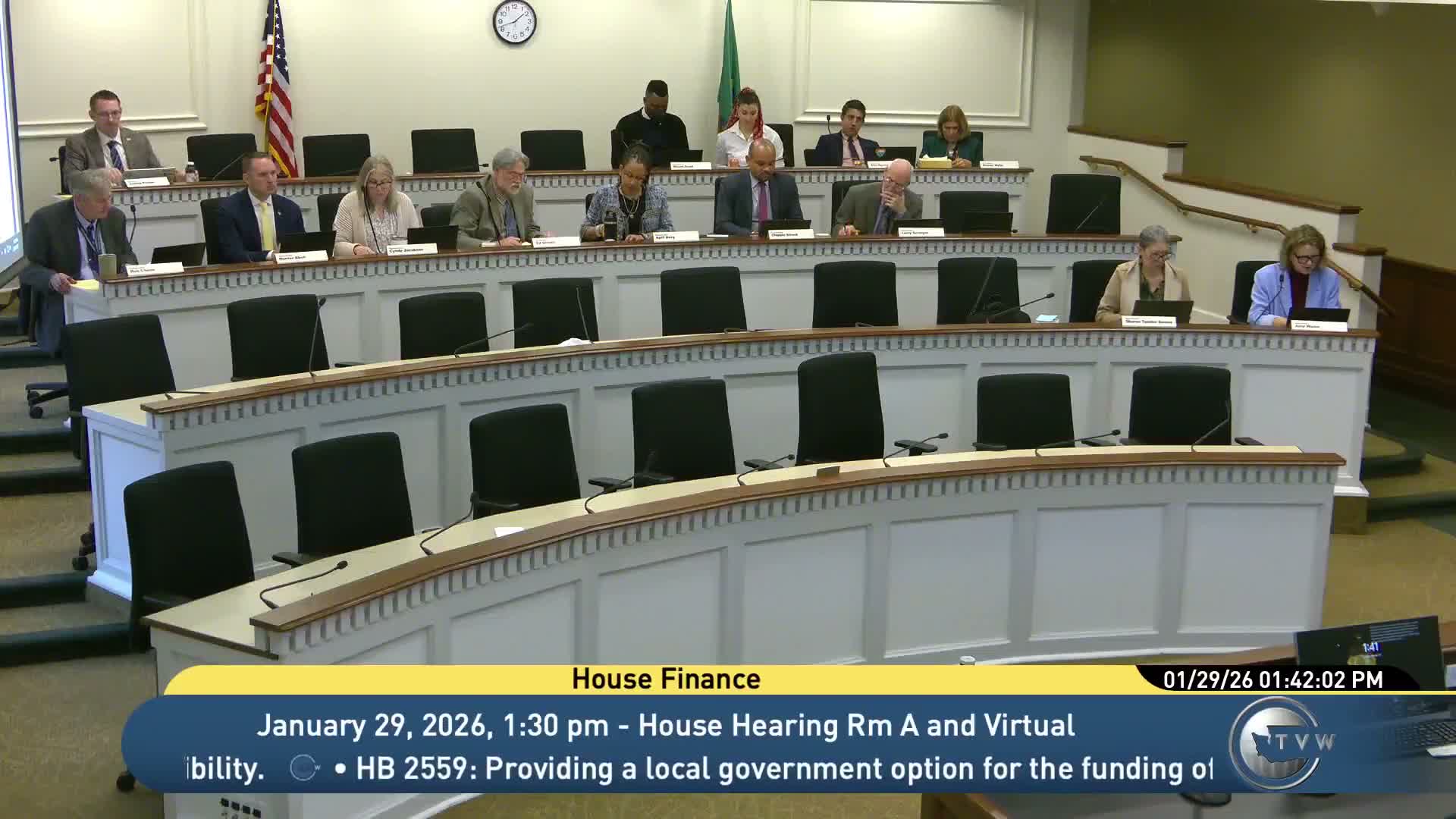
The House Finance Committee on Jan. 29 reported out substitute House Bill 2,442, a comprehensive package of local revenue options described by staff as a ‘‘toolbox’’ for counties and cities. The bill would expand permitted uses of local real‑estate excise tax (REET) revenues, authorize a new county public‑utility tax, allow a local sales‑and‑use tax to fund services for children and families, expand authorized uses of housing sales tax revenues and make changes to veterans assistance and mental‑health/developmental‑disability levies.
Kellen Wright, staff to the local government committee, briefed the bill and detailed two proposed amendments: one requiring voter approval before imposing certain local taxes (RIC 427), and another to credit city/county REET or sales/use taxes against state taxes (RIC 428). Supporters said the bill would give local governments more flexibility to address housing, public safety and health needs; critics warned it could lead to more local tax increases without sufficient voter awareness.
Representative Orcutt raised concerns that some provisions authorize new taxes and urged voter approval for new local levies; he also described potential taxpayer confusion from levy reclassifications. Sponsor remarks described the measure as a toolbox offering options that local governments may choose to use or not use.
A roll call recorded 9 ayes and 6 nays and the substitute was reported out of committee with a due‑pass recommendation. Representative Orcutt, Representative Jacobson and others said they would continue negotiations on voter‑approval language and revenue‑neutral protections for taxing districts.
The bill contains many provisions that will require local implementation choices and further technical work before any tax is imposed at the jurisdiction level.