Get Full Government Meeting Transcripts, Videos, & Alerts Forever!
Get email alerts on the Wildfire Response topic
No spam. Unsubscribe anytime.
Senate committee backs call for careful federal wildfire reorganization and urges restoration of state prevention funding
Summary
Witnesses including tribal leaders, conservation organizations, former federal officials and county representatives urged the committee to support Senate Joint Memorial 8015 asking the federal government to implement wildland fire consolidation cautiously and to maintain or restore state investments in prevention programs (including HB 11-68 funding).
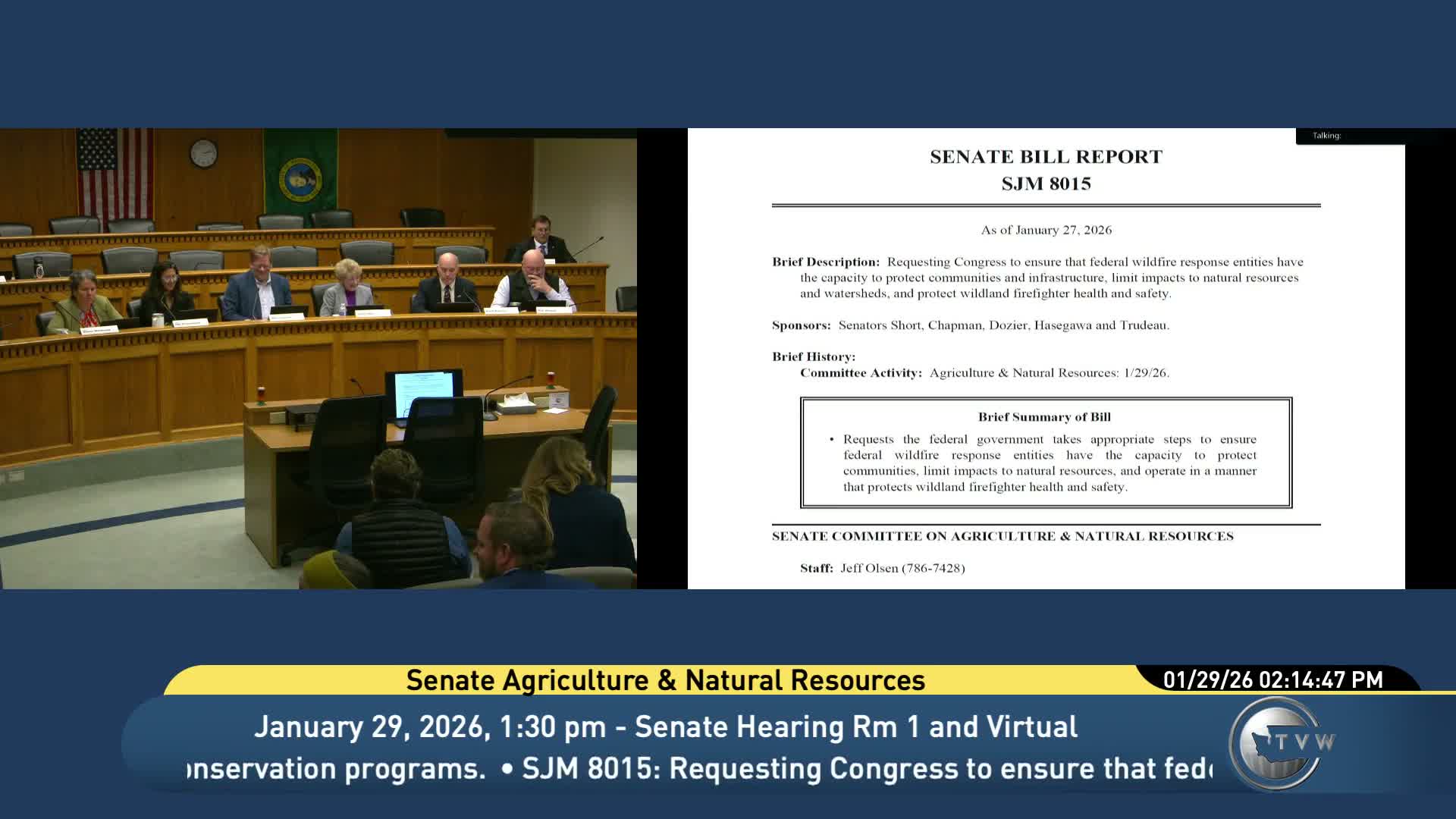
The Senate Agriculture & Natural Resources Committee heard Senate Joint Memorial 8015, which urges the federal government to ensure wildfire response entities maintain capacity during a proposed consolidation of federal wildland fire programs and to consider delaying reorganization until operations are fully prepared.
Jeff Olson, committee staff, described the June 2025 executive order directing consolidation of wildland fire programs and said the memorial requests federal steps to protect communities and natural resources and ensure firefighter health and safety; Olson said no fiscal estimate was available.
Senator Shelley Short (7th LD) said she supports the memorial because stable federal and state capacity matters for districts with extensive National Forest lands. The public record included a wide range of supporters: private forest owners, the Nature Conservancy, Sally Jewell (former U.S. Interior Secretary), tribal representatives from the Colville Confederated Tribes, county officials, fire practitioners and restoration groups. Melton Tenaska (Colville Tribes) urged full funding of the Wildfire Response, Forest Restoration and Community Resilience Account at $125,000,000 and described tribal stewardship and the economic impacts of large fires.
Many witnesses emphasized that federal consolidation should not reduce operational firefighting capacity and that state investments such as House Bill 11-68 — which funds prevention and fuels projects — provide demonstrable cost‑effectiveness. Kyle Smith (Nature Conservancy) and others cited fuels reduction projects and early detection cameras as tools that saved costs and improved response.
The committee closed the public hearing and said the memorial would be on the executive session agenda; no formal committee vote was recorded during the hearing.
Next steps: the memorial will go to executive session; witnesses offered additional materials and follow-up on funding impacts.